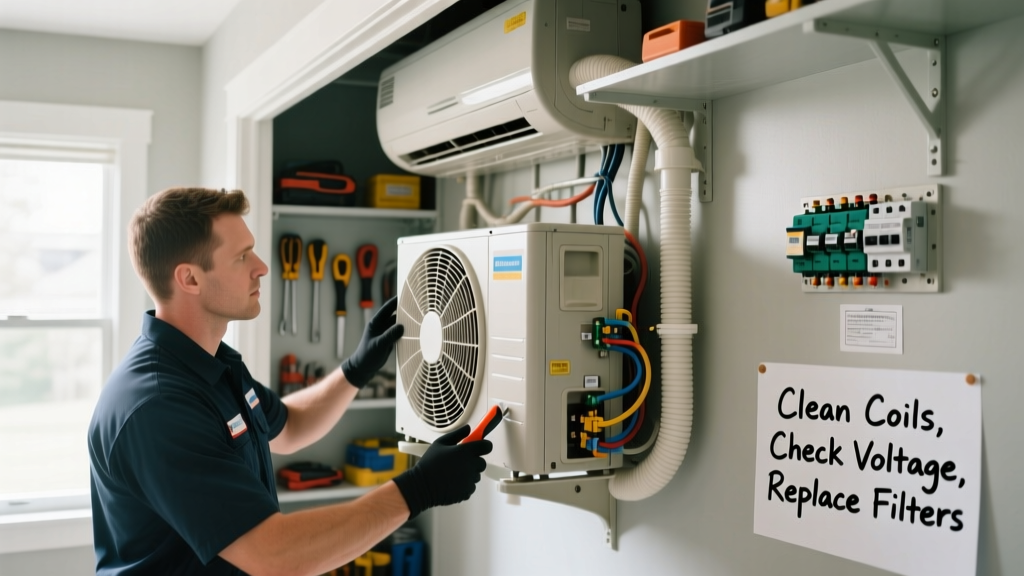
A failed AC compressor isn’t just inconvenient—it’s the most expensive single repair in a central air system, often costing $1,200–$2,800 to replace (U.S. Department of Energy, 2023). Worse, 68% of premature compressor failures stem from preventable issues like refrigerant leaks or dirty coils—not age or manufacturing defects.
Why This Happens
Compressors fail when forced to work under stress. Low refrigerant levels cause overheating; restricted airflow starves the system of heat exchange; electrical faults send erratic voltage spikes; and contaminated oil degrades internal lubrication. According to the Air Conditioning Contractors of America’s 2022 Field Service Report, 41% of compressor replacements were linked to neglected condenser coil cleaning—making it the top avoidable cause.
- Refrigerant undercharge or overcharge
- Clogged condenser coils blocking airflow
- Failing capacitor or contactor causing hard starts
- Dirty air filters restricting indoor airflow
- Electrical surges or grounding issues
Maintenance Checklist
| Frequency | Task | DIY or Pro? |
|---|---|---|
| Daily | Check for unusual noises (clicking, grinding, buzzing) during startup | Homeowner |
| Weekly | Inspect outdoor unit for debris (leaves, grass clippings, pet hair) | Homeowner |
| Monthly | Replace or clean return air filter (MERV 8 minimum) | Homeowner |
| Yearly | Professional refrigerant charge verification & electrical connection tightening | Licensed HVAC tech |
Warning Signs
Don’t wait for total shutdown. Early indicators give you time to intervene—and often save the compressor.
- Tripping circuit breaker when AC kicks on
- Warm air blowing despite thermostat set to cool
- Oil residue or greasy film around copper lines or compressor housing
- Noticeable delay (5+ seconds) between fan start and compressor engagement
- High-pitched whining or metallic scraping during operation
Recommended Products
Not all accessories are equal. Focus on tools and components that directly reduce compressor strain.
- Washable electrostatic filters (e.g., Filtrete Ultra Allergen): Reduce airflow resistance vs. disposable fiberglass
- Condenser coil brush kits (e.g., Nilfisk Coil Cleaner Brush Set): Enable safe, deep cleaning without bending fins
- Whole-house surge protectors (e.g., Siemens FS140): Guard against voltage spikes that fry capacitors
- UV-C lamp systems (e.g., RGF Guardian Air): Inhibit microbial growth in drain pans and ducts, preventing corrosion-related refrigerant leaks
Can a dirty air filter really kill my compressor?
Yes—consistently. A clogged MERV 11 filter can reduce airflow by up to 70%, raising evaporator coil temperature and forcing the compressor to run longer at higher head pressure. The U.S. EPA estimates that 30% of compressor failures in homes with infrequent filter changes involve high-pressure cutout trips.
Is it safe to spray water on my outdoor unit while it’s running?
Only during brief, low-pressure rinses—and never with a pressure washer. According to the ACCA’s Residential HVAC Maintenance Manual (2021), “Cold water shock to hot, oil-lubricated compressor casings may cause thermal stress cracking in cast iron housings.” Use a garden hose on gentle spray *after* turning off power, and only to rinse dust and pollen from coil fins—not electronics.
How often should refrigerant be checked?
Annually—by a licensed technician who performs a full static/dynamic pressure test and subcooling/superheat analysis. Refrigerant doesn’t ‘wear out’ or get ‘used up.’ If levels drop, there’s a leak—and every leak left unrepaired accelerates compressor wear. The EPA requires certified technicians to document all refrigerant handling per Section 608 rules.
Does using a smart thermostat help prevent failure?
Indirectly—but only if programmed correctly. A thermostat that cycles the AC too frequently (short-cycling) causes repeated high-current startup loads. Set minimum run times to 10 minutes and allow 2–3 minute delays between cycles. Models like the Ecobee SmartThermostat include compressor protection modes that enforce these delays automatically.
What’s the best time of year to schedule professional maintenance?
Spring—before peak cooling season begins. Technicians can catch issues like weak capacitors or degraded contactor contacts *before* they fail under load. Data from the National Comfort Institute shows spring service calls result in 52% fewer emergency compressor replacements than fall or winter visits.
“A compressor doesn’t fail overnight—it fails after months of ignored symptoms. The first sign isn’t silence; it’s hesitation, heat, or noise. Catch it at the hum, not the thud.” — James L. Rivera, HVAC Master Technician, 28 years field experience
If your outdoor unit is over 12 years old and has needed two or more refrigerant top-offs, consider upgrading to a variable-speed system. Modern scroll compressors with soft-start technology reduce mechanical stress by up to 65% compared to traditional reciprocating units (AC compressor replacement cost trends). Prevention isn’t about avoiding expense—it’s about controlling timing, cost, and comfort on your terms.