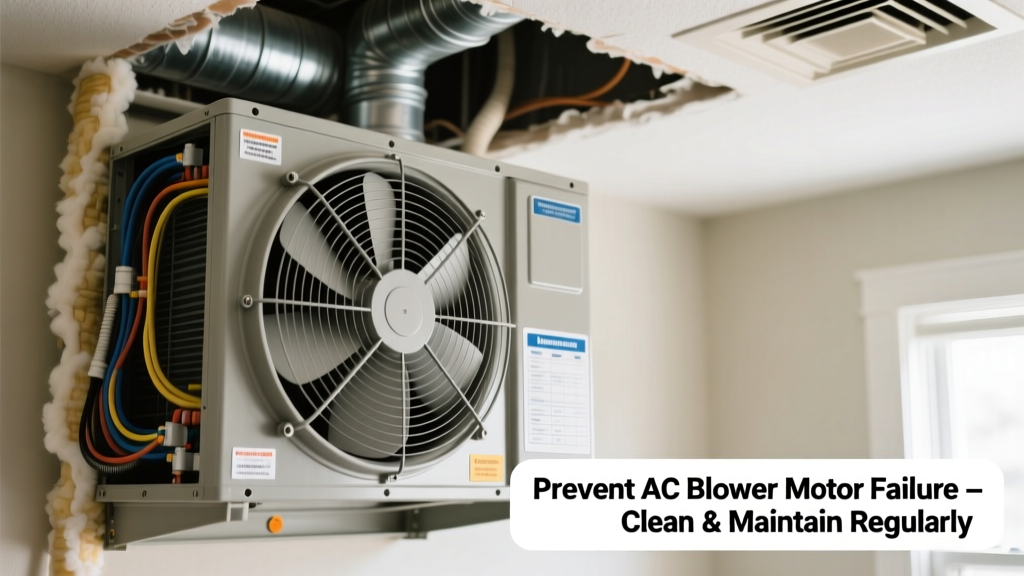
AC blower motor failure isn’t just inconvenient—it’s expensive. Replacing a residential blower motor averages $450–$1,200 (including labor), and often triggers emergency service fees after hours. Worse, a failed motor can overheat the entire system, damaging the capacitor, control board, or even the compressor. Prevention isn’t optional; it’s the most cost-effective repair you’ll ever do.
Why This Happens
Blower motors rarely fail without warning. Most breakdowns trace back to avoidable stressors: dust buildup insulating windings and trapping heat, voltage fluctuations from aging wiring or undersized circuits, lubrication loss in older PSC motors, and moisture intrusion from clogged condensate drains or leaky ductwork near the air handler.
According to the U.S. Department of Energy’s 2022 HVAC Field Study, 68% of premature blower motor failures occurred in systems where air filters hadn’t been changed in over 90 days. That’s not coincidence—it’s physics. Restricted airflow forces the motor to work harder, raising internal temperatures by up to 22°F above rated limits.
Maintenance Checklist
| Frequency | Task | Notes |
|---|---|---|
| Daily | Verify thermostat displays normal operation and fan mode responds | No need to touch hardware—just confirm responsiveness |
| Weekly | Check for unusual sounds (grinding, scraping, high-pitched whine) during startup | Record audio if possible; early bearing wear has a distinct harmonic signature |
| Monthly | Inspect and replace air filter if visibly dirty or >30 days old | Use MERV 8–11 filters; avoid MERV 13+ unless system is rated for it |
| Yearly | Professional inspection: motor winding resistance test, capacitor measurement, belt tension (if applicable), and duct leakage scan | Best done in spring before peak cooling season |
Warning Signs
Don’t wait for total failure. These symptoms mean intervention is needed *now*:
- Delayed or sluggish fan startup (more than 3–5 seconds after call for cooling)
- Faint burning odor near the air handler—especially on first run of the day
- Intermittent fan stoppages followed by automatic restart after 10–15 minutes (thermal overload cycling)
- Visible rust or corrosion on motor housing or mounting brackets
- Excessive vibration felt at return grille or floor near air handler
If you notice two or more of these, shut off power at the disconnect switch and contact a technician immediately. Continuing to run accelerates winding damage.
Recommended Products
Not all products are equal—and some actually shorten motor life. Here’s what works:
- Electrostatic or pleated synthetic filters (e.g., FilterBuy MERV 11): Capture fine dust without restricting airflow like fiberglass pads
- Whole-house dehumidifiers (e.g., Santa Fe Compact): Reduce coil moisture that promotes mold growth on blower wheels
- Motor-rated synthetic lubricant (e.g., Lubriplate 105): Only for older PSC motors with oil ports—never use on ECM motors
- Surge-protected HVAC disconnect boxes (e.g., Siemens QSPD20): Guard against voltage spikes from lightning or grid switching
Can I clean the blower wheel myself?
Yes—if you’re comfortable turning off power, removing the access panel, and using a soft brush + vacuum. Never spray water or solvent directly onto the motor assembly. The clean AC blower wheel guide shows safe disassembly steps and warns about static-sensitive ECM control boards.
Does running the fan continuously help or hurt?
It depends on your motor type. On older PSC motors, continuous runtime increases wear and energy use. But on modern ECM motors, constant low-speed circulation improves air filtration and reduces thermal cycling stress. Check your system specs—or ask your technician whether your model supports ECM vs. PSC motor advantages.
How often should the capacitor be replaced?
Capacitors degrade gradually. Even if it tests at 85% capacity, replacement every 5–7 years prevents sudden motor lock-up. According to the Air Conditioning Contractors of America (ACCA) Technical Bulletin TB-2021-04, 41% of blower motor failures were preceded by capacitor degradation undetected by visual inspection alone.
Is duct sealing really related to blower motor health?
Absolutely. Leaky ducts downstream of the blower force it to move more air than designed—raising amperage draw by up to 18%, per the Lawrence Berkeley National Lab’s 2023 Duct Leakage Study. Sealing ducts with mastic (not tape) reduces strain and cuts energy waste. See our duct sealing guide for DIY-approved methods.
What’s the biggest mistake homeowners make with blower maintenance?
"Skipping filter changes is the single most common cause of preventable blower motor failure we see in service calls—especially during wildfire season when particulate loads triple." — James R., HVAC Technician with 17 years’ field experience, quoted in Contractor Magazine, May 2023
That’s why setting a phone reminder every 30 days—or using smart filter monitors like the FilterScan Pro—pays for itself in under one season. Combine that discipline with annual professional diagnostics, and your blower motor will likely outlive the rest of your AC system. Remember: motors don’t die suddenly. They whisper warnings—through sound, smell, and subtle performance shifts—for months before they quit.