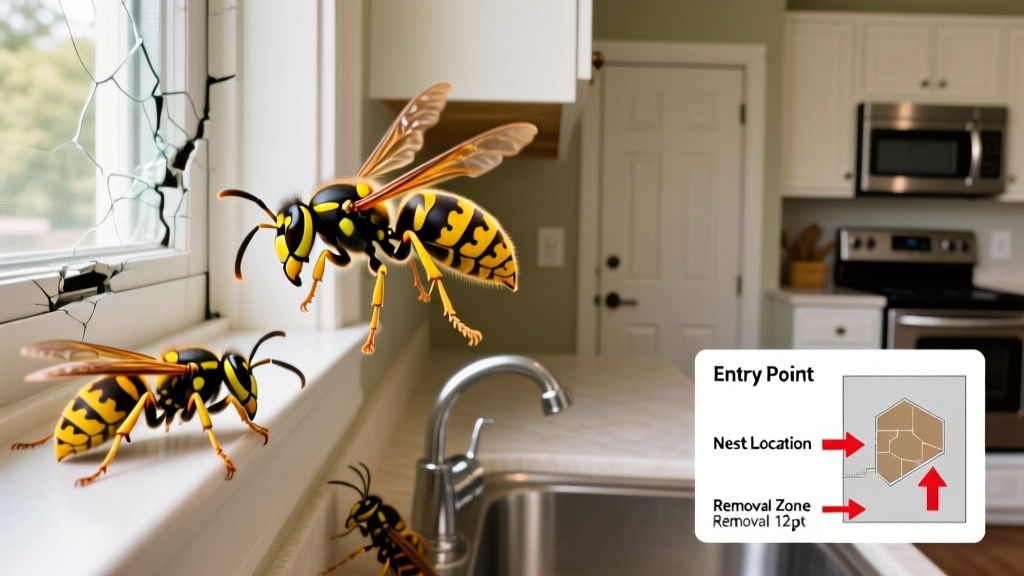
Yellow jackets—aggressive, social wasps in the genus Vespula or Dolichovespula—are not just outdoor pests. When they enter kitchens through gaps near windows, vents, or plumbing chases, they pose stinging risks, contaminate food, and may signal a hidden nest in walls or attic voids. Unlike honeybees, they can sting repeatedly and often become more defensive near food sources.
Identification
Spotting yellow jackets early prevents escalation. They’re ½–¾ inch long, with alternating black-and-yellow bands on a slender, hairless body. Their wings fold laterally at rest, and they fly with a rapid, darting motion—not the lazy hover of hoverflies. Watch for repeated landings on countertops, pantry shelves, or near trash cans.
| Feature | Yellow Jacket | Honeybee | Hoverfly | Asian Lady Beetle |
|---|---|---|---|---|
| Body texture | Smooth, shiny, nearly hairless | Plump, densely hairy | Smooth, often metallic green/blue | Hard, domed, spotted shell |
| Sting capability | Yes—multiple times | Once (barbed stinger) | No sting | No sting |
| Common indoor behavior | Foraging for sugar/protein; may nest in wall voids | Rarely indoors unless swarming or trapped | Rests on windows; no nesting | Overwinters in cracks; no foraging |
Key signs of an active infestation include:
- 3+ yellow jackets inside daily between late July and October
- Faint papery rustling behind baseboards or in ceiling corners
- A steady flight path toward a specific wall seam or light fixture
- Small piles of chewed wood pulp near outlets or vents (nest-building debris)
What Attracts Them
Kitchens offer three critical resources: sugar, protein, and shelter. Yellow jackets seek spilled soda, fruit scraps, open pet food, and even damp coffee grounds. According to the University of Kentucky Entomology’s 2022 Pest Alert, 68% of residential yellow jacket reports in homes involved accessible pantry items or unsealed garbage.
They also exploit structural weaknesses:
- Gaps >1/8″ around window frames, exhaust fan ducts, or pipe penetrations
- Cracked grout or missing caulk near sinks and dishwashers
- Unscreened soffit vents or damaged attic access panels above kitchens
Treatment Methods
Natural Approaches
For 1–3 foragers (not a nest), try non-toxic deterrents first. A spray of equal parts water and white vinegar deters landing but won’t kill. Place shallow bowls of soapy water (1 tbsp Dawn + 2 cups water) near entry points—yellow jackets drown within seconds when they land to drink. Freeze individual wasps using a commercial wasp-freeze aerosol (non-residual) from 12 inches away—only if you’re confident and wearing gloves and eye protection.
Never attempt to vacuum or swat—this releases alarm pheromones that attract more.
Chemical Options
If you’ve confirmed a nest behind drywall or in a cabinet void, use dust insecticides labeled for enclosed spaces—like DeltaDust (deltamethrin) or Tempo Dust (cyfluthrin). Apply sparingly via a bulb duster into the suspected entry point at dusk, when most workers are inside. The U.S. EPA notes that properly applied dusts remain effective for up to 8 weeks in dry voids (EPA Pesticide Registration Review, 2023).
Avoid foggers or sprays in occupied kitchens—they disperse toxins widely and rarely reach nests deep in walls.
Prevention
Seal, sanitize, and monitor. Replace worn weatherstripping on exterior-facing kitchen doors. Install 16-mesh aluminum screening over all vent openings—including range hood ducts and under-sink exhaust ports. Store ripe fruit in the fridge, not on counters, and rinse recyclables before stacking.
Conduct monthly checks:
- Run fingers along baseboard seams for tiny holes or sawdust-like frass
- Tap hollow-sounding sections of cabinets or soffits with a screwdriver handle
- Use a smartphone flashlight to peer into unused outlet boxes behind appliances
- Inspect attic flooring above the kitchen for mud-packed gaps or paper-like nest fragments
When to Call an Exterminator
Call a licensed pest management professional immediately if:
- You hear consistent buzzing inside walls or ceilings for more than 48 hours
- You spot >5 yellow jackets indoors in one day, especially in cooler months
- You find a nest larger than a grapefruit—or any nest within 3 feet of electrical wiring or gas lines
- Anyone in the household has a known wasp allergy (anaphylaxis risk is real and fast-acting)
"Most kitchen yellow jacket calls we get aren't about random foragers—they're about nests in wall voids that started as a single queen in April and now hold 500–2,000 workers by August. Early detection saves walls—and lives." — Mike R., Certified Structural Pest Inspector, NCPMA Member since 2011
Can yellow jackets build nests inside kitchen cabinets?
Yes—but rarely in open shelving. They prefer insulated voids: behind toe-kick panels, inside hollow-core cabinet doors, or within the space between double-wall construction. Look for small entry holes near hinges or drawer slides, plus faint musty odor.
Why do yellow jackets appear suddenly in September?
Colonies peak in late summer. Worker numbers surge, food demands increase, and dying queens trigger colony breakdown—sending desperate foragers indoors. This is why 74% of reported kitchen sightings occur between August 15 and October 10 (National Pest Management Association, 2023 Field Survey).
Is it safe to use bleach or ammonia to repel them?
No. These cleaners don’t deter yellow jackets and create hazardous fumes when mixed. Bleach degrades wasp pheromones only at concentrations unsafe for human exposure—and offers zero residual effect.
Do ultrasonic repellents work against yellow jackets?
No credible field study supports their effectiveness. The FTC issued warnings in 2022 against 11 brands marketing ultrasonic devices for wasps after independent testing showed zero behavioral change in Vespula germanica (Federal Trade Commission, Consumer Protection Report #22-47).
Can I relocate a yellow jacket nest myself?
Not safely. Unlike honeybee swarms, yellow jackets defend nests aggressively, and disturbing them mid-day risks dozens of stings. Even experienced beekeepers avoid yellow jacket relocations—most opt for targeted chemical control instead.
Will sealing my kitchen windows stop them completely?
It helps—but isn’t enough alone. Yellow jackets commonly enter via plumbing stacks, dryer vents, recessed lighting housings, and gaps behind refrigerators. Focus on the entire thermal envelope, not just visible openings.
Yellow jackets in the kitchen aren’t just a nuisance—they’re a warning sign. Addressing them promptly protects your family, preserves your home’s integrity, and avoids costly remediation later. For persistent issues, pair prevention with professional assessment—especially before winter, when queens seek shelter for next year’s colonies. If you’re dealing with other stinging insects, check our guides on paper wasps in the attic and carpenter ants in the kitchen.