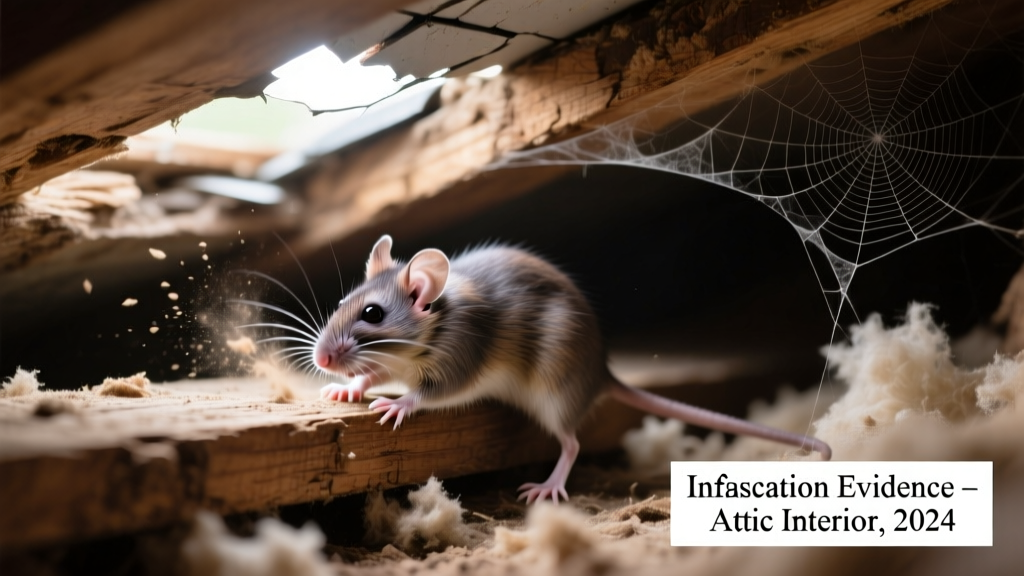
That faint, intermittent scratching in your attic—especially at dawn or dusk—is rarely harmless. It’s usually a sign of active wildlife or rodents exploiting gaps in your home’s envelope. Left unaddressed, these pests can chew wiring (causing fire risk), contaminate insulation with urine and feces, and eventually move into living spaces.
Identification
Three pests cause most attic scratching: squirrels, rats, and raccoons. Each has distinct behaviors and physical clues. Squirrels are diurnal (active by day), make rapid scurrying sounds, and leave 3/4-inch cylindrical droppings with rounded ends. Rats are nocturnal, produce soft gnawing or dragging noises, and leave 1/2-inch dark, tapered pellets. Raccoons create heavy thumping or walking sounds, often at night, and leave large, moist, segmented scat—sometimes with berry seeds or insect parts.
| Pest | Peak Activity | Droppings | Entry Points |
|---|---|---|---|
| Gray Squirrel | Early morning & late afternoon | 0.75" long, smooth, barrel-shaped | Roof vents, soffit gaps, loose shingles |
| Roof Rat | Midnight–4 a.m. | 0.5" long, pointed ends, shiny black | Gaps >1/2", chimneys, utility lines |
| Raccoon | 9 p.m.–3 a.m. | 2–3" long, tubular, often contains undigested food | Chimney crowns, damaged roof decking, attic fans |
What Attracts Them
Attics become pest magnets when they offer warmth, shelter, and easy access. Insulation—especially fiberglass or cellulose—provides nesting material and thermal cover. Overhanging tree branches within 6 feet of the roof give squirrels and raccoons launch points. Uncapped chimneys, missing vent screens, and deteriorated soffits act as open invitations. According to the National Wildlife Control Operators Association’s 2022 field survey, 68% of attic infestations began after a single point of entry widened from weather damage or unchecked wear.
- Untrimmed trees touching roofline
- Uncapped or cracked chimneys
- Rotted fascia boards or soffit gaps
- Old insulation harboring nesting debris
Treatment Methods
Natural Methods
Start with deterrents that exploit pest behavior without toxins. Motion-activated lights or ultrasonic emitters (set to 25–45 kHz) disrupt nocturnal rats and raccoons—but avoid using them near pets. Peppermint oil-soaked cotton balls placed near entry points repel mice and rats; reapply weekly. For squirrels, hang reflective tape or wind chimes near eaves—movement and noise mimic predator presence. These methods work best during early infestation (<2 weeks) and paired with exclusion.
Chemical & Trapping Methods
Use snap traps (for rats/mice) or live-catch traps (for squirrels/raccoons) baited with peanut butter or dried fruit. Place traps along walls where droppings cluster—not randomly. Avoid glue boards: they’re inhumane and banned in 12 states including California and New York. Rodenticides are not recommended for attics—dead animals decompose in inaccessible spaces, causing odor and secondary infestations. The U.S. EPA reports that 32% of homeowner rodenticide misuse cases involve improper attic placement leading to non-target kills.
"If you hear scratching but find no droppings after three days of monitoring, it’s likely a single animal testing entry—not an established nest. That’s your narrow window to seal before breeding season." — Dr. Lena Torres, Wildlife Biologist, NWCOA Field Manual (2023)
Prevention
Exclusion is 90% of lasting prevention. Seal all openings larger than 1/4 inch for mice, 1/2 inch for rats, and 2 inches for squirrels. Use 19-gauge galvanized steel mesh—not hardware cloth thinner than 18 gauge—stapled with corrosion-resistant screws. Replace rotted soffit panels with aluminum or PVC. Install chimney caps with 5/8-inch mesh and secure attic vents with heavy-duty vent guards. Trim tree limbs to at least 8 feet from roof edges.
- Inspect roof line and soffits with a flashlight every spring and fall
- Replace degraded insulation that smells musty or shows nesting tunnels
- Install LED motion-sensor lights in attic access hatches
- Store holiday decorations in hard-sided plastic bins—not cardboard boxes
When to Call an Exterminator
Call a licensed wildlife control operator if you hear scratching daily for more than 5 days, detect ammonia-like odors (indicating urine buildup), or spot nesting materials like shredded paper, leaves, or insulation clumps. Also call if you see baby animals—many species are protected by state law during birthing seasons (March–July for squirrels, April–August for raccoons). DIY removal of raccoons or bats may violate the Migratory Bird Treaty Act or state wildlife codes.
Why do I only hear scratching at night?
Rats, mice, and raccoons are primarily nocturnal. Their peak activity aligns with lower human movement and cooler temperatures—making attic sounds more noticeable after dark. Squirrels, however, scratch mostly between 6–10 a.m. and 4–7 p.m., so timing helps narrow suspects.
Can insulation damage be repaired—or must it be replaced?
Insulation contaminated with urine, feces, or nesting debris cannot be cleaned effectively. The U.S. Department of Energy recommends full replacement of affected batts or blown-in material. Mold spores bind to fiberglass fibers, and ammonia residue persists even after surface cleaning.
Will attic fans or ventilation deter pests?
Not directly—but proper ventilation reduces moisture buildup that attracts insects (which then attract predators like spiders and centipedes). High humidity also degrades wood framing, creating softer entry points. A balanced attic ventilation system (1:300 ratio of net free area to attic floor space) supports structural integrity and indirectly lowers pest appeal.
Are there non-toxic repellents proven to work long-term?
None are reliably effective beyond 2–3 weeks. Capsaicin-based sprays degrade with UV exposure and rain. Predator urine (e.g., coyote or fox) loses potency quickly and has mixed field results. Physical exclusion remains the only evidence-backed long-term solution—backed by the National Pest Management Association’s 2023 Standards.
How fast can an attic infestation grow?
A single pair of roof rats can produce 5–10 litters per year, each with 6–8 pups. Within 4 months, that could mean 60+ individuals. Squirrels have two breeding cycles annually (Feb–April and July–September); one female can raise 4–6 kits per litter. That’s why early identification—before droppings appear—is critical.
What’s the average cost to exclude and clean an attic?
DIY exclusion materials run $80–$220 depending on roof complexity. Professional exclusion + cleanup averages $450–$1,200, per the NPMA’s 2024 Service Pricing Report. Add $1.25–$2.50/sq ft for insulation replacement if contamination is confirmed.
If scratching persists after sealing entry points and resetting traps for 10 days, assume a second, hidden route exists—or the animal has moved into wall voids. Re-inspect along rooflines with a ladder and mirror, check behind HVAC units, and listen with a stethoscope pressed to drywall. Early action prevents costly repairs—and keeps your attic quiet, clean, and safe.