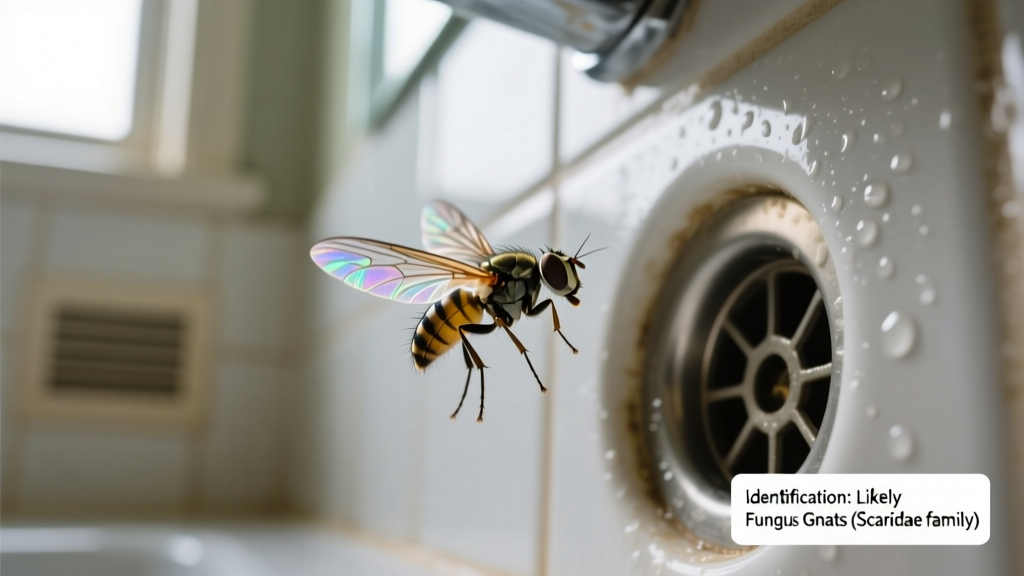
Small flying insects hovering near your bathroom sink, shower drain, or toilet base are rarely random visitors—they’re thriving in hidden moisture and organic buildup. Most aren’t biting or disease-carrying, but their presence signals plumbing issues, stagnant water, or microbial growth that can worsen over time.
Identification
Three pests dominate bathroom airspace: drain flies (Psychoda spp.), fungus gnats (Bradysia spp.), and occasionally fruit flies (Drosophila melanogaster). Visual cues, behavior, and breeding sites differ sharply—confusing them guarantees ineffective treatment.
- Drain flies: Fuzzy, moth-like, 1.5–2 mm, weak fliers; rest on walls near drains; larvae live in gelatinous biofilm inside pipes.
- Fungus gnats: Slender, long-legged, 2–3 mm, dart erratically; larvae feed on damp organic matter in potted plants or overflow pans—not drains.
- Fruit flies: Red-eyed, shiny tan body, 3 mm; drawn to fermenting residue in trash cans or soap scum—not typically drain breeders unless beer or wine was spilled nearby.
| Pest | Wings | Larval Habitat | Flight Pattern | Peak Activity |
|---|---|---|---|---|
| Drain fly | Hairy, triangular, held roof-like at rest | Biofilm in drains, traps, sewer lines | Short hops, low hover | Dawn & dusk |
| Fungus gnat | Clear, delicate, Y-veined | Moist soil, decaying plant matter, condensation trays | Erratic, jerky flight | Daytime, especially near windows |
| Fruit fly | Smooth, veined, held flat | Fermenting liquids, sticky residues, garbage bins | Steady, purposeful flight | Daytime, near food or scented products |
What Attracts Them
Bathrooms offer ideal conditions—but for different reasons depending on the pest. Drain flies need stagnant water with organic sludge; fungus gnats seek fungal hyphae in saturated substrates; fruit flies track ethanol volatiles from personal care products or spills.
- Standing water in overflow holes or cracked grout
- Uncleaned showerheads or aerators harboring algae
- Potted plants kept in the bathroom (especially peace lilies or ferns)
- Old caulk around tubs or sinks trapping moisture and debris
- Infrequent use of drains allowing biofilm accumulation
According to the National Pest Management Association’s Pest Control Industry Survey 2022, 68% of drain fly infestations traced back to drains unused for more than 5 days—highlighting neglect, not contamination, as the primary trigger.
Treatment Methods
Natural Methods
Start here—especially for drain flies and fungus gnats. Boiling water poured down drains twice weekly disrupts larval mats without damaging pipes (avoid PVC if water exceeds 140°F). For fungus gnats in potted plants, allow top 2 inches of soil to dry completely between waterings—larvae desiccate within 48 hours.
- Baking soda + vinegar flush: ½ cup baking soda, 1 cup vinegar, wait 10 minutes, then flush with hot (not boiling) water
- Sticky traps placed vertically near drains catch adults and monitor activity trends
- Cinnamon sprinkled on damp soil deters fungus gnat egg-laying (University of Florida IFAS Extension, 2021)
Chemical Methods
Reserve chemical options for persistent cases where natural methods fail after 10–14 days. Use enzyme-based drain cleaners (e.g., Green Gobbler) weekly for 3 weeks to digest biofilm—not chlorine-based products, which only mask odor and don’t remove larval habitat.
- Pyrethrin sprays applied directly to adult clusters (never near HVAC vents or aquariums)
- Bacillus thuringiensis israelensis (Bti) granules in overflow pans or plant saucers—kills fungus gnat larvae selectively
- Drain gel containing sodium hydroxide only for metal pipes; never use on PVC or septic systems
Prevention
Prevention targets the root cause: moisture + organic debris. Install pop-up drain stoppers to prevent overnight water stagnation. Replace silicone caulk every 2 years—cracked sealant holds 0.3 mL of water per linear inch, enough to sustain dozens of drain fly larvae.
- Run bathroom fans for 20+ minutes after showers to reduce humidity below 50%
- Clean showerheads monthly with white vinegar soak (30 minutes) to remove mineral-fungal colonies
- Store no open toiletries with sugar alcohols (e.g., sorbitol, glycerin)—they ferment and attract fruit flies
- Use a 1:10 bleach-water solution on grout lines quarterly to inhibit mold that supports fungus gnat development
When to Call an Exterminator
Call a licensed professional if you see >20 adults daily for 7+ days despite consistent treatment—or if insects emerge from walls, ceilings, or floor vents. That suggests breeding in hidden spaces: behind tiles, inside wall cavities with leaky supply lines, or under subflooring with chronic moisture intrusion.
"Drain fly infestations almost never originate from sewers—they’re nearly always local pipe biofilm. If you’re chasing them from the street cleanout, you’re treating the wrong problem." — Dr. Elena Ruiz, Entomologist, National Pest Technicians Association, 2023
Why do I only see them at night?
Drain flies are crepuscular—they avoid light and peak during low-light transitions. Turn on lights suddenly in a dark bathroom and watch them drop to surfaces. This behavior helps distinguish them from daytime-active fungus gnats.
Can they come up through the toilet?
Rarely. Toilets have water seals (typically 2-inch trap depth) that block adult emergence. If flies appear near the bowl, check the tank lid gasket (algae buildup), overflow tube (stagnant water), or floor drain behind the toilet—not the bowl itself.
Will cleaning my shower curtain kill them?
Only if it’s mildewed and dripping. Fungus gnats feed on fungal hyphae, not fabric. Vinyl curtains with black mold on folds or weighted hems can host larvae—replace or launder in hot water with ½ cup borax to eliminate spores.
Do bug zappers work in bathrooms?
No. They attract more insects into the space and produce ozone, which reacts with bathroom cleaners to form formaldehyde (U.S. EPA Indoor Air Quality Guidelines, 2022). UV traps without fans are ineffective against weak fliers like drain flies.
Is this a sign of a bigger plumbing issue?
Yes—if you also notice slow drainage, gurgling sounds, or musty odors from fixtures, biofilm may be thickening in branch lines. A camera inspection (starting at $129) often reveals 3–6 inches of accumulated sludge in 1.5-inch bathroom drain arms—common in homes older than 12 years.
Can pets get sick from these insects?
No known pathogen transmission occurs. However, cats and dogs may ingest adults while grooming—drain fly larvae contain chitin that can irritate sensitive stomachs. Monitor for vomiting if infestation exceeds 50+ daily sightings.
Identifying the right pest is half the battle—and the first step toward lasting control. Once you know whether it’s drain flies, fungus gnats, or something else entirely, targeted action becomes simple, safe, and effective. Keep your drains flowing, your humidity low, and your bathroom dry—and the tiny flyers won’t stand a chance.