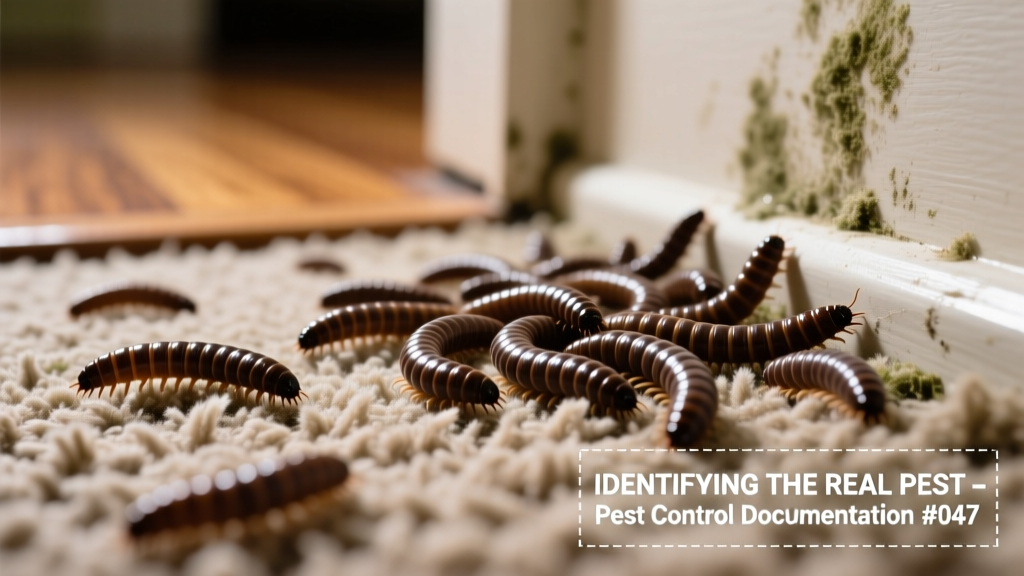
Seeing small, wriggling, worm-like creatures in your carpet is unsettling—but what you’re actually seeing is almost never true worms. Earthworms, nematodes, or other annelids can’t survive indoors for long and won’t infest dry carpeting. Instead, you’re likely dealing with the larvae of fabric-feeding insects like carpet beetles or clothes moths—both of which cause real damage to wool, silk, pet hair, and natural-fiber rugs.
Identification
Carpet beetle larvae (Anthrenus spp.) and webbing clothes moth larvae (Tineola bisselliella) are the two most common culprits misidentified as 'worms.' Both are soft-bodied, segmented, and move with a looping or crawling motion—but they differ in key ways.
| Feature | Carpet Beetle Larva | Clothes Moth Larva |
|---|---|---|
| Length | 3–5 mm | 8–10 mm when mature |
| Color | Tan to dark brown, bristly with alternating light/dark bands | Off-white, translucent, with dark head capsule |
| Hair/Texture | Dense tufts of stiff, backward-pointing setae (can irritate skin) | Smooth, fine, nearly hairless; often hidden in silken tubes or cases |
| Behavior | Free-crawling; found under furniture, along baseboards, in pet bedding | Rarely seen exposed; stays within silken feeding tunnels on carpet backing or rug fibers |
| Damage Signs | Irregular holes in wool rugs; shed larval skins near baseboards | Thinning patches, especially near edges; silken webbing visible with flashlight |
Also rule out millipede or centipede invasions—though these rarely persist indoors, they occasionally enter damp basements and crawl across carpets at night. True earthworms in carpet indicate a serious moisture intrusion or drainage failure beneath flooring.
What Attracts Them
These larvae don’t appear from nowhere—they follow food. Carpet beetles feed on keratin-rich materials: pet dander, dead skin cells, wool rugs, feather pillows, and even dried insect carcasses in wall voids. Clothes moth larvae prefer undisturbed, dark areas with natural fibers: under heavy furniture, inside closets, or beneath area rugs layered over padding.
- High humidity (>60% RH) encourages egg hatch and larval survival
- Infrequent vacuuming (especially under furniture and along edges)
- Pet shedding seasons—spring and fall—create concentrated food sources
- Old wool or silk textiles stored without cedar, lavender, or proper sealing
According to the Entomological Society of America’s 2022 Urban Pest Management Survey, 68% of confirmed carpet beetle infestations began in homes with pets and uncleaned rugs older than five years.
Treatment Methods
Natural Methods
Start with non-toxic mechanical removal and environmental controls. Vacuum daily for one week using a crevice tool along baseboards, under furniture legs, and around door thresholds. Dispose of the vacuum bag or canister contents immediately outdoors—in a sealed plastic bag.
- Steam-clean rugs at ≥120°F for 15+ seconds per square foot (kills eggs and larvae)
- Freeze infested small items (e.g., throw pillows, stuffed animals) at 0°F for 72 hours
- Apply food-grade diatomaceous earth (DE) along baseboards and under furniture—reapply after vacuuming
- Use cedar oil sprays (0.5% concentration) on rug edges—avoid direct application to wool
Chemical Options
If larvae persist after two weeks of natural control, targeted insecticides may be warranted. Always use EPA-registered products labeled specifically for carpet beetles or clothes moths—and never apply directly to carpet pile unless label-approved.
"Carpet beetle larvae avoid light and hide deep in fibers—surface sprays alone fail 90% of the time. You must treat the harborages: padding, tack strips, and subfloor gaps." — Dr. Lena Cho, Urban Entomologist, UC Riverside IPM Program, 2023
- Pyrethrin-based aerosols (e.g., Bedlam Plus) for crack-and-crevice treatment only
- Insect growth regulators (IGRs) like methoprene applied to carpet padding during professional cleaning
- Boric acid dust (NOT powder) injected into wall voids where adult beetles nest (requires licensed applicator)
Prevention
Long-term prevention focuses on denying food and disrupting life cycles. Vacuum high-traffic carpet zones twice weekly—not just the surface, but along transitions where debris accumulates. Rotate area rugs every 3 months to expose hidden larvae and disrupt feeding zones.
- Install dehumidifiers in basements and crawlspaces to maintain ≤50% RH
- Store off-season woolens in airtight plastic bins with 2–3 cedar blocks (replace yearly)
- Trim pet nails regularly—longer nails trap more keratin-rich debris in carpet fibers
- Replace wool padding with synthetic alternatives (e.g., rebond foam) in high-risk rooms
For ongoing monitoring, place sticky traps (carpet beetle traps) near closet doors and under beds—check weekly for adults, which signal active breeding.
When to Call an Exterminator
Call a licensed pest management professional if you find larvae in three or more separate rooms—or if you spot adult carpet beetles flying near windows in late spring. These are signs of established breeding populations in wall voids or attic insulation. Also consult an exterminator if larvae reappear within 10 days of thorough vacuuming and steam cleaning.
Most reputable firms offer free inspections and will provide a written report identifying entry points and harborage zones. Avoid companies that push blanket fumigation—targeted treatments are safer and more effective for this pest.
Are carpet beetle larvae dangerous to humans?
No, they don’t bite or transmit disease—but their tiny barbed hairs can cause allergic dermatitis (‘carpet beetle rash’) in sensitive individuals. Symptoms include itchy, red welts that resemble mosquito bites. Wash affected skin with cool water and mild soap; symptoms usually resolve in 48 hours.
Can I wash carpet beetle larvae out of my rug?
Standard washing won’t work—most home carpet cleaners operate below 120°F, and larvae cling tightly to backing fibers. Professional hot-water extraction (≥150°F delivery temp) is required. For wool rugs, seek a specialist who uses pH-neutral, low-moisture methods—excess water invites mold and attracts more pests.
Why do I only see them at night?
Both carpet beetle and clothes moth larvae are negatively phototactic—they avoid light. They feed and move primarily in darkness or deep shadow. Use a flashlight at night to inspect under furniture and behind baseboards—you’ll spot more activity then.
Do ultrasonic devices repel carpet beetle larvae?
No. The Federal Trade Commission issued warnings in 2021 against ultrasonic pest repellers after independent testing showed zero reduction in larval activity compared to controls. Save your money and focus on vacuuming, heat, and exclusion instead.
Will vinegar kill carpet beetle larvae?
Vinegar has no residual effect on larvae and won’t penetrate carpet backing where they feed. It may temporarily deter adults due to smell, but it doesn’t interrupt the life cycle. Skip the DIY vinegar sprays and invest in a HEPA vacuum instead.
How long does a carpet beetle infestation last?
With consistent intervention (vacuuming, heat, exclusion), most infestations clear in 4–8 weeks. But if adult beetles are emerging from wall voids or attic insulation, full resolution may take 3–6 months—even with professional help—because eggs and pupae develop slowly in protected spaces.
Don’t panic at the first sign of ‘worms’—but don’t ignore them either. Early action prevents damage to heirloom rugs and costly replacements. For related issues, see our guides on carpet beetle larvae identification and clothes moth damage repair.