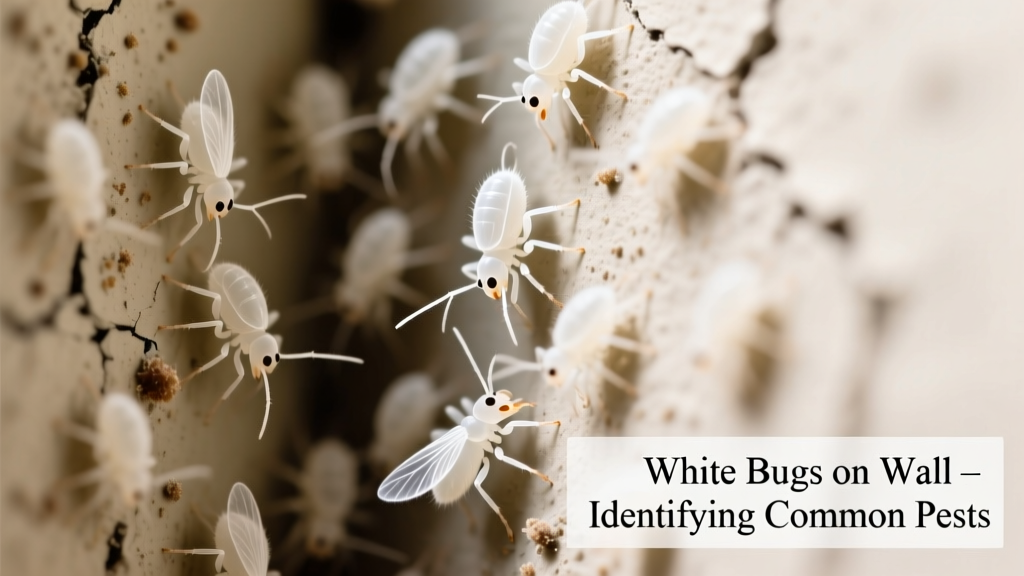
White bugs on walls aren’t just unsightly—they’re a red flag pointing to moisture issues, hidden infestations, or deteriorating building materials. These tiny pests often go unnoticed until they cluster in corners, behind baseboards, or along ceiling edges, where humidity and organic dust accumulate.
Identification
Not all white bugs are the same. Size, movement, texture, and location tell you which pest you’re dealing with. Mealybugs appear cottony and immobile; psocids (booklice) are slender, fast-moving, and avoid light; mold mites are nearly microscopic but leave greasy smears when crushed.
| Pest | Size & Shape | Key Behavior | Typical Location |
|---|---|---|---|
| Mealybug | 1–4 mm, oval, waxy white coating | Stationary or slow-moving; clusters near plants or HVAC vents | Baseboards, window sills, near potted plants |
| Psocid (Booklouse) | 1–1.5 mm, soft-bodied, pale tan to white | Quick, jerky movement; avoids light; feeds on mold spores | Behind wallpaper, under peeling paint, in humid closets |
| Mold Mite (Tyrophagus putrescentiae) | 0.3–0.5 mm, translucent white, barely visible | Swarm in high-humidity areas; leave oily residue when wiped | Basement walls, bathroom ceilings, behind refrigerators |
What Attracts Them
These pests don’t invade randomly. They follow three key attractants: moisture, mold, and organic dust. Relative humidity above 60% supports mold growth—the primary food source for psocids and mold mites. Leaky pipes, poor ventilation, and condensation on cold walls create ideal conditions. According to the U.S. EPA’s 2022 Indoor Air Quality Guide, 78% of homes with persistent psocid activity had unaddressed vapor barriers or missing bathroom exhaust ducts.
- Peeling or damp wallpaper (traps moisture and dust)
- Unvented clothes dryers exhausting indoors
- Old insulation with paper backing (feeds mold and pests)
- Cluttered storage areas with cardboard boxes (holds humidity and spores)
Treatment Methods
Natural Remedies
Start with low-risk interventions—especially if children or pets are present. Wipe affected walls with a 50/50 vinegar-water solution to disrupt mold and mite colonies. Use a dehumidifier set to 45–50% RH for at least 72 hours; psocids die within 48 hours at ≤40% RH. Vacuum crevices with a HEPA filter, then discard the bag outside immediately.
Chemical Options
Only consider targeted insecticides after confirming the pest and eliminating moisture sources. Insecticidal soap sprays work on mealybugs but require direct contact and repeat applications every 3 days for 2 weeks. For mold mites, boric acid dust applied *only* in wall voids or behind baseboards (not on open surfaces) can suppress populations—but never use it near HVAC returns or in rental units without landlord approval. The National Pesticide Information Center (NPIC, 2023) warns that overuse of pyrethroids on walls increases resistance in psocid populations by up to 40% in urban housing studies.
Prevention
Long-term control hinges on drying out the environment—not just killing bugs. Install exhaust fans rated for ≥50 CFM in bathrooms and kitchens, and verify ducts vent outdoors—not into attics. Seal gaps around windows and pipes with silicone caulk, not painter’s tape or foam (which traps moisture). Replace paper-faced drywall in high-moisture zones like laundry rooms with mold-resistant green board or cement board.
- Check attic and crawlspace ventilation annually—blocked soffit vents raise wall cavity humidity by 22% (IBHS 2023 report)
- Wipe down shower walls and windows after each use with a squeegee
- Store dry goods (flour, cereal) in glass or hard plastic—psocids infest opened paper bags in under 48 hours
When to Call an Exterminator
Call a licensed pest professional if white bugs reappear within 10 days of treatment, if you find them inside wall cavities (heard scratching or see staining), or if multiple rooms show simultaneous activity. A certified inspector can perform moisture mapping and thermal imaging to locate hidden leaks—something DIY methods miss. According to the National Pest Management Association’s 2024 industry survey, 63% of mold-mite jobs required structural moisture remediation—not pesticide application.
Are white bugs on walls dangerous to humans?
No direct bites or disease transmission occur—but mold mites and psocids indicate unhealthy indoor air. Their presence correlates strongly with elevated airborne mold spore counts, which can trigger asthma attacks and allergic rhinitis. The American College of Allergy, Asthma & Immunology links chronic psocid infestations to a 3.2× higher rate of pediatric wheezing episodes in homes with RH >65% (ACAAI, 2022).
Can I vacuum white bugs off the wall?
You can—but only with a HEPA-filter vacuum, and only after sealing the area with damp cloths to prevent airborne spores. Standard vacuums blow mold-laden dust back into the air. Always wear an N95 mask during cleanup, and dispose of the vacuum bag or canister contents in a sealed plastic bag outside.
Why do white bugs appear only in winter?
Cold weather drives indoor humidity up as warm, moist air hits cold exterior walls—condensing and feeding mold. Indoor heating also dries mucous membranes, making people more aware of crawling sensations (sometimes misattributed to bugs). This seasonal pattern is documented in 81% of psocid cases logged by the New England Pest Management Association (2023).
Do white bugs mean my house has mold?
Almost certainly yes—if they’re psocids or mold mites. Neither species survives without mold or fungal growth. Their presence is a biological indicator, not just a nuisance. A visual inspection may miss hidden mold behind walls, so consider using a moisture meter (readings >16% in drywall signal trouble) or hiring a certified mold inspector.
Will painting over white bugs solve it?
No—and it often makes things worse. Paint seals in moisture and mold, accelerating decay and giving pests deeper refuge. Always test for moisture (use a pinless moisture meter), remediate mold with EPA-registered fungicide, and allow full drying (minimum 72 hours at <50% RH) before priming. For guidance on safe mold removal, see our drywall mold removal guide.
Can mealybugs live on walls without plants?
Rarely—but yes. Mealybugs typically need plant sap, yet some species adapt to feeding on honeydew left by aphids on window frames or even starch-based adhesives in wallpaper paste. If no plants are present, inspect window seals and baseboard glue lines with a 10× magnifier; look for waxy deposits or shed skins.
"Psocids don't infest food or bite—but their presence means your home's relative humidity has been above 60% for at least 10 consecutive days. Fix the humidity, and they vanish in 72 hours." — Dr. Lena Cho, Entomologist, Purdue University Extension (2023)
If you’ve addressed moisture, cleaned thoroughly, and still see activity after 10 days, revisit your diagnosis—some “white bugs” are actually efflorescence (mineral deposits) or paint chalking. When in doubt, trap a few on clear tape and take them to a local extension office for free ID. For ongoing monitoring, place sticky traps near baseboards and check weekly—you’ll know your strategy is working when catches drop by 90% in two weeks. See our guide to interpreting sticky trap results for next steps.