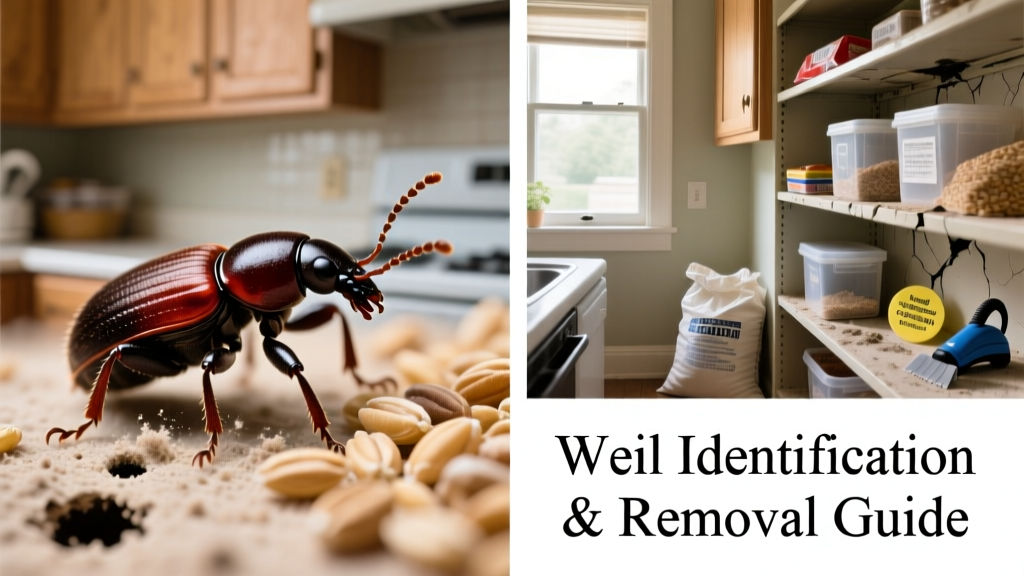
Weevils are tiny, beetle-like pests—most commonly granary or rice weevils—that invade kitchens through infested dry goods like flour, rice, oats, and pasta. They don’t bite or spread disease, but their presence signals contamination, and larvae can hatch inside sealed packages, turning pantry staples into breeding grounds overnight.
Identification
Weevils are 1–5 mm long, reddish-brown to black, with elongated snouts and bent antennae. Adult granary weevils can’t fly; rice weevils can—but rarely do indoors. You’ll spot them crawling on countertops, inside open bags, or floating in cereal bowls. Larvae are legless, creamy-white grubs curled inside grains.
| Pest | Size & Color | Snout? | Flight Capability | Typical Location |
|---|---|---|---|---|
| Granary weevil | 2–3 mm, reddish-brown | Yes, prominent | No | Inside whole grains, flour bins |
| Rice weevil | 2–3.5 mm, dark with light spots | Yes, shorter | Yes (weak) | Bagged rice, birdseed, dried beans |
| Drugstore beetle | 2–3 mm, brown, rounded | No | Yes | Spices, pet food, dried herbs |
| Indian meal moth | Larvae: ½ inch, pinkish; adults: ¾ inch wingspan, bi-colored | No | Yes | Webs in corners of jars, flying near ceiling |
What Attracts Them
Weevils enter homes in infested products—often unnoticed at purchase—and thrive where humidity exceeds 60% and temperatures stay between 70–85°F. They’re drawn to undisturbed, warm, dark storage areas: cabinets behind appliances, deep pantry shelves, and cardboard boxes that retain moisture.
- Unsealed or damaged packaging (especially paperboard boxes)
- Long-term storage of bulk grains (>3 months)
- Cracked or chipped containers with gaps around lids
- Spilled flour or grain dust accumulating under shelves
Treatment Methods
Natural Remedies
Start here—especially if you have kids or pets. Discard all infested items immediately (double-bag in plastic and remove from home). Freeze unopened, suspect dry goods at 0°F for 4 days to kill eggs and larvae. Then transfer contents to airtight glass or thick plastic containers with silicone seals.
Wipe shelves with vinegar-water (1:1) to remove pheromone trails. Diatomaceous earth (food-grade) applied as a thin line along cabinet edges disrupts exoskeletons—but avoid inhaling it or using near open food.
Chemical Options
Residual insecticides like pyrethrin-based sprays (e.g., Bedlam Plus) can be applied to cracks and crevices—not food prep surfaces. According to the U.S. EPA’s 2022 Pesticide Registration Review, pyrethrins break down rapidly indoors and pose low mammalian toxicity when used as directed. Never spray directly on food, containers, or countertops used for prep.
"Most kitchen weevil infestations resolve within 10–14 days if you discard all infested stock, clean thoroughly, and store everything properly—no pesticide needed." — Dr. Elena Torres, Entomologist, UC Riverside Department of Entomology, 2023
Prevention
Prevent recurrence by breaking the life cycle before eggs hatch. Inspect new dry goods for webbing, holes in packaging, or tiny beetles before bringing them into your pantry. Rotate stock using the "first in, first out" rule—label bags with purchase dates.
- Store flour, oats, cornmeal, and nuts in rigid, lidded containers (e.g., OXO Pop Containers or mason jars with clamp lids)
- Keep pantry humidity below 55% using a small dehumidifier or silica gel packs in deep cabinets
- Wipe shelf liners monthly and vacuum cabinet corners with a crevice tool
- Buy whole grains in smaller quantities—steel-cut oats last longer than rolled; brown rice spoils faster than white
For ongoing protection, place bay leaves or whole cloves in grain containers—they deter adults but won’t kill eggs. Replace every 2 months.
When to Call an Exterminator
Call a licensed pest professional if you find live weevils in >3 separate product categories after full cleaning and replacement—or if sightings persist beyond 3 weeks despite strict sanitation. Most exterminators use targeted crack-and-crevice treatments and will inspect adjacent units in apartments or condos, since weevils can migrate through shared walls. According to the National Pest Management Association’s 2023 Field Survey, only 7% of pantry beetle calls require follow-up treatment when clients adhere to storage protocols.
Can weevils get into sealed plastic bags?
Yes—especially thin polyethylene bags. Granary weevils chew through plastic up to 3 mil thick. That’s why rice sold in flimsy “re-sealable” pouches often arrives infested. Always transfer to rigid containers.
Are weevils harmful if accidentally eaten?
No. The FDA allows up to 75 insect fragments per 50g of wheat flour (2023 Food Defect Levels Handbook). Weevils pose no health risk—though finding one in your oatmeal is understandably unsettling. Cooking kills them instantly.
Do weevils come from outside?
Rarely. Unlike ants or cockroaches, pantry weevils almost never enter homes through doors or windows. Over 92% originate from purchased food, per a 2022 University of Florida IFAS study tracking 147 confirmed infestations.
Can I salvage infested flour by sifting it?
No. Sifting removes adults but not microscopic eggs embedded in grain kernels. Discard it. If you’re unsure whether a bag is infested, freeze it for 4 days first—then inspect before transferring.
Why do I keep finding weevils even after cleaning?
Likely because eggs remain in hidden cracks, or you missed one infested item—like old protein powder, pet treats, or birdseed stored in the garage. Recheck every non-refrigerated dry good, including holiday baking supplies and craft materials (e.g., dried beans for sensory bins).
Do weevils multiply in sugar or salt?
No. They only develop in starchy, high-carb foods: wheat, corn, rice, oats, barley, and dried legumes. Sugar, salt, baking soda, and honey are safe—but always store them away from flour bins to avoid cross-contamination.
Consistent storage habits beat reactive fixes every time. For more help identifying pantry pests, see our pantry pest identification chart. If you’ve had recurring issues with flour moths, check our flour moths in kitchen guide—it covers overlapping signs and distinct control tactics. And for sealing pantry gaps against future entry, review our kitchen cabinet sealant guide.