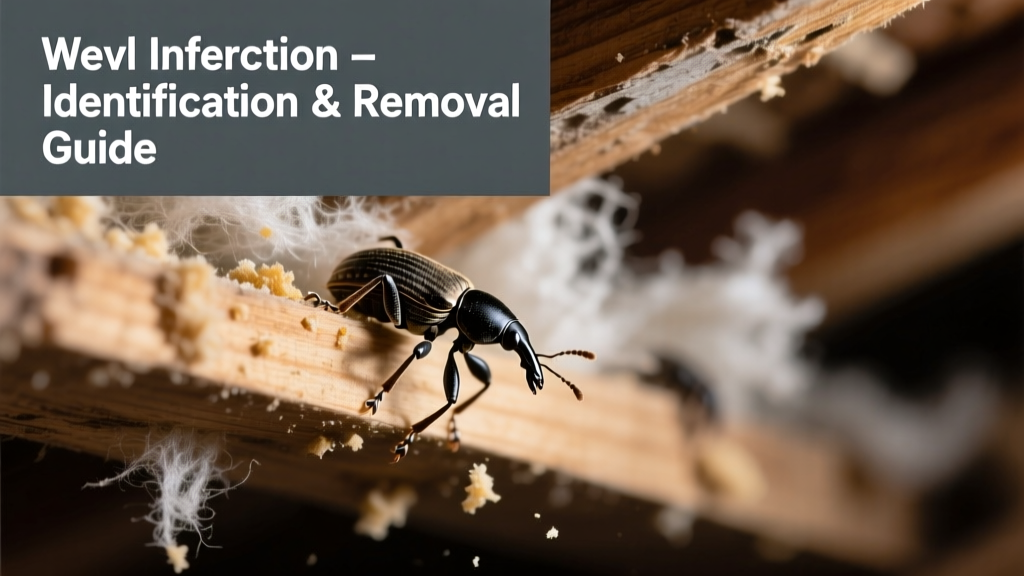
Weevils in the attic aren’t just a nuisance—they’re a red flag for stored food contamination, moisture issues, or entry points from outside. Unlike pantry weevils that stay near kitchens, attic-dwelling species like granary weevils (Sitophilus granarius) or rice weevils (Sitophilus oryzae) often hitchhike in infested grain bags, birdseed, or dried pet food stored overhead—and then multiply unseen in insulation, rafters, or cardboard boxes.
Identification
Weevils are small (1–5 mm), dark brown to black beetles with elongated snouts and bent antennae. They don’t fly, but they crawl persistently—especially at night—and leave behind tiny holes in packaging or grain kernels. In attics, you’ll rarely see adults during daylight; instead, look for evidence: fine dust-like frass (insect excrement), shed larval skins, or clusters of pinhead-sized white eggs tucked into seams of cardboard or burlap sacks.
| Feature | Granary Weevil | Rice Weevil | Attic-Associated Confuser (Drugstore Beetle) |
|---|---|---|---|
| Size | 2.5–5 mm | 2–3.5 mm | 2–3 mm |
| Wings | Present but nonfunctional | Functional—can fly short distances | Functional—strong flier |
| Preferred Habitat | Dry stored grains, no moisture needed | Warmer, slightly humid grain stores | Books, wool, dried herbs, insulation glue |
| Snout Length | Long, curved, rigid | Shorter, more flexible | Very short—often mistaken for a beetle without one |
What Attracts Them
Weevils don’t seek out attics for shelter alone—they follow food. Over 78% of attic weevil infestations traced by the National Pest Management Association (NPMA, 2022) involved improperly sealed birdseed, bulk pet food, or forgotten holiday baking supplies stored in cardboard or paper bags. Other attractants include:
- Cardboard boxes left unsealed for >48 hours near eaves or soffits
- Insulation contaminated with rodent droppings or nesting material
- Roof leaks creating localized humidity pockets (>60% RH) that mimic grain-storage conditions
- Unscreened attic vents or gaps around plumbing stacks (≥1/8” wide)
Treatment Methods
Natural Methods
Start with physical removal and environmental controls. Vacuum all visible adults and larvae using a HEPA-filter vacuum—dispose of the bag immediately outdoors. Then deep-freeze suspect items at 0°F for 72+ hours (kills all life stages). For large-scale infestations in insulation, remove and replace affected batts—don’t attempt to “treat” fiberglass with sprays.
- Diatomaceous earth (food-grade): apply 1/8” layer along baseboards, joist ends, and vent perimeters
- Cedar oil spray (0.5% solution): mist on wood surfaces—not for use on insulation or electrical components
- Bay leaves: place whole leaves inside sealed containers of stored goods (not effective in open attic spaces)
Chemical Methods
Only consider labeled insecticides if natural methods fail after two weeks—and never spray directly onto insulation or HVAC ducts. The U.S. EPA restricts most residual sprays in attics due to off-gassing risks; approved options include pyrethrin-based aerosols (e.g., CB-80) for spot treatment of joists and framing. Always wear N95 + goggles, and vacate the home for 4 hours post-application.
"Weevils in attics almost always originate from *stored product*, not structural wood. If you haven’t found the source container within 72 hours, assume it’s still hidden—check behind knee walls, under plywood subfloors, and inside HVAC access panels." — Dr. Lena Cho, Entomologist, NPMA Technical Advisory Board, 2023
Prevention
Prevention hinges on three pillars: exclusion, sanitation, and monitoring. Seal all attic entry points larger than 1/8” with copper mesh + caulk—not steel wool, which weevils can chew through. Store *all* organic materials—including holiday decorations with dried flowers—in hard-sided plastic bins with gasketed lids (e.g., IRIS Weathertight series). Install LED motion-sensor lights in attic corners—adult weevils avoid bright light and will relocate before breeding.
- Inspect new storage items (birdseed, pet food, craft supplies) under magnification before bringing them upstairs
- Replace paper-based insulation vapor barriers with polyethylene sheeting (6-mil minimum)
- Use pheromone traps (e.g., Scentry Weevil Lure) every 200 sq ft—replace monthly
When to Call an Exterminator
Call a licensed pest professional if you find live weevils in >3 separate locations across the attic, or if frass appears embedded in insulation fibers (indicating multi-generational presence). Also call if you’ve confirmed entry via roof vents but lack safe ladder access—attic work above 10 ft requires fall protection per OSHA standards. Most reputable firms offer free attic inspections; ask if they use thermal imaging to locate hidden nests in wall cavities.
Can weevils damage my roof structure?
No. Weevils feed exclusively on plant-based materials—grains, seeds, nuts, dried beans—not wood, drywall, or wiring. Any structural damage is coincidental and likely caused by rodents or moisture rot.
Do weevils come from the attic into living spaces?
Yes—but rarely by choice. They migrate downward when food runs out or humidity drops. You’ll first notice them on kitchen counters or pantry shelves 3–10 days after attic activity peaks. That’s why pantry weevils and attic infestations are often two phases of the same problem.
Will attic fans help reduce weevils?
Only if they lower relative humidity below 50%. Standard attic fans often pull warm, moist air *up* from living spaces—making conditions worse. Use a hygrometer to confirm RH stays under 50% before relying on ventilation.
Are weevils harmful to pets or children?
No known toxicity, but ingestion of infested food carries risk of gastrointestinal upset. Never feed pets food that’s been stored in the attic—even if unopened. For safety, review our guide on safe pest control for pets.
How long does a weevil lifecycle take in attic conditions?
At 72°F and 55% RH, granary weevils complete development from egg to adult in 28–35 days. Cooler temps (e.g., winter attic zones near soffits) extend this to 60+ days—meaning infestations can linger undetected through seasonal shifts.
Can I use foggers in the attic?
No. Total-release foggers (bug bombs) are ineffective against weevils hiding in crevices or packaging—and pose fire risk near insulation, wiring, or stored fuels. The EPA banned most attic-use foggers in residential settings after 2021 incident reports (EPA Pesticide Registration Review, 2022).
If you’ve removed all infested materials, sealed entry points, and monitored with traps for 21 days with zero captures, your attic is likely clear. Keep a log: date, location, and count of any weevils found—it helps spot recurrence before it spreads. For persistent cases, cross-check with our rodent-proof attic checklist, since mice often introduce weevil-contaminated nesting debris.