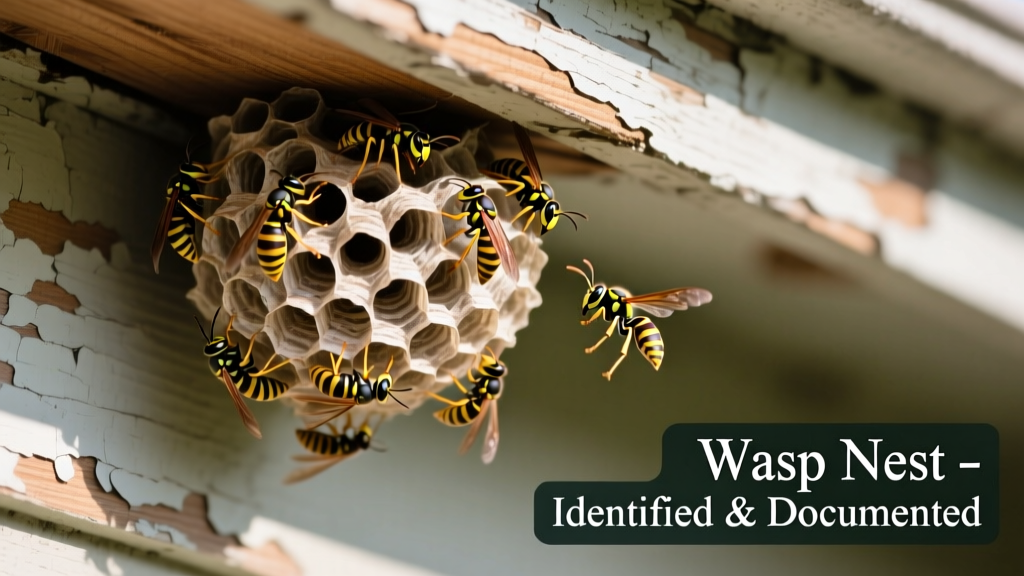
Wasps nesting under your home’s eaves are more than a seasonal nuisance—they’re a safety hazard and potential structural threat. Unlike solitary wasps, social species like paper wasps, yellow jackets, and bald-faced hornets build layered, papery nests in sheltered overhead spaces, often within inches of entryways or windows. A single nest can house 100–500 adults by late summer, and they’ll aggressively defend it when disturbed.
Identification
Not all flying insects under eaves are the same pest. Correct ID prevents misdirected treatment—and dangerous mistakes. Paper wasps (Polistes spp.) build open, umbrella-shaped nests with visible hexagonal cells. Yellow jackets (Vespula spp.) prefer wall voids or attic access points but sometimes start nests under eaves before moving inward; their nests are fully enclosed, football-shaped, and made of chewed wood pulp. Bald-faced hornets (Dolichovespula maculata) construct large, gray, teardrop-shaped nests—often exceeding 14 inches tall—with a single downward-facing entrance.
| Species | Nest Shape & Location | Color Pattern | Aggression Level |
|---|---|---|---|
| Paper Wasp | Open, single comb; hangs from eave underside | Brownish-red body, long legs, yellow markings | Moderate; stings only if nest is touched |
| Yellow Jacket | Enclosed, multi-layered; often hidden behind soffit vents | Black-and-yellow banded abdomen, compact body | High; swarms readily when disturbed |
| Bald-Faced Hornet | Large, smooth gray envelope; suspended from rafters or beams | Black body with white face and thorax markings | Very high; defends 10+ feet radius |
Look for consistent flight paths at dawn or dusk—wasps returning to the same spot signal an active nest. You may also hear a low buzzing sound from inside soffits or find chewed wood debris beneath the eave.
What Attracts Them
Eaves offer ideal conditions: shelter from rain and wind, shade from direct sun, and proximity to food sources. Wasps are drawn to homes with accessible carpenter bee holes (which they repurpose), loose fascia boards, or gaps around roof vents. They also seek protein and sugar—so uncovered trash, pet food left outdoors, and flowering shrubs near foundations increase risk.
- Unsealed soffit vents or rotted wood along the eave line
- Outdoor lighting that attracts nocturnal insects (a food source)
- Standing water in gutters or clogged downspouts (used for nest pulp)
- Overhanging tree branches touching the roofline (bridges for access)
According to the National Pest Management Association’s 2022 Field Survey, 68% of reported wasp infestations in residential settings began under eaves or in attic soffits—making this the most common nesting zone for social wasps in temperate U.S. climates.
Treatment Methods
Natural Options
For small, newly built paper wasp nests (under 6 inches wide and with fewer than 20 wasps), natural deterrents can work—if applied at night when activity is lowest. Mix 1 tablespoon of peppermint oil with 1 cup of water and spray directly on the nest entrance using a long-reach sprayer. Wasps dislike the scent and often abandon the site within 48 hours. Alternatively, hang fake wasp nests—commercially available or DIY using brown paper bags—to trigger territorial avoidance behavior.
- Peppermint oil spray (reapply every 3 days for 2 weeks)
- Fake nests hung at least 10 feet from actual nest location
- Vacuum removal using a shop vac with a 10-foot hose and nylon stocking over the intake (for daytime, low-risk nests)
Chemical Treatments
For yellow jacket or hornet nests—or any colony larger than softball size—targeted insecticides are safer than physical removal. Use a dust formulation like deltamethrin (e.g., DeltaDust) applied with a hand duster at dusk through the nest’s primary entrance. Dust clings to wasps’ bodies and spreads throughout the colony. Liquid sprays like cyfluthrin (Bayer Advanced Carpenter Bee Killer) work well for exposed paper wasp nests but require full PPE and should never be used near open flames or electrical fixtures.
"Dusting the entrance at night is 90% effective for yellow jackets—but only if you hit the main tunnel. One missed opening means reinfestation within 72 hours." — Dr. Elena Ruiz, Entomologist, University of Florida IFAS Extension, 2023
Prevention
Sealing entry points is the most reliable long-term strategy. Inspect eaves annually in early spring before queens begin nesting. Replace damaged soffit panels, caulk gaps around fascia boards, and install 1/8-inch stainless steel mesh behind vent covers. Trim tree limbs at least 3 feet from rooflines, and keep outdoor eating areas clean—especially during July–September, peak wasp season.
- Install motion-sensor LED lights instead of mercury-vapor bulbs (reduces insect attraction)
- Apply almond oil-based repellent to eave undersides each April (deters queen scouting)
- Keep firewood piles at least 20 feet from the house (eliminates nesting substrate)
When to Call an Exterminator
Call a licensed pest control professional if the nest is inside a wall void, exceeds 8 inches in diameter, or is located near HVAC intakes or electrical conduits. Also contact one immediately if anyone in your household has a known wasp allergy—even a small nest poses life-threatening risk. Licensed technicians carry EPA-approved aerosols with extended reach nozzles and protective gear rated for multiple stings.
For local help, see our list of certified wasp specialists, or read about how to tell carpenter bees from wasps—a common point of confusion that leads to unnecessary treatments.
Can I remove a wasp nest myself?
Yes—if it’s a small, exposed paper wasp nest and you’re not allergic. Wear thick gloves, veil, and long sleeves. Work at night with a red-filtered flashlight (wasps can’t see red light). Never use water hoses or power washers—this triggers mass defensive flight. For anything else, skip DIY and call a pro.
Do wasps return to the same nest year after year?
No. Wasps don’t reuse old nests—the colony dies off in winter except for fertilized queens, which overwinter in bark crevices or attics and start new nests elsewhere in spring. However, if entry points remain unsealed, new queens may select the same favorable eave location.
Are wasps beneficial?
Yes—in gardens and orchards. Paper wasps prey on caterpillars and beetle larvae, and yellow jackets scavenge fly maggots and fallen fruit pests. Their ecological role is valuable—but not when nests form within 10 feet of doors or play areas.
How long does a wasp nest last?
Most colonies peak in August and decline rapidly after the first hard frost. By late October, only mated queens survive to hibernate. Nests become inactive and brittle, but should still be removed to prevent mold, secondary pests (like carpet beetles), or accidental contact.
Will vinegar or dish soap kill wasps?
A 50/50 vinegar-water spray may deter foraging wasps temporarily but won’t eliminate a nest. Dish soap solutions (1 tsp Dawn + 2 cups water) disrupt wasps’ exoskeletons on contact—but require direct, sustained spraying, making them impractical and unsafe for elevated nests. These methods lack residual effect and pose higher human risk than targeted dusts.
What time of day is safest to treat a wasp nest?
Dusk or just before sunrise—when temperatures drop below 50°F and wasps are sluggish and inside the nest. Avoid midday heat, when wasps are most active and defensive. Always check local weather forecasts: rain or high winds increase drift risk with chemical applications.
Once the nest is gone, monitor the area for two weeks. If you see continued activity, there may be a secondary nest nearby—or the original wasn’t fully treated. Keep eaves clear, stay alert during spring scouting season, and remember: early action prevents escalation. For ongoing support, explore our seasonal pest calendar to time inspections right.