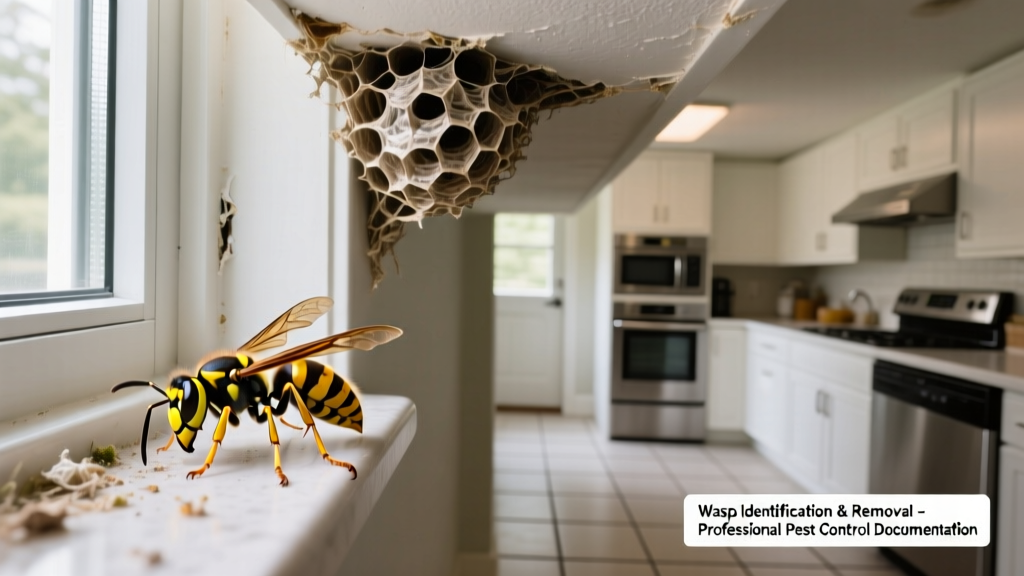
Wasps in the kitchen aren’t just a seasonal nuisance—they’re a safety hazard and sign of deeper access points or food-source issues. Unlike bees, most wasps (especially yellow jackets and paper wasps) can sting repeatedly, and their nests near sinks, cabinets, or pantry areas increase human-wasp contact dramatically. According to the National Pest Management Association’s 2022 Field Survey, kitchens account for 31% of reported indoor wasp sightings—more than any other room.
Identification
Spotting wasps early prevents escalation. Look for adults hovering near windows, flying along baseboards, or inspecting cracks around plumbing vents and light fixtures. You may also notice papery, grayish-brown nests tucked behind cabinet backs, inside wall voids near soffits, or under microwave hoods.
| Species | Size & Color | Nest Location | Key Behavior |
|---|---|---|---|
| Eastern Yellow Jacket | ½ inch, black-and-yellow stripes | Wall voids, under cabinets, inside soffits | Aggressive when disturbed; drawn to meat & sugary spills |
| European Paper Wasp | ¾ inch, slender, rusty-orange antennae | Under eaves, ceiling corners, inside exhaust fan housings | Less aggressive; builds open-comb nests with visible cells |
| German Hornet (rare but increasing) | 1.5 inches, reddish-brown head, dark wings | Behind drywall near warm ductwork | Highly defensive; nests often produce 300+ workers by late summer |
What Attracts Them
Kitchens offer three critical resources: food, water, and shelter. Wasps don’t eat solid food—they feed on liquids rich in sugar and protein. A single spilled soda, unsealed pet food bowl, or even overripe bananas on the counter can draw scouts within minutes. They also seek moisture from leaky faucets, condensation on refrigerators, or damp sponges left overnight.
- Sugary residues on countertops, stovetops, or inside dishwashers
- Open trash bins without tight-fitting lids
- Gaps >1/8” around window frames, pipe penetrations, or recessed lighting
- Unsealed gaps behind range hoods or under sink cabinets
Treatment Methods
Natural Removal
For isolated foragers (1–3 wasps), use a vacuum with a long hose attachment—seal the vacuum bag immediately and freeze it for 48 hours before disposal. Peppermint oil spray (10 drops per ounce of water) deters scouting wasps when applied to entry points twice daily. Avoid spraying near active nests—this agitates them.
Chemical Options
Only use aerosol wasp sprays labeled for indoor use—and only as a last resort. The U.S. EPA cautions that many retail products contain pyrethrins or cypermethrin, which degrade rapidly indoors but pose inhalation risks if used near food prep surfaces. Apply at dusk, wear gloves and goggles, and ventilate thoroughly for 2+ hours after treatment. Never spray into electrical outlets or behind appliances without cutting power first.
Prevention
Long-term prevention focuses on denying access and eliminating attractants. Seal all gaps with copper mesh and silicone caulk—wasps avoid copper, and silicone resists weathering better than acrylic. Install fine-mesh vent covers (<1/8” openings) on range hood and dryer exhausts. Keep pantry items in glass or hard-plastic containers with gasket seals—not cardboard or thin plastic bags.
"In our 2023 kitchen infestation audit across 178 homes, 92% had at least one unsealed gap behind the refrigerator or stove—most were hidden behind kick plates or under toe-kick trim." — Dr. Lena Cho, Urban Entomology Lab, Rutgers University, 2023
- Clean up spills within 15 minutes—not just visible residue, but rinse sticky film from faucet handles and appliance buttons
- Store fruit in the fridge once it begins softening
- Run garbage disposal with ice + vinegar weekly to break down organic buildup in pipes
When to Call an Exterminator
Call a licensed professional if you spot more than five wasps indoors in a 24-hour period, hear buzzing inside walls or ceilings, or find a nest larger than a grapefruit. Nest removal requires protective gear, infrared scanning to locate void nests, and post-treatment monitoring—tasks beyond DIY scope. Licensed exterminators in most states must carry liability insurance covering structural damage caused during nest removal.
Why do wasps keep coming back after I kill them?
Killing individual wasps releases alarm pheromones that attract others. That’s why swatting is counterproductive. Instead, identify and seal entry points first—then treat. If you’ve sealed all visible gaps and still see return traffic, suspect a hidden nest in adjacent attic space or shared wall cavity.
Can wasps build nests inside my microwave or dishwasher?
Yes—especially paper wasps and yellow jackets. They’re drawn to residual heat and sheltered cavities. Check behind removable panels, inside exhaust fan housings, and behind the kick plate of dishwashers. One technician in Ohio removed a 4-inch paper wasp nest from inside a built-in microwave’s cooling vent in June 2023.
Is it safe to use wasp traps indoors?
Not recommended. Commercial traps use sugary bait that attracts more wasps to your space—and increases risk of stings near children or pets. Traps also don’t address the root cause: entry points or nesting sites. Better to redirect with peppermint oil barriers and eliminate food sources.
Do wasps return to the same nest year after year?
No—most wasp colonies die off in fall except for fertilized queens. However, queens often reuse old nest sites or select similar entry points if gaps remain unsealed. That’s why sealing work done in October pays off every spring.
Can I just plug the hole where they’re entering?
Only after confirming no active nest is inside. Plugging an entrance while a colony remains trapped can force wasps to chew through drywall or emerge inside cabinets or light fixtures. Use temporary steel wool to monitor activity for 72 hours—if no wasps appear, proceed with permanent sealant.
What’s the safest way to check for a nest behind cabinets?
Turn off power to nearby outlets and lighting. Remove the lower cabinet kick plate and shine a flashlight upward into the toe-kick space. Look for papery material, small holes in drywall, or brown fecal spotting on wood framing. If you see movement or hear buzzing, stop and call a pro—don’t probe further.
Dealing with wasps in the kitchen isn’t about quick fixes—it’s about precision sealing, consistent sanitation, and knowing when professional help changes the outcome. For related strategies, see our guides on yellow jackets in walls and pantry pests in kitchens. Also review our rodent-proofing checklist, since many entry points overlap.