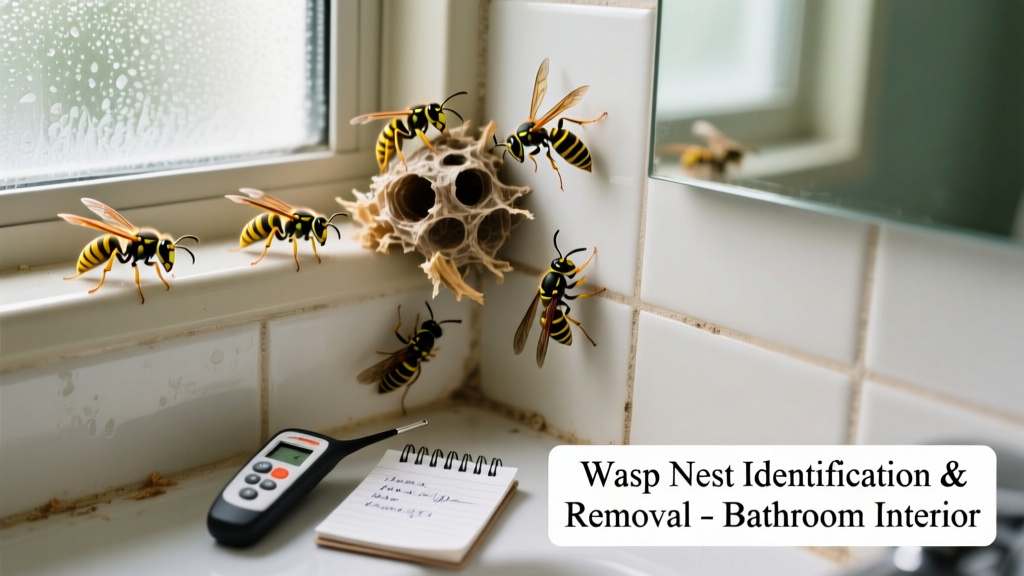
Wasps in the bathroom aren’t just a seasonal nuisance—they’re a sign of an active nest nearby, often hidden behind tiles, inside exhaust fan housings, or within wall voids. Unlike occasional flies or moths, wasps are territorial, aggressive when disturbed, and capable of stinging multiple times. Their presence indoors—especially in moisture-rich, warm spaces like bathrooms—indicates they’ve found shelter, entry points, and possibly nesting material.
Identification
Spotting wasps early prevents escalation. Common species include yellow jackets (often mistaken for bees), paper wasps (slender, long-legged, brownish with yellow markings), and occasionally European hornets (larger, reddish-brown). In bathrooms, you’ll typically see them flying near vents, hovering near ceiling corners, or crawling along grout lines.
| Species | Size & Color | Nesting Behavior | Bathroom Clue |
|---|---|---|---|
| Paper Wasp | 0.7–1 inch; brown/yellow stripes, narrow waist | Open, umbrella-shaped nests under eaves or inside soffits—sometimes behind bathroom exhaust covers | Single wasps inspecting ceiling corners; no visible nest but repeated sightings near vent grille |
| Yellow Jacket | 0.5–0.6 inch; bright yellow/black, compact body | Builds concealed nests in wall voids, attics, or crawlspaces—can enter via plumbing chases or gaps around pipes | Sudden swarm near floor drain or behind vanity; buzzing from inside walls after shower use |
| Hornet | 1–1.5 inches; reddish-brown head, darker abdomen | Large aerial nests—but may nest in wall voids if entry is accessible | Deep, low-frequency buzzing near light fixtures or recessed ceiling cans |
- Look for small, pencil-sized entry holes near caulk lines, exhaust fan housings, or where pipes meet walls
- Check for chewed wood pulp near baseboards—wasps gather cellulose to build nests
- Listen at night with a stethoscope or glass against walls—nest activity peaks during daytime but can be heard faintly after dark
What Attracts Them
Bathrooms offer three key draws: warmth, moisture, and shelter. Exhaust fans pull warm, humid air—and sometimes pheromones from prior wasp activity—creating thermal updrafts that mimic ideal nesting conditions. Cracks around plumbing penetrations (especially near tub/shower drains) provide access from attics or soffits. Older homes with deteriorated caulk, missing vent screens, or unsealed pipe boots are especially vulnerable.
According to the National Pest Management Association’s 2022 Structural Pest Survey, 37% of indoor wasp reports involved bathrooms or adjacent utility closets—more than kitchens or garages combined. Moisture damage also softens drywall and framing, making it easier for wasps to chew through and expand nest space.
Treatment Methods
Natural Methods
For isolated, non-aggressive wasps or very small nests (under 10 cells), natural options reduce risk before escalation. A vacuum cleaner with a nylon stocking secured over the hose end traps live wasps without crushing them—critical to avoid releasing alarm pheromones. Peppermint oil spray (10 drops per ounce of water) deters scouts when applied to entry points twice daily for five days. Smoke from a smoldering bundle of dried sage or rosemary, held near vent openings for 90 seconds, disrupts orientation—but only works on exposed, shallow nests.
- Never spray aerosol wasp killers directly into vents—chemicals can pool in ductwork and off-gas later
- Avoid using citrus-based cleaners near suspected entry points—limonene attracts some wasp species
- Wait until dusk to treat: most foragers return to the nest, increasing effectiveness
Chemical Methods
For nests deeper than 2 feet inside walls or behind tile, dust insecticides (like deltamethrin or cyfluthrin labeled for wasps) are more effective than sprays. Apply using a hand duster through a 1/4-inch drilled access hole near the nest location—then seal with steel wool and caulk. Residual liquid sprays (e.g., lambda-cyhalothrin) work well on exterior entry points but must be applied by licensed applicators if used within 3 feet of operable windows or doors per U.S. EPA Label 2021-087.
"Dusting is the gold standard for void nests—but skip the flashlight. Use a fiber-optic borescope first. One misplaced beam can trigger mass emergence." — Dr. Lena Cho, Entomologist, University of Florida IFAS Extension (2023)
Prevention
Sealing is 80% of prevention. Replace brittle caulk around tubs, sinks, and exhaust fans with silicone-acrylic hybrid sealant rated for high-moisture areas. Install aluminum mesh vent covers (minimum 1/8-inch aperture) behind all bathroom exhaust grilles—wasps cannot chew through this grade. Run exhaust fans for 20 minutes post-shower to reduce humidity buildup that mimics outdoor nesting microclimates.
Inspect attic access points above bathrooms annually: look for frass (fine sawdust), mud dauber mud patches, or chewed insulation near plumbing stacks. Repair gaps larger than 1/16 inch with expanding foam followed by metal flashing.
When to Call an Exterminator
Call immediately if you hear persistent buzzing inside walls for more than 48 hours, see >5 wasps daily over three consecutive days, or notice swelling in drywall or ceiling texture—these indicate a mature nest (often 200–800 individuals). Also call if anyone in the household has a known wasp allergy, or if the nest is located within 3 feet of electrical junction boxes or gas lines. Most reputable services offer same-day inspection and same-day treatment for bathroom-accessible nests.
Why do wasps keep returning to my bathroom after I killed one?
Killing a wasp releases alarm pheromones that attract others—even hours later. That single wasp may have been scouting for a new nest site. If you’ve seen more than two within 48 hours, assume a nest exists within 10 feet of your home’s exterior—check soffits, fascia boards, or roof vents.
Can wasps nest inside bathroom exhaust ducts?
Yes—especially flexible foil ducts with kinks or disconnected sections. Wasps exploit stagnant air pockets and chew insulation to build papery combs. A duct camera inspection (available at hardware stores for $60–$90) confirms presence before disassembly.
Is it safe to use wasp spray in a bathroom with poor ventilation?
No. Most aerosol wasp sprays contain petroleum distillates that displace oxygen and irritate mucous membranes. In confined, poorly ventilated bathrooms, exposure can cause dizziness or respiratory distress. Always open windows, run fans, and vacate for 2+ hours post-application.
How do I know if the nest is behind my bathroom mirror?
Gently tap the wall around the mirror frame with a plastic handle—if it sounds hollow *and* you hear a faint rustling or increased buzzing, there’s likely a void nest. Do not drill or pry—contact a professional. Mirror backing often hides wiring, and pressure can crack tempered glass.
Will sealing the bathroom vent stop wasps permanently?
Only if done correctly. Standard plastic vent covers fail within 18 months due to UV degradation. Use stainless steel or aluminum covers rated for pest exclusion (look for ASTM E2112-22 certification). Pair with back-damming caulk and inspect annually—wasps test seams with antennae and exploit even hairline cracks.
Can wasps damage bathroom drywall or tile?
Yes—but indirectly. Nest-building requires cellulose, which wasps extract by chewing drywall paper and joint compound. Over time, this weakens substrate integrity and creates pathways for moisture migration. In one documented case in Portland (Oregon Department of Agriculture, 2021), a paper wasp colony behind a shower tile caused 3 sq ft of tile detachment due to substrate erosion.
Once the nest is gone and entry points sealed, monitor for 14 days using sticky traps near vents and windows. If no wasps appear, your fix worked. If activity resumes, retrace airflow paths—bathroom vents often share chaseways with laundry rooms or HVAC returns. For long-term peace of mind, consider scheduling a comprehensive attic pest inspection and pairing it with a bathroom exhaust sealing guide. And remember: never ignore a single wasp in your bathroom—it’s rarely alone.