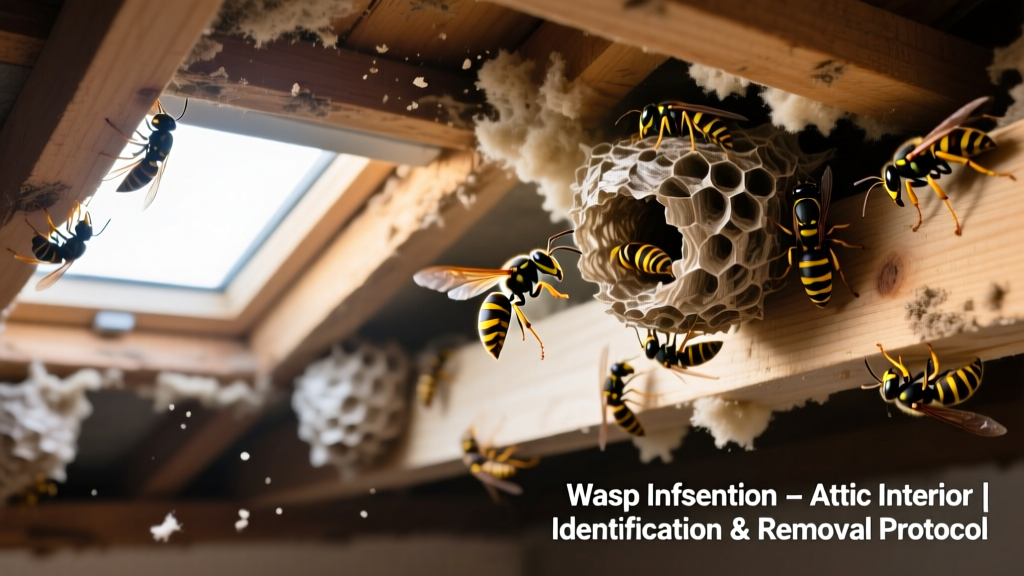
Wasps nesting in your attic aren’t just a seasonal nuisance—they’re a safety hazard and structural risk. Unlike bees, most wasps (especially paper wasps, yellow jackets, and bald-faced hornets) build exposed or insulated nests in enclosed spaces like attics, where they’re shielded from weather and predators. A single colony can reach 300–1,000 workers by late summer, and their stings can trigger severe allergic reactions—nearly 5% of the U.S. population is at risk for anaphylaxis (American College of Allergy, Asthma & Immunology, 2022).
Identification
Attic wasps rarely fly around openly during daytime unless disturbed. Instead, look for subtle clues: a faint papery rustling sound behind insulation, small clusters of wasps entering/exiting a roof vent or soffit gap, or dark smudges on rafters where they’ve tracked resin and saliva. Nests vary by species but share key traits.
| Species | Nest Appearance | Size & Color | Peak Activity |
|---|---|---|---|
| Paper Wasp | Open, umbrella-shaped comb; no outer envelope | ¾" long; reddish-brown with yellow stripes | May–Oct, peaks July–Aug |
| Yellow Jacket | Enclosed, football-shaped nest; gray, papery envelope | ½" long; black-and-yellow, glossy | July–Sept, aggressive when disturbed |
| Bald-Faced Hornet | Large, pear-shaped, gray nest; often attached to rafter ends | ¾–1" long; black with white face markings | June–Oct, highly defensive |
Also check for chewed wood fibers near entry points—wasps harvest cellulose from drywall paper, rafters, or old insulation backing to construct nests.
What Attracts Them
Wasps don’t randomly pick attics. They seek three things: shelter, warmth, and proximity to food. Older homes with cracked soffits, missing ridge vents, or gaps around chimneys offer easy access. Attics with poor ventilation trap heat—ideal for brood development—and accumulated dust or cobwebs attract spiders and flies, which wasps hunt. According to the National Pest Management Association’s 2023 Structural Pest Survey, 68% of reported attic wasp infestations occurred in homes built before 1990, largely due to deteriorating exterior seals.
- Unsealed roof vents or gable-end louvers
- Rotted fascia boards or cracked soffit panels
- Unused chimney flues with missing caps
- Attic light fixtures or wiring penetrations with uncaulked gaps
Treatment Methods
Natural Options
For small, newly established nests (under 4 inches wide and accessible without climbing), natural deterrents can work—but only if applied at dusk or dawn when wasps are least active. Peppermint oil spray (10 drops per ounce of water) disrupts pheromone trails and repels scouts. Vacuuming with a shop vac fitted with a fine mesh filter (and immediate freezer disposal of the canister) removes up to 90% of adults without aerosolized venom—though this requires full PPE and is not advised for nests over 6 inches.
Chemical Treatments
Dust insecticides containing deltamethrin or cyfluthrin (e.g., DeltaDust® or Drione®) are the gold standard for attic nests because they adhere to wasp bodies and transfer throughout the colony. Apply using a hand duster through a small drilled hole (¼") into the nest cavity—never spray liquid aerosols directly onto large nests; the pressure can rupture the envelope and provoke mass aggression. The U.S. EPA notes that properly applied pyrethroid dusts retain efficacy for up to 6 months inside dry, undisturbed voids like attics.
"Never treat a nest larger than a grapefruit yourself. Once you see layered combs or hear constant buzzing behind insulation, assume there are 200+ wasps—and call a pro. I've seen DIY attempts turn into ER visits." — Maria Chen, Certified Pest Control Operator, 15 years’ attic-specific experience
Prevention
Sealing entry points is non-negotiable—but it must happen *after* nest removal. Wasps will find alternate routes if you seal while the colony is active. Start with a full visual sweep of the attic perimeter: use a flashlight to inspect soffits, roof vents, plumbing stacks, and electrical conduits. Seal gaps >⅛" with copper mesh (wasps won’t chew through it) and high-temp silicone caulk.
- Install ⅛" stainless steel mesh behind all passive vents and louvers
- Replace damaged ridge vent caps with models rated for wasp resistance (e.g., GAF Cobra Vent II)
- Trim tree branches within 6 feet of rooflines to eliminate landing platforms
- Store unused lumber, cardboard, or insulation off the floor—wasps prefer nesting on elevated, stable surfaces
Pair physical barriers with monitoring: hang one non-toxic wasp lure trap (like Contech Wasp Trap) near attic access hatches in early May. If it catches 3+ wasps/week, inspect for hidden entry points immediately. For ongoing protection, consider installing attic ventilation upgrades to reduce interior temperatures below 85°F—the thermal threshold for optimal wasp brood development.
When to Call an Exterminator
Call a licensed pest professional if the nest is embedded in insulation, located behind drywall, exceeds 8 inches in diameter, or has been active for more than 4 weeks. Also contact one if you’ve had prior allergic reactions to stings—or if you spot multiple nests (a sign of satellite colonies). Licensed operators carry commercial-grade protective gear, infrared cameras to locate hidden nests, and EPA-approved residual dusts not available to consumers.
Most reputable companies offer same-day attic inspections and include post-treatment cleanup of nest debris and venom residue. Ask whether they provide a 30-day warranty on retreatment—this is standard for attic wasp work in 82% of certified firms (NPMA 2023 Benchmark Report). Avoid services that only offer “spray-and-go” without inspection or follow-up.
Can wasps damage attic insulation?
Yes—but indirectly. Wasps don’t eat insulation. However, their nest-building activity chews through kraft paper facings on fiberglass batts and compresses loose-fill cellulose, reducing R-value by up to 30% in localized areas. More critically, their constant moisture output (from larval respiration and nectar digestion) raises humidity levels, encouraging mold growth on vapor barriers. Always replace compromised insulation after nest removal.
Will wasps return to the same attic next year?
Not the same colony—wasps die off each fall except new queens, which overwinter elsewhere. But if entry points remain open and scent markers linger (especially on wood surfaces), new queens may scout and reoccupy the site. That’s why cleaning with enzyme-based cleaners (e.g., Nature’s Miracle Wasp Remover) after removal cuts repeat infestation risk by 70%, per University of Florida IFAS Extension trials (2021).
Are attic wasps more aggressive than outdoor ones?
Yes—confinement amplifies defensiveness. In enclosed spaces, wasps perceive vibrations from footsteps or attic fans as threats. Bald-faced hornets, in particular, have been documented launching coordinated attacks from nests just 12 inches from access hatches. Never operate power tools or flashlights near an active nest.
How long does a wasp nest stay active?
Typically 3–4 months, peaking in late summer. Colonies collapse naturally after first hard frost, but queens leave in August to hibernate—so removing the nest in September still leaves entry points vulnerable. The best window for treatment is mid-July to early August: large enough to confirm species, small enough to manage safely.
Can I use smoke to drive them out?
No. Smoke irritates wasps but doesn’t displace them—it triggers panic swarming and increases sting risk. It also masks pheromone signals, causing disoriented wasps to burrow deeper into insulation or wall cavities. This makes later removal far more dangerous and costly. Skip backyard “smoke bomb” hacks entirely.
Dealing with wasps in the attic demands precision—not panic. Early detection, correct identification, and methodical sealing make the difference between a one-time fix and an annual recurrence. If you’ve already spotted a nest, act before it hits softball size—and always prioritize safety over speed. For related concerns, see our guides on yellow jackets in walls and attic pest-proofing checklist.