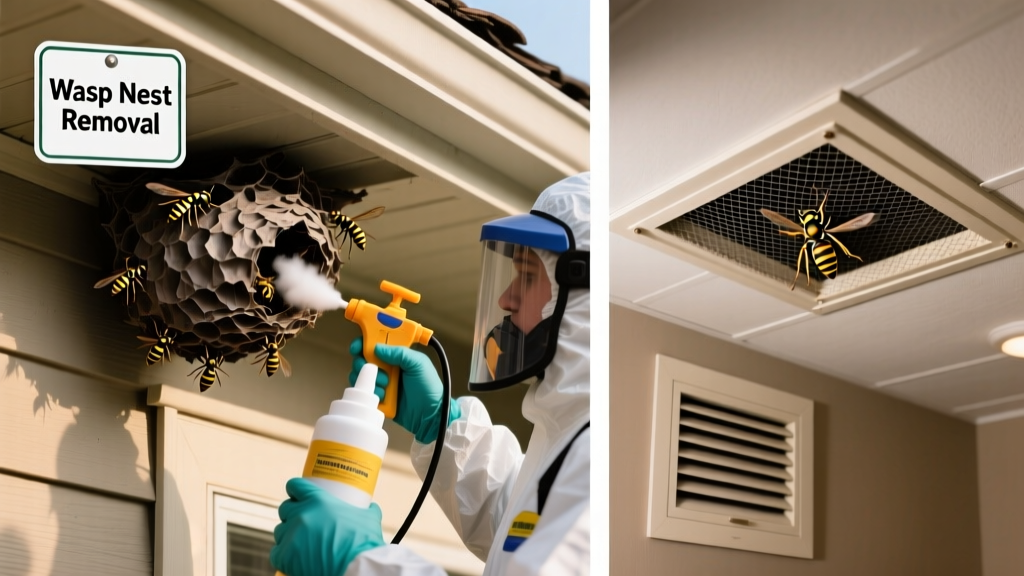
Wasps are stinging insects that build papery nests in eaves, attics, sheds, and wall voids. Unlike bees, most wasps are aggressive defenders of their nests—and a single colony can grow to 10,000 workers by late summer (University of Florida IFAS Extension, 2022). Their venom causes painful stings, and repeated exposure raises allergy risks.
Identification
Look for smooth, slender bodies with narrow waists, often black-and-yellow or reddish-brown. Common species in North America include the eastern yellowjacket (Vespula maculifrons), bald-faced hornet (Dolichovespula maculata), and paper wasp (Polistes dominula). Nests vary: aerial, open-comb nests hang from branches or porch ceilings; yellowjacket nests are often hidden underground or in wall cavities.
| Feature | Wasps | Honey Bees | Yellowjackets |
|---|---|---|---|
| Body texture | Smooth, shiny | Fuzzy, hairy | Smooth, glossy |
| Nest location | Aerial or sheltered cavities | Hollow trees, hives | Underground, wall voids, attics |
| Behavior near nest | Aggressive when disturbed | Defensive only if hive is threatened | Highly aggressive, especially late summer |
| Diet preference | Protein (insects) + nectar | Pollen + nectar | Sugary foods, meats, garbage |
Signs of an infestation include constant buzzing near soffits or siding, wasps flying in straight lines to a small entry point, or spotting multiple wasps near windows or doors during warm months.
What Attracts Them
Wasps seek shelter, food, and water. They’re drawn to uncovered trash, sugary drinks, fallen fruit, pet food left outdoors, and standing water in clogged gutters or birdbaths. Leaky faucets and damp wood also invite nesting—especially in roof overhangs and deck joists.
- Overripe fruit on patios or under trees
- Uncleaned grill grease traps
- Gaps larger than 1/8″ around windows, vents, or fascia boards
- Old bird nests in eaves (wasps often take them over)
Treatment Methods
Natural Options
For small, accessible nests (less than golf-ball size and low to the ground), try these non-toxic approaches at dusk or dawn when wasps are least active:
- Soapy water spray: Mix 2 tbsp liquid dish soap + 1 quart warm water in a spray bottle. Saturate the nest entrance—soap disrupts their exoskeletons.
- Peppermint oil deterrent: Combine 10 drops peppermint oil + 1 cup water + 1 tsp dish soap. Spray around door frames and window sills weekly.
- Wasp traps: Hang commercial or DIY vinegar-sugar-water traps away from high-traffic areas to reduce foragers.
According to the National Pest Management Association’s 2023 Field Manual, natural methods work best on nests with fewer than 50 adults—and must be repeated for 3–5 days to break the colony cycle.
Chemical Treatments
For larger nests or those in hard-to-reach places, use pyrethroid-based dusts (like deltamethrin) or aerosol wasp & hornet sprays labeled for structural use. Always wear long sleeves, gloves, goggles, and a respirator. Apply at night, aim directly into the nest opening, and retreat immediately.
- DeltaDust® works inside wall voids and remains effective for up to 8 weeks
- Aerosols like Spectracide Wasp & Hornet Killer reach up to 22 feet
- Never use foggers indoors—risk of inhalation and fire hazard
Prevention
Seal entry points with copper mesh and exterior-grade caulk. Install fine-mesh vent covers (1/8″ or smaller) on soffit, gable, and attic vents. Trim tree branches within 3 feet of your roofline and keep compost bins tightly covered.
Replace old wooden fascia boards showing signs of rot—wasps chew soft, weathered wood to make pulp for nests. The U.S. Department of Agriculture notes that 68% of recurring wasp problems stem from untreated structural gaps (USDA Forest Service, 2021).
"If you see more than 5 wasps entering one spot consistently, assume there’s a nest behind it—even if you can’t see it yet. Don’t wait until June. Early intervention stops colony buildup." — Dr. Lena Cho, Urban Entomologist, Purdue University Extension
When to Call an Exterminator
Hire a licensed professional if:
- The nest is inside a wall, ceiling, or attic space
- You’ve had allergic reactions to stings before
- The nest is larger than a grapefruit or has visible wasp traffic for more than 48 hours
- You’re uncomfortable using ladders or working at heights
Certified technicians use infrared cameras to locate hidden nests and apply targeted dusts with minimal disruption. Most charge $150–$350 per treatment—often including a 30-day warranty. For long-term control, consider bundling with our yellowjackets service, since they share nesting habits.
Can wasps reuse old nests?
No. Wasps abandon nests each fall and never return. However, new queens may select the same favorable site—so always seal entry points after removal. Learn more about seasonal behavior in our bee vs. wasp comparison guide.
Are wasps beneficial?
Yes—in moderation. They prey on caterpillars, flies, and grubs, helping control garden pests. But when nesting within 10 feet of doorways or play areas, their risk outweighs their ecological role.
How long does a wasp nest last?
Most annual colonies die off by late October in northern climates. Queens overwinter alone in bark crevices or mulch piles, then start new nests in April or May. That’s why early-season inspections—before May 1—are critical.
Do wasps sting or bite?
They sting—using a smooth, reusable stinger—and can attack repeatedly. They don’t bite humans unless physically restrained. Their venom contains acetylcholine, which triggers intense localized pain (Journal of Allergy and Clinical Immunology, 2020).
What time of day is safest to treat a nest?
Between 9 p.m. and 5 a.m., when temperatures drop below 50°F and wasps are sluggish and clustered. Never treat during daylight hours—aggression peaks between 10 a.m. and 4 p.m.
Can I remove a nest myself if it’s in my garage?
Only if it’s small, fully exposed, and you have full protective gear. Most garage nests grow rapidly in warm, sheltered spaces—by mid-July, they often exceed 500 workers. If the nest is attached to rafters or behind insulation, call a pro. See our garage pests checklist for other common invaders.
Wasps aren’t inherently malicious—they’re just trying to survive and reproduce. Your goal isn’t eradication, but coexistence at a safe distance. Monitor eaves and vents every spring, seal cracks before April, and act fast at the first sign of sustained activity. With consistent prevention, most homes go 2–3 years without a major infestation.