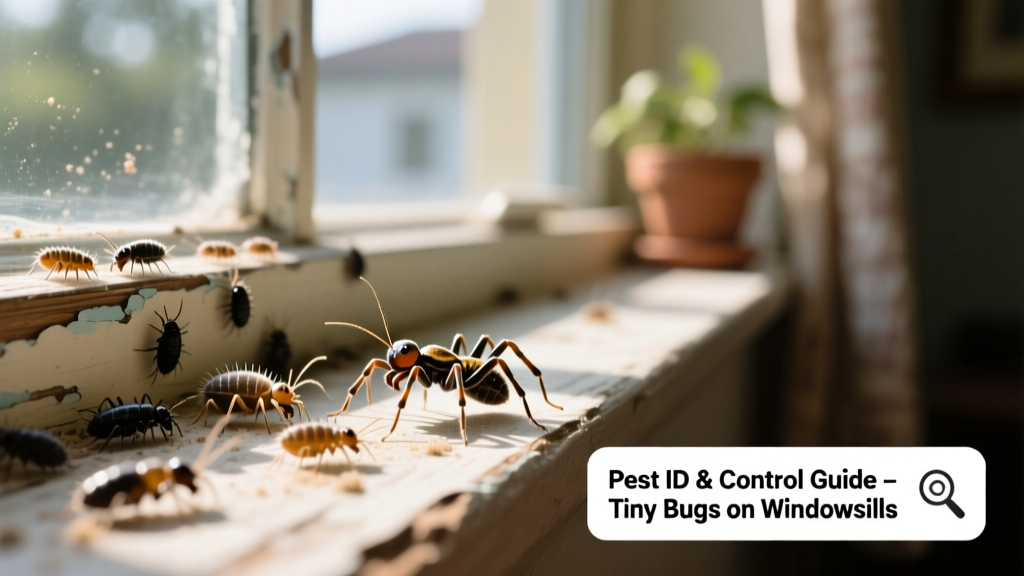
Tiny bugs clustering on your windowsill aren’t just annoying—they’re a signal. These pests often indicate excess moisture, decaying organic matter, or entry points near glazing. Left unchecked, some (like fungus gnats) breed in potted plant soil; others (like booklice) feed on mold spores thriving in humid window frames. Early ID prevents infestation spread.
Identification
Most tiny bugs on windowsills are under 2 mm long, pale or translucent, and jump, crawl, or flutter weakly. Key suspects include springtails (collembola), fungus gnats (sciaridae), booklice (psocids), and occasionally thrips or aphid crawlers blown indoors. Look closely: do they jump? Are they near damp soil or condensation? Do they vanish when the sun hits the sill?
| Pest | Size & Color | Key Behavior | Typical Location Clue |
|---|---|---|---|
| Springtails | 0.5–2 mm, gray/white/bluish | Jump using furcula (spring-like tail) | Cluster where condensation pools; avoid direct light |
| Fungus Gnats | 1–3 mm, black/dark gray, mosquito-like | Weak fliers; hover near plants or drains | Soil surface of overwatered houseplants |
| Booklice | 1–1.5 mm, pale yellow/brown, wingless | Crawl slowly; avoid light | Behind window trim with visible mold or dust buildup |
| Thrips | 0.5–2 mm, slender, yellow/black | Fast runners; may fly short distances | On sunlit sills near flowering plants or screens |
What Attracts Them
Windowsills create micro-environments ideal for moisture-loving pests. Condensation from poor insulation, leaky seals, or high indoor humidity (above 60% RH) encourages mold growth—and that’s food for booklice and springtails. Overwatered plants on sills provide breeding grounds for fungus gnats. Dust accumulation behind trim offers shelter and organic debris for psocids. Even UV light attracts thrips and some gnat species.
- Relative humidity above 60% (measured with a hygrometer)
- Standing water in plant saucers or cracked window frames
- Mold or mildew on caulk, drywall, or curtain linings
- Decaying leaf litter or dead plant matter in nearby pots
Treatment Methods
Natural Solutions
Start here—especially if you have pets, kids, or houseplants. For springtails and booklice, reduce humidity with a dehumidifier set to 45–55% RH and wipe sills daily with a vinegar-water mix (1:1) to disrupt mold spores. Let potting soil dry 1–2 inches deep between waterings to break the fungus gnat life cycle. Place sticky yellow cards vertically near affected sills to trap adults.
Chemical Options
Only use targeted, low-risk products after confirming pest ID. Bacillus thuringiensis israelensis (Bti) dunks dissolved in watering cans kill gnat larvae in soil—safe for pets and humans per EPA registration (2022). For persistent booklice in wall voids, a residual insecticide like deltamethrin (0.02% aerosol) applied *only* to cracks behind trim—not open surfaces—is permitted under label guidelines. Avoid broad-spectrum sprays: they rarely reach hidden colonies and harm beneficial mites.
Prevention
Fix the conditions—not just the bugs. Replace cracked or warped window seals; recaulk gaps where moisture collects. Install vent fans in adjacent bathrooms/kitchens to cut ambient humidity. Keep plants at least 6 inches from windowsills and rotate pots monthly to inspect undersides. Vacuum window tracks weekly with a crevice tool—booklice eggs cling to dust bunnies.
- Check window weep holes for blockage (clean with pipe cleaner)
- Use silica gel desiccant packs taped inside hollow vinyl window frames
- Replace old thermal curtains with moisture-wicking blackout liners
When to Call an Exterminator
Call a licensed pest pro if bugs persist >3 weeks despite humidity control and sanitation—or if you find them in multiple rooms, not just sunlit sills. That suggests breeding in wall voids, HVAC ducts, or attic insulation. According to the National Pest Management Association’s 2023 Field Survey, 68% of confirmed booklice infestations required structural moisture remediation—not just pesticide application.
"Springtails don’t bite or damage structures—but their presence means you’ve got a hidden moisture problem. Treat the environment, not the bug." — Dr. Lena Cho, Entomologist, Purdue Extension Urban Pest Program (2022)
Why do I only see them in the morning?
Many tiny pests are photophobic and nocturnal. They migrate toward cooler, damper areas overnight—windowsills often become temporary refuges as indoor temps rise and humidity drops midday. You’re seeing their “exit route” before they retreat into wall voids or baseboards.
Are they coming from my houseplant?
Likely—if it’s a fern, peace lily, or pothos. Fungus gnats lay eggs in moist potting mix; larvae feed on fungi and root hairs. Check soil surface for tiny black adults or translucent larvae with shiny black heads. Repot with fresh, pasteurized soil and add a ½-inch layer of sand on top to deter egg-laying.
Can they get into my food pantry?
Booklice can—but only if pantry humidity exceeds 65% and there’s flour, oatmeal, or dried fruit with mold or starch residue. Store dry goods in airtight containers and place food-grade diatomaceous earth along cabinet edges as a barrier.
Do they mean my windows are failing?
Not always—but consistent condensation on double-pane glass indicates seal failure. Fogged panes or moisture trapped between layers create perfect microhabitats for springtails and mold. A certified window technician can test seal integrity with a thermal camera.
Will cold weather kill them?
Most won’t survive sustained outdoor freezing, but they thrive indoors year-round if conditions remain favorable. Winter heating dries air—yet poorly insulated windows create cold spots where condensation forms, giving them exactly what they need.
Are they harmful to pets or children?
No known species found on windowsills bites, stings, or transmits disease to humans or pets. However, heavy gnat infestations near pet water bowls may indicate bacterial biofilm—clean bowls daily and scrub with diluted hydrogen peroxide (3%).
Small bugs on your windowsill are rarely about invasion—they’re about imbalance. Fix the humidity, clean the micro-habitat, and monitor weekly. Most cases resolve in 10–14 days with consistent environmental tweaks. For deeper issues, explore our moisture problems in homes guide or indoor plant pests troubleshooting page.