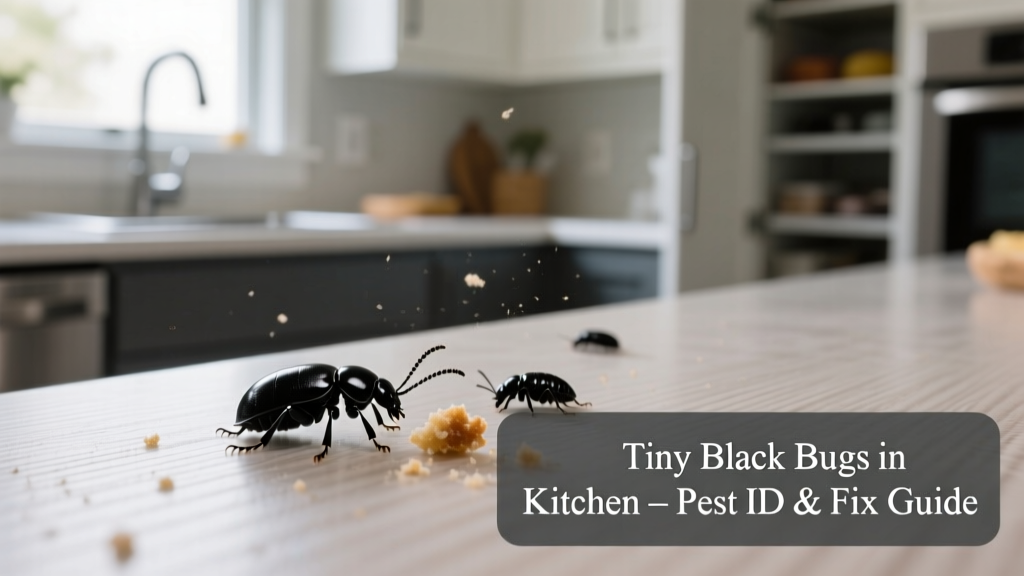
Tiny black bugs skittering across your countertop or buzzing near the sink aren’t just annoying—they’re a red flag pointing to moisture, decay, or overlooked food sources. These pests rarely appear alone; their presence signals an underlying condition you can fix—once you know which insect you’re dealing with.
Identification
Not all tiny black bugs are the same. Size, movement, habitat, and behavior narrow it down fast. Most measure 1–3 mm and are easily mistaken for each other—but key differences matter.
| Pest | Size & Shape | Wings? | Where You’ll See Them | Key Clue |
|---|---|---|---|---|
| Drain fly (Psychoda spp.) | 1.5–5 mm; fuzzy, moth-like | Yes — held roof-like over body | Inside drains, garbage disposals, wet sponges | Hover weakly; won’t fly straight when disturbed |
| Fungus gnat (Bradysia spp.) | 2–3 mm; slender, mosquito-like | Yes — long legs, delicate wings | Near overwatered houseplants, compost bins, damp mops | Larvae feed on fungi in moist organic debris |
| Carpet beetle (Anthrenus spp.) | 1–3 mm; oval, hard-shelled | No — adult has wings but rarely flies indoors | On windowsills, pantry shelves, near wool rugs or pet hair | Larvae are hairy, tan, and destructive to natural fibers |
| Spider beetle (Mezium americanum) | 2–3 mm; rounded, reddish-brown to black | No — wingless adults, but pupae in stored foods | In flour, cereal, dried beans, birdseed | Often found in old, undisturbed dry goods; larvae spin silk webbing |
- Drain flies leave tiny black specks (feces) around drain edges
- Fungus gnat larvae have shiny black heads and transparent bodies—check soil surface with a magnifier
- Carpet beetle adults don’t eat fabric—but their larvae do, and they’re often misidentified as bed bugs
What Attracts Them
Kitchens offer three things these pests need: moisture, organic residue, and shelter. But each species prioritizes different conditions.
Drain flies thrive where biofilm builds up—especially in slow-moving or neglected drains. Fungus gnats follow excess irrigation and decomposing plant matter. Carpet beetles seek keratin-rich materials: pet hair, wool dish towels, feather dusters, even dead insects behind appliances. Spider beetles invade pantries after months of undisturbed storage—especially in cardboard boxes or cloth bags.
According to the National Pest Management Association’s 2022 Residential Pest Report, 68% of indoor fungus gnat complaints originated from houseplants watered more than twice weekly.
Treatment Methods
Natural Solutions
Start here—especially if you have kids, pets, or prefer low-toxicity options.
- For drain flies: Boil ½ cup baking soda + ½ cup white vinegar, pour down drain, wait 15 minutes, then flush with boiling water. Repeat daily for 3 days.
- For fungus gnats: Place yellow sticky traps just above soil, and drench potting mix with a 1:4 solution of hydrogen peroxide (3%) and water to kill larvae.
- For carpet beetles: Vacuum thoroughly—including baseboards, under appliances, and inside cabinets—then dispose of the bag outside immediately.
Chemical Options
Use only when natural methods stall or populations surge. Always follow label directions and ventilate well.
- Drain gel insecticides (e.g., Invade Bio Drain) break down organic sludge while killing larvae on contact.
- Pyrethrin-based aerosols (like MGK Pyrethrum TR) provide quick knockdown for flying adults—but won’t reach hidden larvae.
- Food-grade diatomaceous earth (DE) dusted along cabinet corners and pantry shelves disrupts exoskeletons of crawling beetles and spider beetles.
Prevention
Long-term control hinges on disrupting breeding cycles—not just killing adults. Focus on consistency, not intensity.
Run hot water down all drains for 60 seconds daily. Let houseplant soil dry at least 1 inch deep between waterings. Store dry goods in rigid, sealable containers—glass or thick plastic—not paper or thin plastic bags. Sweep or vacuum behind the fridge and stove weekly; crumbs and grease films attract beetles and gnats alike.
"A single female fungus gnat can lay 200 eggs in 10 days—if moisture and fungi persist, you’ll see new adults every 17–28 days." — Dr. Susan Jones, OSU Extension Entomology, 2021
When to Call an Exterminator
Call a licensed professional if:
- You’ve treated drains, plants, and pantry for 2+ weeks with no reduction in activity
- You find larvae inside wall voids, behind baseboards, or inside HVAC ducts
- Carpet beetle damage appears on upholstery, area rugs, or stored clothing—indicating long-term infestation
Most reputable firms offer free inspections and targeted treatments—not blanket sprays. Ask about integrated pest management (IPM) protocols before booking.
Are these bugs dangerous to humans?
No common tiny black kitchen pests bite or transmit disease to people. Drain flies and fungus gnats are nuisance pests only. Carpet beetle larvae can cause skin irritation in sensitive individuals (dermatitis), but this is rare and resolves once exposure stops. None contaminate food directly—but their presence means conditions favorable to pathogens may exist.
Why do I only see them at night?
Drain flies and fungus gnats are weak fliers and avoid air currents—so they’re most active during still, humid periods, often at dusk or overnight. Turning on lights suddenly triggers brief, disoriented flight. This isn’t circadian preference; it’s evasion behavior.
Can they come from my apartment’s shared plumbing?
Yes—especially drain flies. Biofilm in vertical stacks or horizontal branch lines can harbor populations that migrate upward through vents or overflow pipes. If neighbors report similar issues, request a building-wide drain inspection. A plumber with a sewer camera can pinpoint exact locations of buildup.
Do bug zappers work on these pests?
No—and they make things worse. Zappers attract flying adults but don’t reduce breeding sites. Worse, they kill beneficial insects and scatter tiny body parts that feed mold spores. Yellow sticky traps are safer, quieter, and give you diagnostic data: pattern, quantity, and timing.
Will cleaning my kitchen fix it permanently?
Cleaning helps—but only if it targets the right source. Wiping counters won’t stop drain flies. Vacuuming floors won’t eliminate fungus gnat larvae in potted soil. The drain fly guide explains how to inspect and clean trap arms; the fungus gnat article details soil treatment thresholds; and our pantry pests page walks through shelf-by-shelf inspection steps.
Small bugs mean small fixes—if you match the method to the pest. Observe for 48 hours: note where they gather, when they’re most active, and what surfaces they land on. That intel beats any spray. Most infestations resolve in under two weeks once the breeding site is located and disrupted.