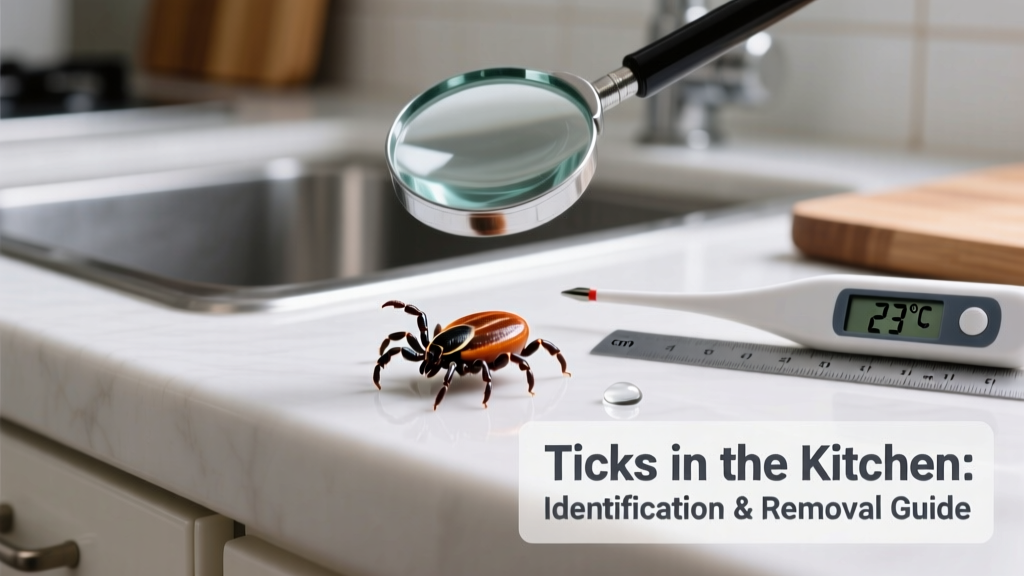
Ticks are blood-feeding arachnids that rarely appear in kitchens — but when they do, it’s almost always because they’ve hitched a ride on pets, clothing, or rodents. Unlike pantry pests like ants or beetles, ticks pose direct health risks: Lyme disease, Rocky Mountain spotted fever, and other tick-borne illnesses can begin with a single unnoticed bite. Finding one in your kitchen isn’t just alarming — it’s a red flag demanding immediate inspection of entry routes and pet routines.
Identification
Ticks in the kitchen are usually adult or nymph-stage deer ticks (Ixodes scapularis) or American dog ticks (Dermacentor variabilis). They’re not flying or jumping insects — they crawl slowly, often clinging to baseboards, cabinet undersides, or near pet food bowls. Look for oval, flattened bodies ranging from sesame-seed size (nymphs) to apple-seed size (adults), with eight legs and visible mouthparts when engorged.
| Species | Size (Unfed) | Color | Key Clue in Kitchen |
|---|---|---|---|
| Black-legged (Deer) Tick | 1–2 mm | Reddish-brown, dark shield behind head | Often on pets’ bedding near pantry doors or dropped after grooming |
| American Dog Tick | 3–5 mm | Brown with white or gray markings | Frequently found near dog food storage or where leashes hang |
| Brown Dog Tick | 2–3 mm | Uniform reddish-brown | The only tick that can complete its entire life cycle indoors — look for eggs in cabinet cracks or behind appliances |
Don’t confuse ticks with poppy seeds, fleas, or carpet beetles. Fleas jump; carpet beetles have antennae and fly; ticks remain motionless unless disturbed — and they’ll latch if brushed against bare skin.
What Attracts Them
Ticks aren’t attracted to food crumbs or moisture like cockroaches — but they *are* drawn to warmth, carbon dioxide, and hosts. In kitchens, their presence usually traces back to three conditions: pets entering and resting near food prep zones, rodent activity behind walls or under sinks, or humans tracking them in after yard work or hiking.
- Pets sleeping on kitchen rugs or eating near baseboards — especially unmedicated dogs or cats
- Gaps around exterior doors, windows, or pipe penetrations near the sink or dishwasher
- Cluttered cabinets or stored cardboard boxes that harbor rodents (and their tick-carrying nests)
- Unwashed pet bedding left near pantry doors or under breakfast nooks
Treatment Methods
Natural Methods
Start with physical removal and environmental disruption. Vacuum all baseboards, cabinet toe-kicks, and appliance edges using a crevice tool — immediately seal and freeze the vacuum bag for 48 hours before disposal. Wipe surfaces with a 5% solution of food-grade diatomaceous earth mixed into water (test on small area first), focusing on gaps where pets rest. Wash pet bedding in hot water (130°F+) weekly.
According to the CDC’s 2022 Tick Prevention Toolkit, vacuuming removes up to 73% of non-engorged ticks hiding in floor crevices — but only if followed by prompt, sealed disposal.
Chemical Methods
For confirmed brown dog tick infestations — the only species known to breed indoors — use EPA-registered acaricides labeled for indoor crack-and-crevice treatment. Products containing bifenthrin or permethrin (e.g., Tempo SC Ultra) are effective when applied along cabinet hinges, behind refrigerators, and around plumbing entries. Never spray near food prep surfaces, open shelving, or pet feeding areas without thorough rinsing afterward.
- Always follow label instructions — over-application increases resistance risk
- Retreat after 10–14 days to catch newly hatched larvae
- Avoid foggers — they disperse chemical ineffectively and miss hidden harborages
Prevention
Stop ticks before they reach your kitchen. Install door sweeps (≤1/4" gap) on exterior kitchen entrances. Treat pets year-round with vet-approved topical or oral acaricides — even indoor-only cats can pick up ticks from screened porches or basements. Store dry pet food in sealed metal or thick plastic bins (not cardboard), and inspect new deliveries for rodent signs.
Seal gaps >1/8" with copper mesh and caulk — especially where pipes enter walls near the sink or dishwasher. Rodents carrying ticks often use those same pathways.
“Finding a tick in the kitchen is like finding smoke without fire — it means the ignition source is elsewhere. Focus on the pet, the perimeter, and the plumbing.” — Dr. Lena Cho, Entomologist, National Pest Management Association, 2023
When to Call an Exterminator
Call a licensed pest professional if you find more than two ticks in one week, discover tiny white tick eggs in cabinet joints or behind the stove, or see evidence of mice (droppings, gnaw marks) alongside tick sightings. Brown dog tick infestations require precise, multi-stage treatments — DIY efforts often miss larval clusters in wall voids or behind kick plates.
Reputable firms will conduct a full perimeter inspection, assess pet protocols, and provide a written treatment plan with follow-up intervals. Ask whether they’re certified in brown dog tick control — not all general pest services handle this species correctly.
Can ticks lay eggs in kitchen cabinets?
Yes — but only brown dog ticks do so reliably indoors. Their eggs are translucent, barrel-shaped, and laid in clusters of 1,000–5,000. Look for them in dark, undisturbed spots: behind microwave mounts, inside unused drawer liners, or beneath loose linoleum near the refrigerator.
Do ticks survive on kitchen countertops?
No — ticks desiccate rapidly on exposed, dry surfaces. They need high humidity (>80%) and shelter to survive more than 24–48 hours. If you spot one on granite or stainless steel, it likely fell off a host moments before — check nearby pets, shoes, or backpacks.
Why did I find a tick near my coffee maker?
Coffee makers generate localized warmth and humidity — especially older models with drip trays that retain moisture. Ticks seeking microclimates may pause there briefly. More likely, though, it dropped from a pet’s ear or your sleeve while you were brewing. Inspect the area above (cabinets) and below (toe-kick) for additional specimens.
Are kitchen ticks dangerous?
Yes — any tick capable of transmitting disease remains dangerous regardless of location. A single bite from an infected deer tick in your breakfast nook carries the same Lyme risk as one in your backyard. Prompt removal within 24 hours reduces transmission risk significantly — use fine-tipped tweezers, grasp close to the skin, and pull straight upward.
Can ticks come through the dishwasher vent?
Rarely — but possible. Dishwasher exhaust vents often connect to shared wall cavities or attic spaces where rodents nest. If mice or rats are present, ticks can drop from their fur into ductwork and emerge near the appliance. Seal the vent duct interior with expanding foam and install a 1/4-inch metal mesh screen at the exterior termination.
Do tick repellents work on kitchen floors?
Not effectively — most repellents (like DEET or picaridin) evaporate quickly on hard surfaces and aren’t labeled for indoor floor use. Instead, focus on host management: treat pets, block entry points, and vacuum daily in high-traffic zones. For long-term deterrence, consider installing pet-safe kitchen pest barriers near entryways.
Tick presence in the kitchen is uncommon — but never dismissible. It reflects a breakdown in either pet protection, structural integrity, or rodent control. Address the root cause, not just the specimen on your floor mat. Monitor pet behavior, inspect door seals monthly, and keep kitchen clutter to a minimum — especially near exterior walls and utility access points.