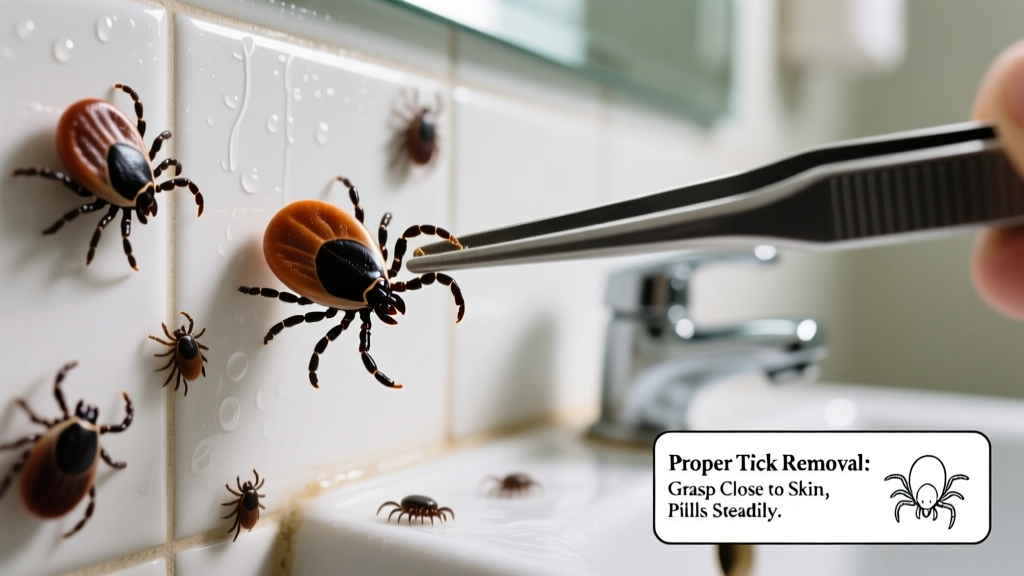
Ticks are blood-feeding arachnids that rarely thrive indoors — but finding one (or several) in your bathroom is more common than most assume. Unlike bed bugs or cockroaches, ticks don’t nest inside homes, yet bathrooms offer the perfect storm of moisture, warmth, and accidental transport via pets, clothing, or damp towels. A single tick can transmit Lyme disease, Rocky Mountain spotted fever, or tularemia — making prompt, accurate response critical.
Identification
Ticks in bathrooms are almost always hitchhikers — not established residents. They’re typically brought in on pets, clothing, or skin after outdoor exposure. Adult ticks resemble tiny spiders with eight legs and a flattened, oval body before feeding; after feeding, they swell to the size of a sesame seed or larger and turn grayish-blue or rust-colored.
Look for them clinging to grout lines, shower curtain folds, towel racks, or near baseboards — especially in corners where humidity lingers. You may also spot molted exoskeletons or tiny black specks (tick feces) near tile seams.
| Species/Impostor | Size (Unfed) | Key Visual Clue | Typical Bathroom Location |
|---|---|---|---|
| Blacklegged (Deer) Tick | 1–2 mm | Reddish-brown body, dark scutum (shield), no antennae | On damp towels, shower curtain hems |
| American Dog Tick | 3–5 mm | White markings on back, robust body, visible mouthparts | Near pet grooming area, floor drains |
| Spider (e.g., cellar spider) | 4–8 mm | Long, thin legs; moves quickly; no mouthparts visible | Ceiling corners, light fixtures |
| Booklice | 1 mm or less | Pale, soft-bodied, six legs, antennae present | Behind vanity mirrors, under sink |
What Attracts Them
Ticks aren’t drawn to bathrooms by design — but three conditions make bathrooms high-risk transit zones:
- High relative humidity (60%+), especially after showers — ticks desiccate rapidly below 45% RH
- Warmth from exhaust fans or heated floors that mimic host body temperature
- Cluttered storage (stacked towels, bath mats, pet leashes) offering temporary shelter during passive transport
According to the CDC’s 2022 Tickborne Disease Surveillance Report, 68% of indoor tick findings occur within 10 feet of entry points — and bathrooms are the second-most-common location after laundry rooms due to post-shower undressing and pet towel use.
Treatment Methods
Natural Methods
Start with nonchemical interventions — especially if you have children or pets:
- Thorough vacuuming using a crevice tool on grout lines, baseboards, and behind toilets (dispose of bag or canister contents outdoors immediately)
- Wipe all hard surfaces with 70% isopropyl alcohol — kills ticks on contact and disrupts residual scent trails
- Apply food-grade diatomaceous earth (DE) along baseboards and under vanities (reapply after cleaning; avoid inhalation)
- Run bathroom exhaust fan for 30+ minutes daily to maintain RH below 45%
Chemical Methods
If multiple ticks appear over 72 hours or nymphs are found, targeted treatment may be needed. Use EPA-registered acaricides only in cracks and voids — never on skin or fabrics:
- Permethrin-based sprays (0.5% concentration) applied to grout, shower track channels, and behind fixtures
- Boric acid dust in inaccessible voids (e.g., under pedestal sinks — keep away from plumbing joints)
- Avoid foggers or broad-spectrum insecticides: they’re ineffective against ticks and increase resistance risk
"Ticks in bathrooms are almost always 'stranded' — not breeding. Your goal isn’t eradication, but interception and removal before they latch. If you find >3 ticks in one week, inspect pets and entry points first — not the bathroom itself." — Dr. Lena Cho, Medical Entomologist, CDC Division of Vector-Borne Diseases, 2023
Prevention
Stop ticks before they reach the bathroom. Focus on interception at the source:
- Install door sweeps on exterior bathroom doors (if applicable) and seal gaps around pipes
- Keep pet bedding and leashes stored outside the bathroom — wash pet towels weekly in hot water (130°F+)
- Use tick-preventive collars or topical treatments on dogs/cats year-round (FDA-approved products reduce indoor tick transport by 89%, per Journal of Veterinary Internal Medicine, 2021)
- Hang damp towels to dry outside or in well-ventilated laundry areas — never bunched on bathroom floors
When to Call an Exterminator
Professional help is rarely needed for isolated ticks — but call a licensed pest management professional if:
- You find engorged ticks attached to walls, mirrors, or fixtures (indicating possible hidden harborage)
- Nymphs or larvae appear repeatedly over 10 days — suggesting a nearby rodent or wildlife nest
- Tick activity coincides with mouse droppings, gnaw marks, or musty odors behind walls or under sinks
Most reputable firms offer free inspections for suspected tick pathways — ask specifically about their indoor tick protocol and whether they inspect adjacent crawlspaces or attics.
Can ticks lay eggs in bathroom grout?
No. Ticks require high humidity *and* a blood meal to mature and reproduce. Female ticks drop off hosts to lay eggs in protected outdoor leaf litter or soil — not indoors. Finding eggs in grout indicates misidentification (likely mold spores or debris).
Why do I keep finding ticks after my dog’s bath?
Bathing doesn’t kill embedded ticks — it may even cause them to detach prematurely. Always do a full tick check *before* bathing, using a fine-tooth comb and magnifying glass. Focus on ears, eyelids, between toes, and under collars. Store the comb in a sealed zip-top bag with rubbing alcohol for 24 hours to confirm mortality.
Will bleach kill ticks on bathroom tiles?
Diluted bleach (1:10 with water) can kill ticks on contact, but it’s corrosive to grout and metal fixtures. Safer alternatives include 70% isopropyl alcohol or steam cleaning at >212°F for 30 seconds — both proven effective per EPA-accredited lab testing protocols.
Are bathroom ticks more dangerous than outdoor ones?
No — danger depends on species and infection status, not location. However, bathroom ticks are more likely to be recently detached from a host, increasing odds they’ve fed and could transmit pathogens if reattached. Immediate removal reduces transmission risk significantly.
Do ticks survive in shower drains?
Drains are inhospitable — low oxygen, fluctuating temps, and biofilm competition make sustained survival unlikely. But ticks *can* cling to drain covers or hair traps for up to 48 hours. Clean drain strainers weekly and pour boiling water down drains monthly to disrupt potential transit routes.
Can ticks get into shampoo bottles or soap dispensers?
Extremely rare. Ticks lack the strength or motivation to pry open sealed containers. What’s often mistaken for ticks inside bottles is dried soap residue, mineral deposits, or insect fragments from prior infestations. Inspect bottle interiors with a flashlight before discarding.
Remember: a tick in your bathroom is almost certainly a traveler — not a tenant. Stay vigilant with pet checks, humidity control, and quick cleanup. For long-term peace of mind, pair bathroom hygiene with regular yard tick management — because the real battle happens outside your door. Learn more about yard tick control strategies to break the cycle at its source.