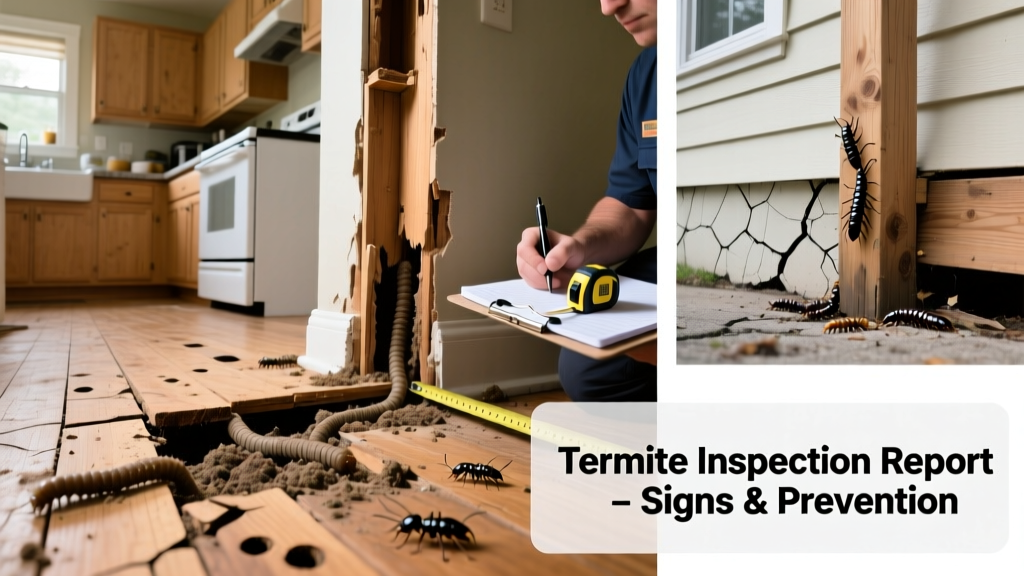
Termites in the kitchen aren’t just a nuisance—they’re a structural red flag. These silent destroyers target cellulose-rich materials like cabinet framing, subflooring, and pantry shelving, often going unnoticed until damage is visible. Unlike ants or cockroaches, termites don’t seek food scraps; they eat your home’s bones.
Identification
Spotting termites early in the kitchen requires knowing what to look for—and what they’re not. Drywood and subterranean termites are the two most likely culprits here. Drywood termites leave behind tiny, six-sided fecal pellets (frass) that resemble coarse pepper near baseboards or cabinet joints. Subterranean termites build mud tubes along walls, plumbing lines, or under sinks—often bridging from slab to wood.
| Feature | Termites | Ants | Carpenter Ants |
|---|---|---|---|
| Waist | Thick, straight | Narrow, pinched | Narrow, pinched |
| Antennae | Straight, beaded | Elbowed | Elbowed |
| Wings (if present) | Equal length, veined, translucent | Front wings longer than rear | Front wings longer, slightly smoky tint |
| Damage pattern | Hollowed-out wood with layered galleries | No wood damage | Smooth, hollowed galleries with sawdust-like frass |
Look closely inside cabinets—especially where toe-kick panels meet flooring—or behind refrigerators and dishwashers. Tap on baseboards: a papery or hollow sound may indicate internal tunneling.
What Attracts Them
Kitchens offer three termite magnets: moisture, warmth, and accessible wood. Leaky sink supply lines, condensation under refrigerators, and poor ventilation around dishwashers create persistent dampness—ideal for subterranean colonies. Wood-to-soil contact (e.g., untreated cabinet legs resting directly on concrete slabs) gives them a direct highway indoors. And yes—even particleboard cabinets count as food: they contain enough cellulose to sustain drywood colonies for months.
- Leaking faucets or slow-dripping supply lines under sinks
- Poorly sealed gaps where pipes enter walls or floors
- Wooden cabinets installed without moisture barriers or vapor wrap
- Stored cardboard boxes or paper bags against baseboards or in pantries
Treatment Methods
Natural Options
For light, localized infestations—like a single affected cabinet shelf—start with non-chemical tactics. Boric acid dust (applied with a bulb duster into drill holes or cracks) disrupts termite metabolism on contact. Orange oil (d-limonene) injected into galleries kills drywood termites within days and has low mammalian toxicity. Diatomaceous earth works best in dry, undisturbed areas: sprinkle it along cabinet toe-kicks or behind appliances—but only if moisture levels stay below 50% RH.
Chemical Treatments
For confirmed subterranean activity, liquid termiticides like fipronil or imidacloprid applied as a barrier around the foundation are effective—but they require licensed application in most states. Bait stations (e.g., Sentricon® or Exterra®) placed near suspected entry points work slower but deliver colony-wide control over 3–6 months. According to the U.S. Forest Service’s 2022 Termite Management Report, bait systems reduced active infestations by 92% in homes with documented slab entry points.
"In kitchens, always inspect behind the refrigerator first—it’s the top-three hotspot for hidden moisture and termite access. One missed leak there can fuel an entire colony." — Dr. Lena Cho, Urban Entomologist, UC Riverside Extension, 2023
Prevention
Stop termites before they start by breaking their access chain: moisture, wood, and entry. Install moisture meters under sinks and near dishwasher hookups—replace any flooring showing >18% moisture content. Use stainless steel or PVC pipe sleeves instead of wood blocking around penetrations. Seal all gaps >1/8″ with copper mesh + acoustical sealant (termites won’t cross metal).
- Replace cardboard storage with plastic bins with tight-fitting lids
- Keep cabinet interiors dry using silica gel packs in corners (refresh every 90 days)
- Install exhaust fans rated for ≥110 CFM above stoves and near dishwashers
- Inspect toe-kick panels quarterly with a flashlight and pocket mirror
Also consider our free termite inspection checklist for monthly kitchen sweeps.
When to Call an Exterminator
Call a licensed pest management professional immediately if you find mud tubes larger than ¼″ wide, multiple swarmer wings near windowsills, or more than three piles of frass in different cabinets. Delaying treatment risks spread to adjacent rooms—kitchen infestations have a 68% likelihood of extending into dining or laundry areas within 4 months, per the National Pest Management Association’s 2023 Residential Infestation Survey.
Can termites eat laminate countertops?
No—they can’t digest the melamine or resin layers. But they’ll readily tunnel through the particleboard or MDF substrate beneath, especially if it’s damp or poorly sealed at seams.
Do termites come out at night in the kitchen?
Subterranean workers are active 24/7 but rarely surface unless disturbed. Swarming alates (reproductives) typically emerge in spring or fall—often midday—but may appear near kitchen windows if attracted to light.
Will vinegar kill termites in cabinets?
Vinegar’s acidity may repel or dehydrate surface termites temporarily, but it doesn’t penetrate galleries or affect the colony. It’s not a viable treatment—use it only for cleaning surfaces pre- or post-treatment.
How long does it take for termites to damage kitchen cabinets?
A small drywood colony (50–200 individuals) can compromise a standard 36″ base cabinet’s structural integrity in 6–12 months. Subterranean colonies act faster: one mature colony consumes ~2 feet of 2×4 lumber per year, according to the USDA Forest Service.
Are kitchen termites dangerous to pets or kids?
The insects themselves pose no direct health risk—but some chemical treatments (e.g., chlorfenapyr) require 24-hour room evacuation. Always read labels and use child-proof bait stations. Safer alternatives like borates or orange oil are pet-friendly when applied correctly.
Can I spray termite killer under my kitchen sink myself?
You can apply ready-to-use aerosols labeled for indoor crack-and-crevice use—but avoid overspray near food prep zones or water lines. Never use outdoor-grade termiticides indoors. For slab or wall voids, hire a pro: improper application risks contamination and ineffective coverage.
Termites in the kitchen demand urgency—not panic. Catch them early, cut off their resources, and reinforce weak points. If you’ve found frass near your pantry or mud tubes behind the fridge, don’t wait for visible sagging. Start with moisture control and a targeted natural treatment, then review full termite signs across your home to rule out wider activity. And remember: the goal isn’t just elimination—it’s making your kitchen inhospitable, permanently.