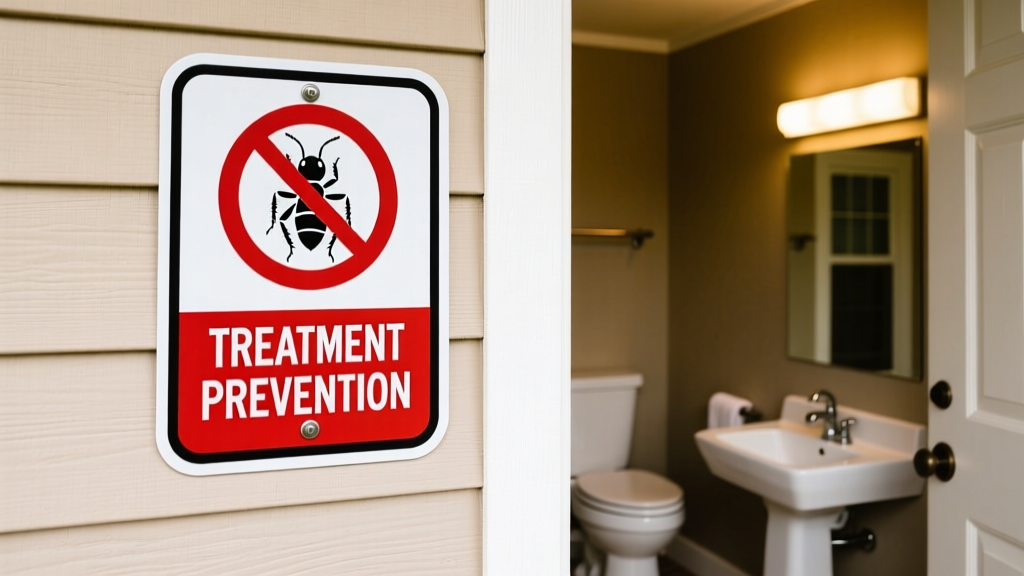
Termites in the bathroom aren’t just a fluke—they’re a red flag pointing to hidden moisture damage and structural vulnerability. Unlike kitchens or living rooms, bathrooms offer consistent warmth, humidity, and cellulose-rich materials (drywall paper, subflooring, vanity framing), making them prime real estate for subterranean and dampwood termites. Left unchecked, they can compromise load-bearing studs behind tile walls or rot floor joists beneath vinyl flooring—often before visible damage appears.
Identification
Spotting termites early in the bathroom requires knowing what to look for—and what’s *not* there. Termites don’t leave droppings like ants or cockroaches; instead, they leave subtle, telltale evidence. Swarming alates (winged reproductives) may appear near exhaust fans or light fixtures in spring. Mud tubes—thin, pencil-width tunnels of soil and saliva—often run vertically along baseboards, behind toilets, or up shower stall framing. Hollow-sounding walls or floors when tapped? That’s wood eaten from the inside out.
| Type | Key Features | Typical Bathroom Locations |
|---|---|---|
| Subterranean | Require soil contact; build mud tubes; creamy-white workers, dark heads | Under sinks, along foundation walls, behind toilets, under bathtub surrounds |
| Dampwood | Larger, no mud tubes; need >20% moisture content; avoid dry wood | Rotted subflooring, water-damaged vanity framing, leaky shower pan bases |
| Formosan | Aggressive, form carton nests; tolerate drier conditions than subterraneans | Inside wall cavities with plumbing leaks, insulation around hot water pipes |
What Attracts Them
Bathrooms are termite magnets—not because of cleanliness, but because of chronic moisture. A leaking faucet dripping 10 drops per minute wastes over 340 gallons per year (U.S. EPA, 2022), saturating adjacent framing. Poor ventilation keeps relative humidity above 60%, ideal for dampwood species. Other attractants include:
- Cracked grout or caulk allowing water into wall cavities
- Unvented exhaust fans that recirculate humid air instead of expelling it
- Wood-backed vanities or shelving installed directly against exterior walls
- Old pipe insulation containing cellulose-based materials
Even small gaps—like a 1/8-inch crack between tub and tile—can let in enough moisture to sustain a colony for months.
Treatment Methods
Natural Options
For minor, localized activity—say, a single mud tube behind the toilet—natural methods can buy time while you address moisture sources. Orange oil (d-limonene) injected directly into infested wood disrupts termite exoskeletons and is non-toxic to humans and pets. Boric acid dust applied with a bulb duster into wall voids (via outlet cutouts or access panels) dehydrates workers on contact. Both require precise application: orange oil must reach live galleries, and boric acid needs direct contact—spraying it on surfaces won’t work.
Chemical Treatments
For confirmed structural involvement—such as hollow-sounding floor joists under the shower or mud tubes extending into wall studs—professional-grade termiticides are necessary. Termidor SC (fipronil) and Premise 75 (imidacloprid) are non-repellent liquid barriers that termites unknowingly track back to the colony, achieving >95% control within 3 months (University of Florida IFAS Extension, 2021). Foam formulations like Alpine Foam are ideal for bathroom wall voids, expanding to fill gaps around pipes and wiring without damaging tile or drywall.
"In bathrooms, treating the symptom without fixing the leak is like mopping the floor while the faucet runs—temporary at best." — Dr. Elena Ruiz, Urban Entomologist, UC Riverside, 2023
Prevention
Long-term prevention hinges on breaking the moisture–cellulose–access triad. Start by auditing all bathroom plumbing: check supply lines under sinks for micro-leaks, inspect shower pan seams with a moisture meter (readings >15% indicate trouble), and replace rubber gaskets in shower valves every 5 years. Install an exhaust fan rated for at least 1.5 air changes per minute (e.g., 50 CFM for a 5'x7' bathroom) and run it for 20 minutes post-shower. Seal all penetrations—including pipe chases and electrical boxes—with silicone caulk rated for high-humidity use.
- Replace water-damaged drywall with mold-resistant green board or cement board
- Elevate wood vanities on adjustable metal legs to eliminate direct floor contact
- Use borate-treated lumber for any bathroom framing repairs
- Inspect attic crawlspaces above bathrooms annually for condensation on cold water pipes
When to Call an Exterminator
Call immediately if you see swarming termites indoors, find mud tubes longer than 6 inches, or notice sagging floors or bowed baseboards near plumbing fixtures. Also act if a moisture meter reads >20% in subflooring or framing—this indicates active decay supporting termite survival. Licensed pest professionals can perform borescope inspections inside walls and deploy monitoring stations (like Sentricon® AG) that detect and eliminate colonies without trenching.
Can termites eat through tile or grout?
No—they can’t digest ceramic, porcelain, or epoxy grout. But they’ll travel underneath tiles via compromised subfloors or behind grout lines where moisture has softened underlying drywall paper or backer board. If your bathroom tile feels spongy or loose, lift a corner to inspect the substrate—not the tile itself.
Will a dehumidifier stop termites in the bathroom?
Not alone. While lowering ambient humidity helps deter new infestations, it won’t kill existing colonies feeding on wet wood. Dehumidifiers are most effective when paired with leak repair and ventilation upgrades—think of them as supportive care, not primary treatment.
Do termites in the bathroom mean my whole house is infested?
Not necessarily—but it’s a strong warning sign. Subterranean termites often enter through one moisture source (e.g., a leaking shower drain) and spread laterally through soil or framing. A full perimeter inspection and interior assessment of adjacent rooms (laundry, basement, garage) is recommended within 72 hours of discovery.
How long does it take for termites to cause serious damage in a bathroom?
In high-moisture environments, subterranean colonies can consume 1 foot of 2x4 framing in 3–6 months (National Pest Management Association, 2022). Dampwood termites work faster—up to 2 feet per month in severely rotted wood. That’s why early detection isn’t optional; it’s structural insurance.
Can I treat bathroom termites myself if I rent?
You can document evidence and request repairs—but legally, landlords are responsible for structural pest control under most state habitability laws (e.g., California Civil Code § 1941.1). Submit photos of mud tubes, damaged wood, and moisture readings in writing. Link to resources like how to find a licensed exterminator and moisture meter buying guide to strengthen your case.
Are termite-damaged bathroom walls safe to tile over?
No—covering compromised framing or drywall invites mold, further decay, and future tile failure. Remove all affected material down to sound wood or concrete, treat with borate solution, and allow full drying (use a hygrometer to confirm <12% moisture content) before installing new substrate. Skipping this step leads to callbacks—and costly rework.
Termites in the bathroom rarely appear out of nowhere. They’re drawn by persistent, fixable conditions—not fate or bad luck. Address the leak first, then the insects. Repair the vent, then reinforce the barrier. Every moisture fix you make shrinks their habitat—and strengthens your home’s resilience. For more on related issues, see our guides on leaky faucet repair and bathroom ventilation tips.