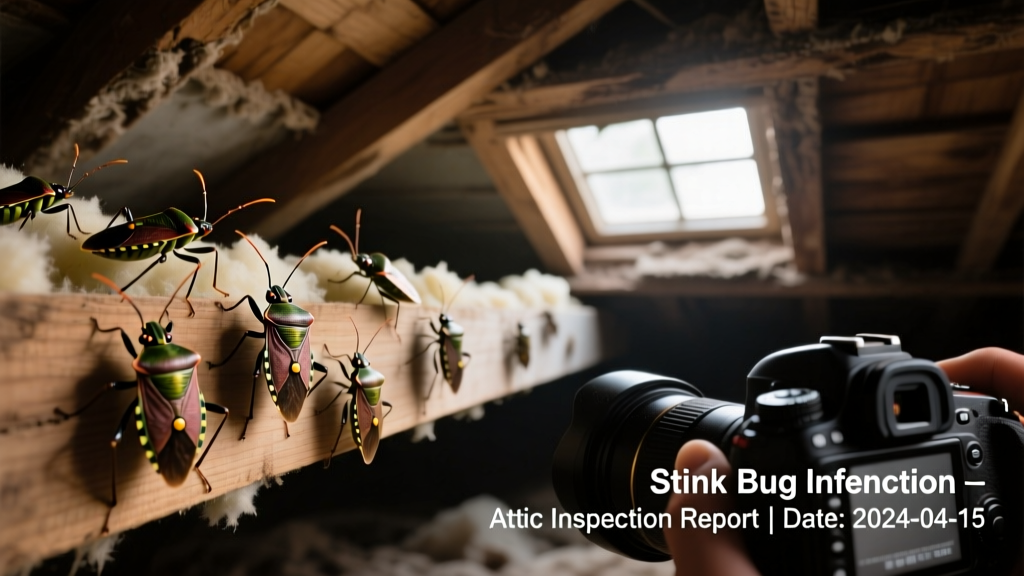
Stink bugs—especially the invasive brown marmorated stink bug (Halyomorpha halys)—flock to attics in late summer and fall seeking warm, dry shelter for overwintering. Unlike occasional invaders like spiders or silverfish, stink bugs enter in large numbers, emit a pungent odor when crushed or disturbed, and can stain insulation and wood surfaces with their excrement.
Identification
Brown marmorated stink bugs are shield-shaped, about 14–17 mm long, with mottled brown-gray coloring, alternating light and dark bands on antennae, and smooth shoulders (no spines). They don’t bite or spread disease, but their sheer numbers—and that unmistakable cilantro-or-pungent-peanut odor—make them unwelcome attic residents.
Look for these signs: clusters along rafters or near soffits, especially on south- or west-facing rooflines; shed exoskeletons (nymphal molts) in corners; faint yellowish stains on insulation from defensive secretions.
| Insect | Size & Shape | Key Distinguishing Feature | Odor When Crushed? |
|---|---|---|---|
| Brown Marmorated Stink Bug | 14–17 mm, shield-shaped | Banded antennae, smooth shoulder margins | Yes — strong, foul odor |
| Boxelder Bug | 12–14 mm, elongated oval | Red markings on black body, no banding on antennae | Faint, musty — not sharp |
| Asian Lady Beetle | 5–8 mm, rounder, dome-shaped | Variable spot count, "M"-shaped mark behind head | Mild, acrid — rarely noticeable |
What Attracts Them
Attics offer ideal overwintering conditions: stable above-freezing temps, low light, minimal disturbance, and easy entry points. Stink bugs detect warmth gradients from up to 100 feet away—and they’re drawn to heat loss through gaps around chimneys, vents, and roofline seams.
- Cracks >1/8 inch wide near soffits, gables, or fascia boards
- Unscreened attic vents or damaged ridge vents
- Missing or warped shingles exposing underlayment seams
- Warm air leaking from living spaces into attic via recessed lights or ductwork
According to the USDA’s 2022 Pest Management Guide, 73% of confirmed stink bug infestations in single-family homes originated from attic entry points—not windows or doors.
Treatment Methods
Natural Removal
Vacuuming is the safest first step—use a shop vac with a disposable bag or a vacuum with a detachable hose and a cloth filter you can discard outdoors immediately. Avoid crushing bugs inside the machine. For live removal, place a fine-mesh net over attic vents and gently sweep bugs into a container for release >100 yards from your home.
- Cooler attic temps (<55°F) slow movement—schedule vacuuming at dawn
- Diatomaceous earth (food-grade) applied along baseboards and entry seams dehydrates nymphs and adults
- Peppermint oil spray (10 drops per cup water) deters but doesn’t kill—reapply weekly near entry zones
Chemical Options
Residual insecticides should be used sparingly and only where physical exclusion isn’t feasible. Pyrethroids like deltamethrin (e.g., Suspend SC) applied as a perimeter barrier along attic framing edges provide 4–6 weeks of control—but avoid spraying near insulation or HVAC ducts.
"Never fog an attic for stink bugs—it disperses them deeper into walls and voids. Spot-treat only visible harborage points, and always prioritize sealing over spraying." — Dr. Anne Nielsen, Rutgers Cooperative Extension, 2023
Prevention
Long-term prevention hinges on exclusion—not eradication. Seal all openings larger than 1/8 inch using copper mesh (not steel wool, which corrodes), caulk rated for exterior use (e.g., OSI Quad Max), and vent screens with ≤1/8" mesh. Inspect annually in early August, before peak migration begins.
- Install vent guards on all gable, soffit, and ridge vents
- Seal gaps around plumbing stacks and electrical conduits with expanding foam + exterior caulk cap
- Add attic baffles to maintain airflow while blocking entry behind soffits
- Keep attic temps below 60°F in fall using passive ventilation—this reduces thermal attraction
For help identifying common attic entry points, see our attic pest entry points guide.
When to Call an Exterminator
Call a licensed pest professional if you find more than 50 live stink bugs in one attic session—or if you’ve sealed all visible gaps and still see new arrivals weekly for three consecutive weeks. Licensed technicians can apply microencapsulated pyrethroids in wall voids and install monitored exclusion devices that intercept bugs before they reach interior spaces.
Reputable firms will provide a written inspection report with photos of entry points and a 90-day warranty on exclusion work. Avoid companies that push whole-attic fumigation—it’s ineffective and violates EPA label guidelines for stink bug control.
Do stink bugs damage attic insulation?
No—they don’t chew or nest in insulation. But their excrement leaves yellowish stains that may reduce R-value slightly over time, and large accumulations attract carpet beetles that do feed on organic binders in fiberglass batts.
Can stink bugs get into living spaces from the attic?
Yes—especially during warm winter spells or early spring thaws. They follow heat and light upward, often entering bedrooms or bathrooms via recessed light fixtures, ceiling fans, or gaps around chimney chases. Sealing attic-to-living-space transitions is critical.
Are stink bugs more active at night in the attic?
They’re primarily diurnal but become restless during temperature swings. You’ll hear faint rustling at dusk and dawn as they shift positions—especially on warmer attic surfaces like south-facing rafters.
Will cold weather kill stink bugs in my attic?
Not reliably. They enter diapause (a hibernation-like state) and survive brief dips to 23°F. Most die only after prolonged exposure below 10°F—rare in insulated attics. That’s why exclusion beats waiting for winter.
How long do stink bugs stay in the attic?
Typically November through March—but in mild winters or well-insulated attics, some remain active into April. Adults that emerge too early often die of dehydration or starvation indoors.
Do stink bugs lay eggs in attics?
No. They only lay eggs on outdoor host plants (e.g., soybeans, fruit trees, ornamental shrubs). Attics are strictly overwintering sites—no breeding occurs there.
If you’ve dealt with attic stink bugs before, you know how quickly they reappear without proper sealing. For related strategies, check out our brown marmorated stink bug control page and attic vent screening guide. Consistent exclusion—not repeated vacuuming—is what finally breaks the cycle.