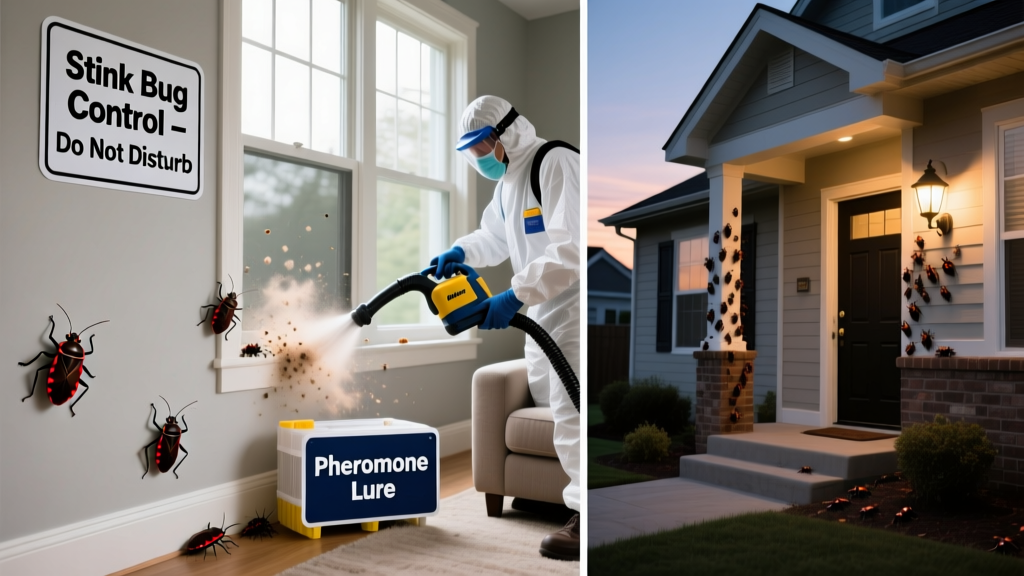
Stink bugs—especially the brown marmorated stink bug (Halyomorpha halys)—are invasive shield-shaped insects that invade homes by the dozens each fall, releasing a pungent odor when crushed or disturbed. They don’t bite or spread disease, but their sheer numbers, foul smell, and tendency to stain walls and curtains make them a top-tier nuisance for homeowners across 47 U.S. states.
Identification
Stink bugs are easy to spot once you know what to look for. Adults are about 14–17 mm long, with a distinctive triangular "shield" shape, grayish-brown mottled coloring, and alternating light-and-dark bands on the antennae and abdomen edges. Nymphs are smaller, rounder, and brightly colored—often red and black—with no wings.
| Feature | Stink Bug | Boxelder Bug | Asian Lady Beetle |
|---|---|---|---|
| Size | 14–17 mm | 10–13 mm | 5–8 mm |
| Shape | Distinctive shield | Oval, flattened | Round, domed |
| Odor when crushed | Strong cilantro-or-pungent-herb scent | Mild, musty | Faint, acrid |
| Seasonal peak indoors | September–November | October–early November | October–December |
Signs of infestation include clusters on sun-warmed south- and west-facing walls, sudden appearances near windows or baseboards, and that unmistakable odor—especially after vacuuming or stepping on one.
What Attracts Them
Stink bugs seek shelter from cold weather—not food or moisture inside your home. They’re drawn to warmth, light, and structural gaps. According to the USDA’s Stink Bug Pest Management Guide (2022), over 80% of entries occur through cracks larger than 1/8 inch in window frames, attic vents, soffits, and foundation seals.
- Sun-warmed exterior walls (especially brick or stone)
- Unsealed utility penetrations (cable, pipe, dryer vent openings)
- Loose or damaged window/door screens
- Gaping gaps around garage door weatherstripping
They’re not attracted to garbage, pet food, or crumbs—so cleanliness won’t deter them. It’s all about access points and thermal cues.
Treatment Methods
Natural Removal
Start with non-toxic, low-risk tactics—especially if you have kids or pets. A vacuum with a disposable bag works well for quick removal: empty the bag immediately outdoors and seal it before disposal. For live capture, use a wide-mouth glass jar with a piece of ripe fruit (like banana or pear) as bait; place it near a sunny window at dusk—the bugs will crawl in overnight.
Essential oil sprays (10 drops peppermint + 1 cup water + 1 tsp dish soap) can deter crawling adults when sprayed along baseboards and windowsills—but they won’t kill eggs or nymphs. Diatomaceous earth (food-grade) applied as a thin line along entry points dehydrates adults on contact, though it loses effectiveness when wet.
Chemical Options
For heavy infestations, targeted insecticides may be necessary. The U.S. EPA recommends pyrethroid-based aerosols (e.g., bifenthrin or cyfluthrin) applied only to cracks and crevices—not broad surfaces. Never spray indoors unless labeled for indoor use; most residual sprays are approved only for perimeter treatment.
- Apply outdoor barrier sprays in late August to early September—before peak migration
- Avoid foggers: they disperse chemicals inefficiently and don’t reach hiding spots
- Always wear gloves and a mask when applying; ventilate treated areas for 2+ hours
According to the National Pesticide Information Center’s 2023 review, perimeter treatments reduce indoor stink bug counts by up to 62% when applied correctly—far more effective than reactive indoor sprays.
"Vacuuming is the safest first step—but never use a bagless vacuum. Their odor compounds bind to plastic and filters, making the machine unusable for months." — Dr. Kim Hoelmer, USDA Agricultural Research Service Entomologist, 2021
Prevention
Long-term control hinges on exclusion. Seal every possible entry point *before* Labor Day, when stink bugs begin scouting for winter shelter. Focus on high-risk zones: attic vents (replace mesh with 16-mesh or finer), window weep holes, and gaps where siding meets brick or foundation.
Install door sweeps with rubber gaskets (not foam) and replace cracked or warped window screens with fiberglass mesh rated for 18-mesh or tighter. Trim ivy and shrubs within 2 feet of exterior walls—vegetation provides cover and bridges gaps.
One often-overlooked fix: caulk around exterior electrical outlets and cable TV boxes. These tiny openings account for nearly 12% of documented entries, per the Home Sealing Best Practices Report (IBHS, 2022).
When to Call an Exterminator
Call a licensed pest professional if you find more than 50 stink bugs indoors in a single week—or if you see them emerging from wall voids, ceiling fixtures, or behind outlet plates. That indicates nesting in structural cavities, which requires specialized dusting or aerosol injection tools.
Reputable providers should offer a seasonal exclusion package—not just a one-time spray. Ask whether they inspect and seal entry points, and whether follow-up visits are included. Avoid companies that push whole-house fumigation: it’s unnecessary, ineffective, and potentially hazardous.
Can stink bugs damage my house?
No—they don’t chew wood, wiring, or insulation. Their presence is purely a nuisance. However, large numbers can stain walls and curtains with defensive secretions, especially if crushed or left to dry in hidden spaces.
Do stink bugs lay eggs inside homes?
Almost never. Females lay barrel-shaped, barrel-shaped, white-to-pale-green eggs in tight clusters on the undersides of leaves—primarily on ornamental trees, soybeans, and fruit crops. Indoor sightings are almost always overwintering adults seeking shelter.
Why do they gather on my windows?
They mistake glass reflections for open sky—a phenomenon called “positive phototaxis.” South- and west-facing windows heat up during afternoon sun, mimicking ideal microclimates. This draws them in like magnets—even though they can’t escape once inside.
Will vinegar kill stink bugs?
Vinegar alone has no insecticidal effect on stink bugs. A 50/50 vinegar-water mix may help clean odor residues off hard surfaces, but it won’t repel or kill live bugs. Skip it—focus on sealing and vacuuming instead.
Are stink bugs harmful to pets?
Not directly. If a dog or cat bites or chews one, the defensive secretion can cause temporary drooling, gagging, or lip-smacking—but no lasting harm. Rinse mouth with water and monitor. Keep vacuum bags sealed and out of pet reach.
Do ultrasonic repellents work?
No. Multiple controlled trials—including a 2022 study published in Journal of Economic Entomology—found zero statistically significant reduction in stink bug activity using ultrasonic devices. Save your money and invest in caulk and mesh instead.
Stink bugs aren’t going away—they’ve established breeding populations in 47 states and show no signs of retreat. But with consistent exclusion, timely vacuuming, and smart seasonal prep, you can keep them outside where they belong. For more on sealing vulnerable spots, see our guide on attic vent sealing and window crack repair.