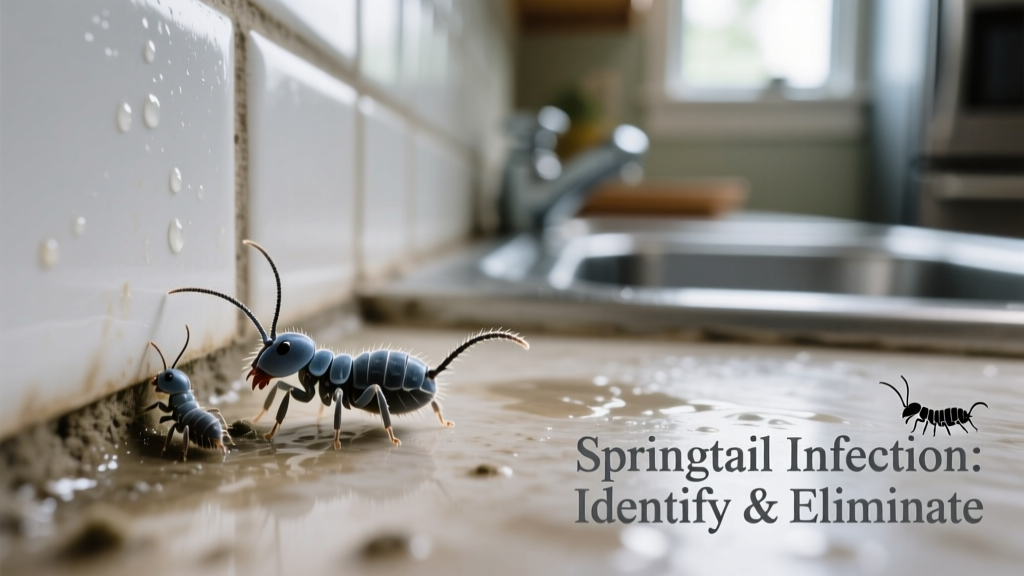
Springtails are tiny, wingless hexapods (not insects) that thrive in damp, organic-rich environments — and your kitchen’s under-sink cabinet, leaky faucet, or overwatered herb pots make perfect real estate. Though harmless to humans and pets, their sudden appearances — especially in clusters near sinks or countertops — trigger alarm and indicate underlying moisture issues you can’t ignore.
Identification
Springtails measure just 1–2 mm long and range from white and gray to bluish or purplish-black. They don’t bite or transmit disease, but their rapid, jerky 'jumping' (via a forked appendage called a furcula) is unmistakable — and often mistaken for fleas or mold mites.
Look for them in moist areas: along baseboards near the sink, inside damp dishrags, under refrigerators, or floating in standing water in drip pans. Unlike fruit flies, they won’t hover around ripe bananas — they’ll cluster where humidity exceeds 80%.
| Pest | Size | Movement | Preferred Habitat | Signs |
|---|---|---|---|---|
| Springtail | 0.2–2 mm | Short, erratic jumps (no wings) | Damp, decaying organic matter | Clusters on wet surfaces; vanish when disturbed |
| Fruit fly | 3–4 mm | Flying, hovering near fermenting food | Ripening fruit, garbage, drains | Swarming near produce or trash cans |
| Mold mite | 0.3–0.5 mm | Slow crawling (no jumping) | Visible mold colonies on walls or food | White dust-like film on damp pantry items |
| Flea | 1–3 mm | Longer jumps; feeds on blood | Pets, carpets, pet bedding | Bites on ankles; pets scratch excessively |
What Attracts Them
Springtails aren’t seeking food — they’re chasing moisture and microbial growth. Their presence means something in your kitchen is consistently wetter than it should be. Common attractors include:
- A slow leak under the sink (even 1 drip per minute adds up to 3 gallons/month)
- Overwatered potted herbs (basil, mint, and parsley pots are frequent hotspots)
- Condensation behind the refrigerator or dishwasher
- Decomposing food scraps trapped in cabinet corners or behind toe-kicks
- High indoor humidity (>60%) combined with poor ventilation
According to the U.S. EPA’s 2022 Indoor Air Quality Guide, kitchens average 55–75% relative humidity during cooking — well within springtail comfort range if airflow is restricted.
Treatment Methods
Natural Remedies
Start with non-toxic options — especially if you have kids or pets. Dry out the area first: wipe all surfaces, replace soggy shelf liners, and run a dehumidifier set to 45–50% RH for 48 hours. Then try:
- Food-grade diatomaceous earth (DE) lightly dusted along baseboards and cabinet corners — kills on contact by damaging their waxy cuticle
- 1:1 vinegar-water spray on visible clusters (kills on contact; avoid on natural stone)
- Cotton balls soaked in clove or peppermint oil placed near entry points — repels without toxicity
- Vacuuming with a HEPA filter (immediately seal and freeze the bag/canister for 24 hours before disposal)
Chemical Options
If populations persist after 5–7 days of drying and natural treatment, targeted insecticides may be needed. Use only labeled, low-impact products:
- Pyrethrin-based sprays (e.g., MGK PyGanic EC 1.4) applied as a crack-and-crevice treatment — effective for 3–5 days
- Boric acid gel bait (like Niban Fine Granular) placed in dry, inaccessible spots — disrupts metabolism upon ingestion
- Avoid broad-spectrum foggers: they don’t address the moisture source and can worsen indoor air quality
"Springtails are a symptom, not the disease. If you kill them but ignore the leak or condensation, they’ll be back in 72 hours." — Dr. Lena Cho, Entomologist, Purdue Extension IPM Program, 2023
Prevention
Long-term control means making your kitchen inhospitable. Focus on moisture management and sanitation:
- Check under-sink plumbing quarterly with a flashlight — look for mineral deposits or dark staining indicating slow leaks
- Install a small exhaust fan or open windows for 10 minutes after boiling or steaming
- Use moisture-absorbing silica gel packs in cabinets storing flour, oats, or dried beans
- Elevate potted plants on pebble trays instead of sitting directly in saucers
- Wipe down the exterior of the refrigerator and dishwasher weekly to prevent condensation buildup
Pair these steps with routine cleaning of drain traps using how to clean kitchen drain methods — biofilm in pipes feeds springtail food sources like bacteria and fungi.
When to Call an Exterminator
Call a licensed pest professional if:
- You see springtails in multiple rooms — especially bedrooms or bathrooms — suggesting a structural moisture issue
- Clusters return within 48 hours of thorough drying and cleaning
- You find evidence of hidden water damage (bubbling paint, warped flooring, musty odors)
- You’ve confirmed no visible leaks but humidity remains above 65% despite dehumidifier use
A certified technician can conduct thermal imaging and moisture meter readings — tools most homeowners lack. They’ll also inspect adjacent walls and crawlspaces where hidden condensation may feed infestations. For localized cases, start with kitchen pest control checklist before scheduling service.
Do springtails come from drains?
No — they don’t live in or breed inside pipes. But drains collect organic sludge and retain moisture, creating ideal surface conditions for springtails to gather. Cleaning the drain with enzymatic cleaners (not bleach) removes their food source and discourages congregation.
Can springtails get into food?
Rarely — they prefer decaying matter, not fresh food. However, if you find them in a bag of flour or oatmeal, discard it immediately. Their presence signals high ambient humidity or nearby moisture, not contamination per se — but cross-contamination risk exists if they’ve crawled across prep surfaces.
Are springtails dangerous to pets?
No. Springtails do not bite, parasitize, or carry pathogens harmful to dogs or cats. If your pet sniffs or licks one, no action is needed. That said, persistent springtails mean your pet’s water bowl or food storage area may be too humid — check for spills under bowls and replace damp kibble bags.
Why do I see them only after rain?
Outdoor springtail populations explode after heavy rainfall. When saturated soil forces them upward, they enter homes through gaps under doors, utility penetrations, or weep holes — especially on ground-level kitchens. Seal entry points with silicone caulk and install door sweeps rated for ≤⅛" gaps.
Will a dehumidifier alone get rid of them?
Not instantly — but it’s essential. Springtails desiccate and die within hours at ≤45% RH. Run a 30-pint dehumidifier continuously for 3 days in the affected zone, then maintain 45–50% RH. Pair with ventilation and leak repair for lasting results. For help choosing the right unit, see our best dehumidifier for kitchen comparison.
Springtails won’t harm your health, but they’re nature’s moisture alarm system. Address the dampness — not just the bugs — and your kitchen stays springtail-free year-round. Consistent monitoring beats reactive treatment every time.