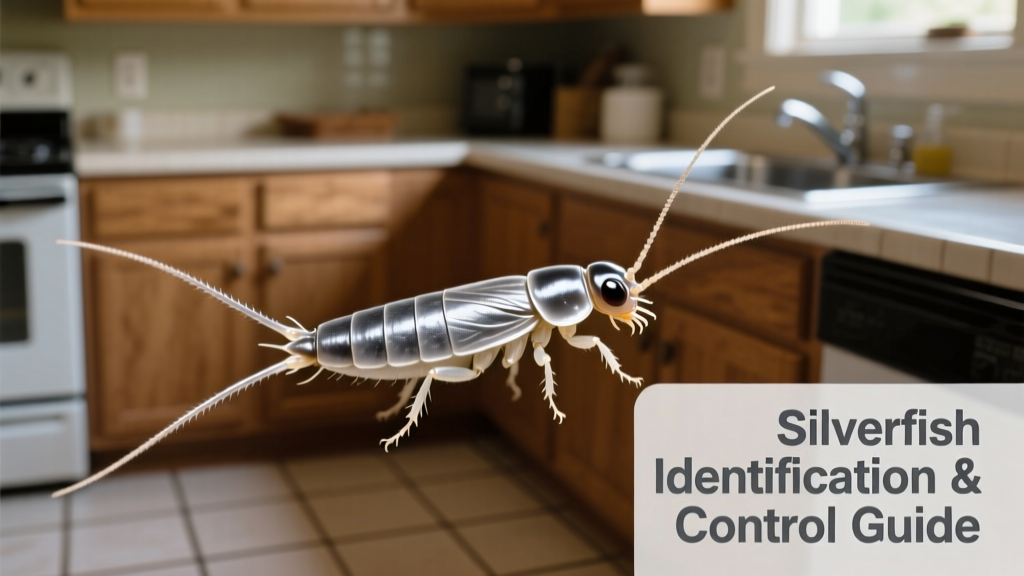
Silverfish aren’t just a nuisance—they’re a red flag for moisture and humidity issues in your kitchen. These wingless, silvery-gray insects (Lepisma saccharina) thrive where starches, sugars, and dampness converge—exactly where your pantry, cabinets, and sink base live. Left unchecked, they damage paper labels, glue in packaging, and even dry cereals and flour.
Identification
Silverfish are ½-inch long, teardrop-shaped, with three tail-like bristles and antennae nearly as long as their bodies. They move in quick, fish-like wiggles—hence the name. Unlike cockroaches or ants, they don’t bite or spread disease, but their presence signals underlying conditions that invite other pests.
| Pest | Size & Color | Key Features | Typical Location |
|---|---|---|---|
| Silverfish | ¼–½ inch; silvery-gray or pearl | No wings; 3 caudal filaments; fast, darting motion | Under sinks, behind appliances, inside cereal boxes |
| Fishmoth (Boreus hyemalis) | ⅛ inch; dark brown | Wingless but stout; slow-moving; found outdoors | Rare indoors; not pantry-associated |
| Firebrat | Similar size; mottled gray-brown | Same shape, but prefers >90°F heat (e.g., near water heaters) | Basement utility rooms—not kitchens |
What Attracts Them
Silverfish seek three things: moisture, darkness, and starchy food sources. Kitchens deliver all three—especially under leaky sinks, inside damp cardboard boxes of pasta or oatmeal, and behind refrigerators where condensation pools.
- Relative humidity above 75% (common near dishwashers and garbage disposals)
- Unsealed dry goods: flour, cornstarch, rice, rolled oats, and even book bindings on recipe binders
- Old paper towels, takeout menus, or cardboard cereal boxes stored under counters
According to the National Pest Management Association’s 2022 Household Pest Survey, silverfish infestations spike 37% in homes reporting persistent under-sink leaks or poor cabinet ventilation.
Treatment Methods
Natural Remedies
Start here—especially if you store food nearby or have kids or pets. Diatomaceous earth (food-grade) works by dehydrating silverfish on contact. Dust a thin line along cabinet baseboards and behind appliances—not inside open food containers. Boric acid gel bait stations (labeled for indoor use) also disrupt their nervous system, but place only in inaccessible cracks—not on countertops.
- Silica gel desiccant packets (like those in vitamin bottles) placed in pantry corners absorb local humidity
- Cedar oil spray (10 drops cedarwood essential oil + 2 oz water) deters silverfish when misted in cabinet voids weekly
- Sticky traps made from rolled-up newspaper coated in honey catch scouts before colonies expand
Chemical Options
Reserve chemical treatments for confirmed, recurring infestations. Pyrethrin-based aerosols (e.g., CB-80) kill on contact but break down quickly—ideal for spot-treating cabinet hinges and toe-kick areas. For long-term control, professional-grade insect growth regulators (IGRs) like hydroprene disrupt silverfish molting cycles over 4–6 weeks.
"Silverfish don’t respond to broad-spectrum sprays like ants or roaches do. Targeting their microhabitats—and drying them out—is 3x more effective than blanket applications." — Dr. Lena Cho, Entomologist, Purdue University Extension, 2023
Prevention
Elimination means nothing without sealing the invitation. Fix leaks first—U.S. EPA estimates that a dripping kitchen faucet wastes up to 3,000 gallons/year, creating ideal silverfish breeding zones. Then shift storage: replace cardboard boxes with rigid, lidded plastic or glass containers labeled with waterproof markers.
- Install a small exhaust fan or dehumidifier drawer under the sink (maintain RH <60%)
- Vacuum cabinet interiors monthly with a crevice tool—silverfish eggs cling to dust bunnies
- Seal gaps around pipes with copper mesh + silicone caulk (they can’t chew through copper)
- Rotate pantry stock using “first in, first out”—old flour and dried beans attract silverfish within 3 weeks
For ongoing monitoring, check our guide on pantry pests identification and learn how to distinguish silverfish from Indian meal moths or weevils.
When to Call an Exterminator
Call a licensed pest professional if you spot silverfish daily for more than two weeks—or find them in multiple cabinets *and* adjacent rooms (e.g., laundry or bathroom). That suggests a colony has matured beyond DIY reach. Licensed technicians use moisture meters to locate hidden damp zones and apply residual IGRs in wall voids where eggs hide.
Most reputable providers offer free inspections; ask whether they include humidity assessment and cabinet seal recommendations—not just spraying. You’ll find vetted local services in our pest control companies directory.
Can silverfish contaminate food?
They don’t defecate in food like flies or roaches, but they do shed scales and exoskeletons into open packages. Discard any dry goods with visible silverfish, webbing, or musty odor—even if no bugs are visible. Their presence indicates prolonged exposure to moisture, which encourages mold spores.
Do silverfish bite humans or pets?
No. Silverfish lack mouthparts capable of piercing skin. They feed exclusively on polysaccharides—glue, starch, cellulose, and dead skin cells—not blood or tissue. Reports of “bites” are usually misidentified dermatitis or flea reactions.
Why do I see silverfish only at night?
They’re photophobic and nocturnal, avoiding light to reduce dehydration. If you spot them midday, it means their hiding spots are overcrowded—or environmental stress (e.g., sudden humidity drop) is forcing them into the open.
Will cleaning alone get rid of them?
Cleaning helps—but only if paired with moisture control. Vacuuming removes adults and eggs, yet new ones hatch from cracks in baseboards within 3–4 weeks if humidity stays high. Combine deep cleaning with a dehumidifier and sealed storage for lasting results.
Are silverfish a sign of mold?
Indirectly, yes. Silverfish feed on mold spores and thrive in the same damp, organic-rich environments where mold grows. Finding them behind the fridge or under the sink warrants a mold inspection—especially if you smell earthy or musty odors.
How fast do silverfish reproduce in kitchens?
A single female lays 1–3 eggs per day for several months, often depositing them in cracks near food sources. Eggs hatch in 2–8 weeks depending on temperature and humidity. In warm, humid kitchens, populations can double every 3–4 months—so early intervention matters.
Silverfish won’t vanish overnight, but consistent humidity control and sealed storage break their life cycle in under six weeks. Focus on the under-sink zone first—it’s ground zero in 8 out of 10 kitchen infestations. For related concerns, see our guide on kitchen pests overview and how to tell silverfish apart from carpet beetles or springtails.