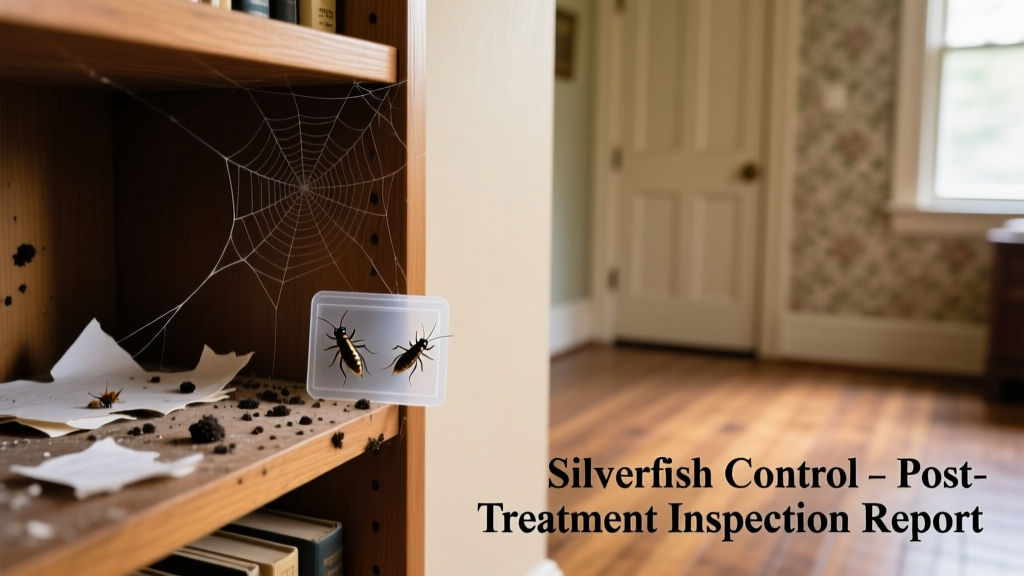
Silverfish are ancient, wingless insects that thrive in damp, dark places—think basements, bathrooms, and behind baseboards. Though they don’t bite or spread disease, they damage books, wallpaper paste, clothing, and stored food by feeding on starches, sugars, and cellulose. Left unchecked, a small population can grow to hundreds in just a few months.
Identification
Silverfish are unmistakable once you know what to look for: slender, carrot-shaped bodies (½–1 inch long), shimmering silvery-gray scales, three tail-like appendages at the rear, and two long antennae. They move in quick, fish-like wiggles—hence the name. Unlike firebrats (a close relative), silverfish prefer cooler, humid spots (70–80°F and >75% RH) and avoid light.
| Pest | Size & Color | Habitat Preference | Key Behavior |
|---|---|---|---|
| Silverfish | ½–1"; silvery, metallic sheen | Cool, humid (bathrooms, basements) | Nocturnal; avoids light; fast lateral movement |
| Firebrat | ½–¾"; mottled gray-brown | Warm, humid (near furnaces, water heaters) | More heat-tolerant; often found near appliances |
| Carpet beetle larva | ¼–⅜"; brown, hairy, oval | Dry, dusty (closets, under furniture) | Feeds on wool, fur, feathers—not paper or glue |
Signs of infestation include:
- Shed exoskeletons (translucent, whole-body casings) near baseboards or in cabinets
- Small, pepper-like black fecal pellets on shelves or in book spines
- Irregular notches or yellowish stains on paper, wallpaper, or fabric
- Live sightings at night—especially after turning on lights in dark rooms
What Attracts Them
Silverfish aren’t drawn to homes by accident—they’re lured by specific environmental conditions. High humidity is the biggest magnet: they absorb moisture through their cuticle and dehydrate quickly in dry air. According to the U.S. EPA’s 2022 Indoor Air Quality Guide, indoor relative humidity above 60% supports silverfish survival and reproduction year-round.
Other attractants include:
- Starchy materials: book bindings, wallpaper paste, cereal boxes, pet food
- Dark, undisturbed storage: cardboard boxes, old newspapers, folded laundry
- Leaky pipes or poor ventilation in bathrooms, kitchens, and crawl spaces
- Clutter that creates hiding spots and traps moisture
Treatment Methods
Natural Remedies
Start here if you have pets, kids, or prefer low-toxicity options. Diatomaceous earth (food-grade) works best—it’s a fine powder made from fossilized algae that damages silverfish exoskeletons on contact. Apply a thin line along baseboards, behind toilets, and under sinks. Reapply after cleaning or if it gets wet.
Other proven natural tactics:
- Cedar oil spray (10 drops cedarwood essential oil + 1 cup water): disrupts their nervous system; mist in cracks and corners weekly
- Sticky traps baited with rolled oats or dried fruit: place near suspected entry points—check daily
- Boric acid dust (use only in inaccessible areas like wall voids): dehydrates and poisons on ingestion; keep away from pets and children
Chemical Treatments
For moderate to heavy infestations, targeted insecticides deliver faster results. The National Pest Management Association’s 2023 Field Manual recommends pyrethroid-based sprays (e.g., deltamethrin) applied as a crack-and-crevice treatment—not broadcast spraying. Always follow label instructions and ventilate treated areas for at least 2 hours.
Effective chemical options include:
- Aerosol insecticide dust (e.g., DeltaDust) injected into wall voids via drill holes near plumbing stacks
- Residual liquid sprays (e.g., Suspend SC) applied to baseboards, under sinks, and behind appliances
- Gel baits containing abamectin—silverfish carry it back to nests, increasing colony impact
"Silverfish rarely respond to perimeter sprays. Success hinges on treating harborage sites—not where you see them, but where they hide and breed." — Dr. Lena Torres, Entomologist, University of Florida IFAS Extension (2022)
Prevention
Elimination means little without long-term prevention. Focus on moisture control first—install dehumidifiers in basements (<50% RH target), fix dripping faucets within 48 hours, and add exhaust fans to bathrooms (run 20+ minutes post-shower). Seal gaps around pipes, windows, and door frames with silicone caulk—silverfish squeeze through cracks as narrow as 1/64".
Also critical:
- Store dry goods (cereal, flour, pet food) in hard plastic or glass containers with tight lids
- Rotate stored items every 3 months—silverfish eggs hatch in 19–32 days depending on temperature
- Vacuum bookshelves and closet floors weekly with a HEPA filter to remove eggs and nymphs
- Replace cardboard boxes with plastic totes—cardboard is both shelter and food
When to Call an Exterminator
Call a licensed pest professional if you’ve treated consistently for 3 weeks with no reduction in sightings—or if you find silverfish in multiple rooms across different floors. A certified technician will conduct a moisture audit, use infrared cameras to locate hidden nests behind walls, and apply microencapsulated insecticides that last 90+ days.
Look for companies certified by the NPMA or with IPM credentials. Avoid firms offering “one-time fogging” packages—silverfish live deep in voids and won’t be affected by aerosols alone.
Do silverfish bite humans?
No. Silverfish lack mouthparts capable of piercing human skin. They feed exclusively on carbohydrates and proteins found in organic matter—not blood or tissue.
Can silverfish climb walls and ceilings?
Yes—they have tiny claw-like structures (tenent setae) on their feet that let them scale smooth vertical surfaces like tile, glass, and painted drywall. That’s why you’ll sometimes spot them on bathroom mirrors or shower doors.
Are silverfish harmful to pets?
No direct harm, but they can contaminate pet food bowls and chew through kibble bags. More importantly, boric acid or diatomaceous earth used for control can irritate pets’ respiratory tracts if inhaled—always apply these in pet-inaccessible zones.
How long do silverfish live?
Surprisingly long for insects: 2–8 years, depending on temperature and humidity. They molt up to 60 times in their lifetime and continue reproducing into old age—making early intervention critical.
Will bleach kill silverfish?
Bleach may kill on contact, but it’s ineffective as a treatment. It evaporates too quickly, doesn’t penetrate cracks, and offers zero residual effect. Worse, mixing bleach with other cleaners (like ammonia in urine-soaked areas) creates toxic chloramine gas.
Do silverfish mean my home is dirty?
No. Silverfish indicate moisture issues—not sanitation failures. You’ll find them in immaculate homes with leaky foundations or poorly vented attics. Focus on humidity control, not scrubbing.
Getting rid of silverfish isn’t about eradicating a single pest—it’s about rebalancing your home’s microclimate. Fix the humidity, seal the entry points, and rotate your stored goods. With consistent action, most infestations drop below noticeability in under 4 weeks. For persistent cases, pair DIY efforts with a professional inspection to uncover hidden moisture sources—and remember, silverfish are more symptom than cause.