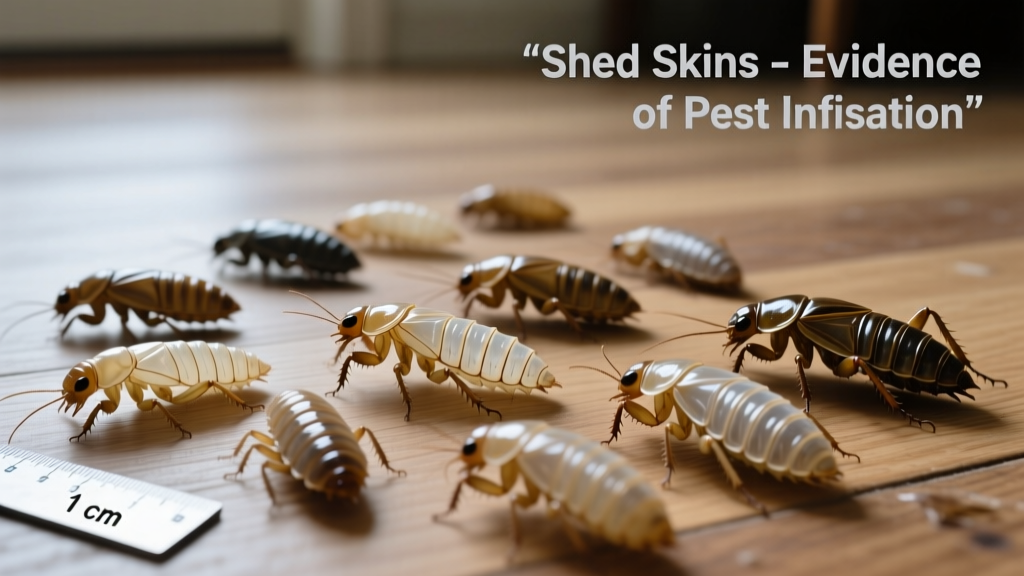
Shed skins on your floor aren’t just unsightly—they’re a clear signal that something is breeding or molting inside your home. Most commonly, these translucent, hollow exoskeletons point to insects undergoing metamorphosis, especially those that thrive in warm, humid, or cluttered spaces like sheds, basements, and garages.
Identification
Shed skins (also called exuviae) are left behind when immature insects molt. The size, shape, and location of the skin help narrow down the culprit. Look for fine detail: leg segments, head capsules, and whether wings are present—even in partial form.
- House crickets: ½–1 inch long, tan with three dark bands on the head; skins often near baseboards or in cardboard boxes
- German cockroach nymphs: 3–5 mm, shiny brown-black, two dark parallel stripes behind the head; skins found in kitchen cabinets or under sinks
- Silverfish: ½ inch, silvery, carrot-shaped, no wings; skins appear in bathrooms, attics, or behind bookshelves
- Carpet beetle larvae: Tiny (2–4 mm), bristly, reddish-brown; skins often mixed with lint or dust bunnies near wool rugs or stored clothing
| Pest | Skin Size | Key Features | Typical Location |
|---|---|---|---|
| German cockroach | 3–5 mm | Two dark dorsal stripes, oval head capsule | Under appliances, pantry shelves |
| Silverfish | 4–6 mm | Tapered body, three tail-like appendages | Bathrooms, basements, paper stacks |
| Carpet beetle larva | 2–4 mm | Dense bristles, segmented, curved posture | Wool carpets, wool sweaters, bird nests in eaves |
| House cricket | 8–12 mm | Long antennae, visible hind legs, no wings yet | Garages, sheds, crawlspaces |
What Attracts Them
These pests don’t wander in randomly—they follow food, moisture, shelter, or breeding opportunities. German cockroaches seek grease, crumbs, and damp warmth. Silverfish love starches in wallpaper paste, book bindings, and cotton fabrics. Carpet beetle larvae feed on keratin in wool, feathers, and pet hair. Crickets are drawn to outdoor lighting and gaps near doors or foundation vents.
- High humidity (>60% RH) encourages silverfish and cockroach development
- Cluttered storage—especially cardboard, paper, and fabric—provides nesting and feeding sites
- Unsealed entry points (cracks >1/16”, gaps under doors, torn screens) let them in year-round
- Old pet food, open cereal boxes, or forgotten dried fruit in pantries sustain infestations silently
Treatment Methods
Natural Options
Start with non-toxic interventions—especially if you have pets, kids, or sensitive airways. Diatomaceous earth (food-grade) works well against silverfish and carpet beetle larvae: apply a thin line along baseboards and under shelves. Sticky traps placed near suspected activity reveal species and hotspots. Vacuuming with a HEPA filter removes both live pests and shed skins—and disrupts breeding cycles by removing eggs and nymphs.
According to the National Pest Management Association’s Pest Control Best Practices Report (2022), “Diatomaceous earth reduced silverfish populations by 73% in monitored homes after 10 days of consistent application.”
Chemical Options
For persistent infestations, targeted insect growth regulators (IGRs) like hydroprene stop molting and reproduction without broad-spectrum toxicity. Gel baits containing fipronil or abamectin are highly effective against German cockroach nymphs—apply only in cracks and crevices, never on open surfaces. Avoid broadcast sprays: they repel cockroaches deeper into walls and rarely contact hidden nymphs.
Prevention
Preventing future molting events means cutting off access and eliminating conditions pests need to mature. Seal all gaps larger than 1/16” with silicone caulk or copper mesh. Install door sweeps and repair damaged window screens. Reduce indoor humidity using dehumidifiers—keep basement levels below 50% RH. Store dry goods in hard-sided, lidded containers (glass or thick plastic), not cardboard or paper bags.
- Wash and freeze wool clothing for 72 hours before storing to kill carpet beetle eggs
- Rotate stored items every 3 months to disrupt hidden life cycles
- Replace cardboard moving boxes with plastic totes—cardboard attracts silverfish and cockroaches
- Inspect secondhand furniture thoroughly before bringing it indoors
When to Call an Exterminator
Call a licensed professional if you find more than 10 shed skins in one week—or if you spot live adults regularly in multiple rooms. A certified technician can perform thermal imaging to locate wall voids harboring cockroach colonies, conduct dust sampling for carpet beetle larvae in insulation, and install monitoring stations that track developmental stages over time. Delaying treatment allows populations to multiply exponentially: German cockroaches can produce up to 300 offspring in 3 months.
Are shed skins dangerous to humans?
No, the skins themselves aren’t toxic or allergenic—but their presence signals active infestation. Cockroach exoskeleton fragments and feces are major asthma triggers, especially for children. The U.S. EPA identifies cockroach allergens as one of the top five indoor asthma contributors in urban housing (2021 Indoor Air Quality Report).
Can vacuuming alone eliminate the problem?
Vacuuming helps reduce numbers and removes evidence, but it won’t reach eggs glued in cracks or nymphs hiding behind baseboards. Use a crevice tool and empty the canister outside immediately—otherwise, survivors may crawl back out.
Why do I only see skins—not live bugs?
Nymphs and larvae are nocturnal and photophobic. They hide in wall voids, under appliances, or deep in clutter during daylight. You’re seeing proof of their presence—not the pests themselves. Finding skins is often the first detectable sign of an infestation that’s been growing for weeks.
Do shed skins mean the pest is gone?
Not at all. Molting happens repeatedly—cockroach nymphs molt 6–7 times before adulthood; silverfish molt up to 60 times in their lifetime. Each skin is evidence of ongoing development, not departure.
Can I confuse spider molts with insect skins?
Rarely. Spider exuviae retain leg joints and eye arrangements, often with visible chelicerae (fangs). Insect skins show antennae, mouthparts, and segmented abdomens—but no spinnerets. If you see silk nearby or a single large, intact skin (½ inch+), consider spider molt identification.
Is this related to seasonal changes?
Yes. Peak molting occurs in spring and summer when temperatures rise above 70°F and humidity climbs. But indoor heating keeps basements and utility rooms warm year-round—so infestations rarely go dormant. Watch closely in March through October, but don’t assume winter means safety.
If you’ve found shed skins, you’re already past early detection—you’re in active management mode. The good news? Most causes respond quickly to precise intervention. Start with identification and moisture control, then escalate only as needed. For long-term success, pair treatment with structural fixes—like sealing that gap under your garage door or replacing water-damaged baseboard where silverfish nest. And if you’re unsure whether it’s a carpet beetle vs. silverfish situation, snap a close-up photo with a coin for scale and consult a local extension office before applying treatments.