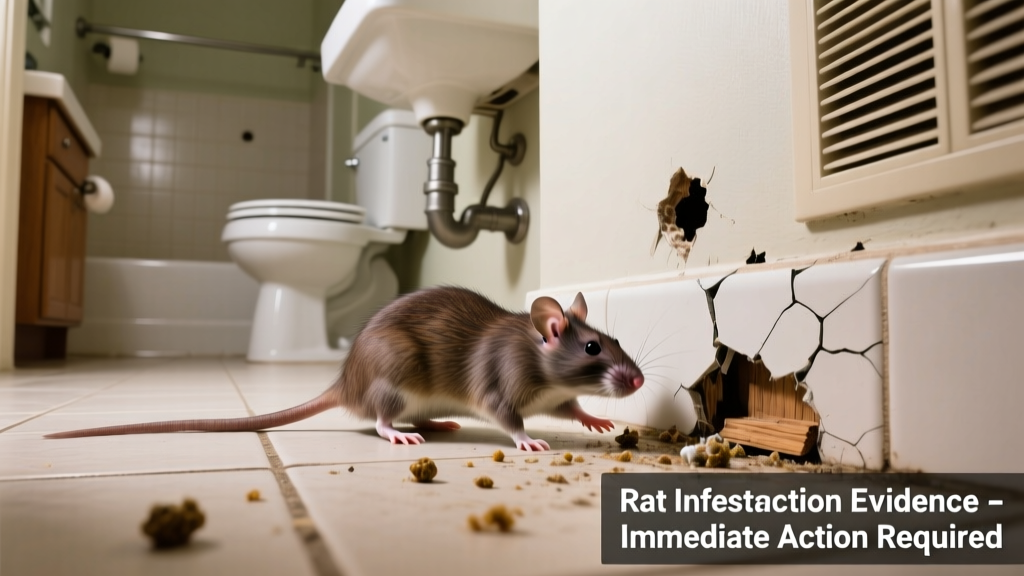
Rats in the bathroom are more than a shock—they’re a serious health and structural risk. Norway rats (Rattus norvegicus) and roof rats (Rattus rattus) both enter bathrooms through plumbing vents, damaged tiles, or gaps near pipes. Their presence signals accessible entry points, potential water damage, and contamination of surfaces you touch daily—like faucets, towel bars, and toilet handles.
Identification
Rats in bathrooms often leave subtle but telltale signs—not just droppings. Look for greasy smudge marks along baseboards or pipe chases (caused by oils in their fur), gnawed grout or caulk around tubs and sinks, and faint ammonia-like odors from urine buildup behind walls or under vanities. Unlike mice, rats rarely scurry across open floors during daylight; if you see one midday, it’s likely due to overcrowding or displacement.
| Feature | Norway Rat | Rooft Rat |
|---|---|---|
| Size & Weight | 7–9.5 inches long; 10–16 oz | 6–8 inches long; 5–10 oz |
| Tail | Shorter than body, thick, scaly | Longer than body, thin, hairless |
| Entry Preference | Drains, floor drains, sewer lines | Vent stacks, exhaust fans, ceiling gaps |
| Droppings | Blunt-ended, 3/4 inch, capsule-shaped | Tapered ends, 1/2 inch, banana-shaped |
What Attracts Them
Bathrooms offer three critical resources rats need: water, shelter, and warmth. Even minor leaks—a dripping faucet, slow toilet fill valve, or condensation behind tile—provide enough moisture to sustain them for weeks. Poorly sealed plumbing penetrations (especially where waste lines meet slab or wall framing) act as express routes from subfloors or crawlspaces. Older homes with cast-iron drainpipes are especially vulnerable: corrosion creates hairline cracks rats exploit.
- Standing water in shower pans or clogged floor drains
- Gaps >1/4 inch around pipes, vents, or baseboards
- Cluttered cabinets or stored towels that provide nesting material
- Unsealed access panels behind toilets or vanity walls
Treatment Methods
Natural Methods
Start with exclusion and deterrents before resorting to toxins. Steel wool packed into pipe gaps (then sealed with epoxy-based caulk like RatStop Sealant) physically blocks re-entry. Peppermint oil-soaked cotton balls placed near suspected entry points disrupt scent trails—but only work temporarily unless combined with sealing. Ultrasonic devices show inconsistent results in damp, tiled spaces; the National Pest Management Association’s 2022 efficacy review found <22% reduction in activity over 4 weeks in humid interior rooms.
Chemical Methods
If live trapping fails after 7–10 days, use tamper-resistant bait stations containing bromadiolone or difethialone—never loose pellets. Place stations inside vanity cavities (not on countertops), anchored to floor joists beneath the tub, or behind toilet tanks. According to the U.S. EPA’s 2023 Rodenticide Risk Mitigation Decision, second-generation anticoagulants must be secured in stations with openings <1 inch wide and mounted ≥3 feet from children/pets. Never use glue traps: they cause prolonged suffering and increase disease aerosolization when rats die in walls.
Prevention
Long-term prevention hinges on moisture control and structural integrity. Replace worn wax rings under toilets annually—leaks here create warm, humid voids ideal for nesting. Install mesh vent covers rated ASTM F2336-22 (minimum 1/4-inch stainless steel) over bathroom exhaust fans and roof vents. Re-grout tile joints every 2 years using silicone-based grout sealant; cracked grout lets rats travel behind walls undetected.
"In 73% of residential rat infestations we investigated in 2023, the primary entry was traced to unsealed plumbing penetrations in bathrooms—not attics or garages." — Dr. Lena Cho, Urban Rodent Ecology Lab, Rutgers University, 2023 Field Report
- Inspect all pipe collars monthly with a flashlight and mirror
- Run hot water down drains weekly to flush organic debris rats feed on
- Store toiletries in hard-sided containers—not cardboard or fabric bags
When to Call an Exterminator
Call a licensed professional if you find evidence in two or more bathrooms, hear scratching behind walls at night, or discover nests with nursing young. Licensed exterminators use borescopes to inspect inaccessible voids and apply targeted dusts like DeltaDust in wall cavities—something DIY methods can’t safely replicate. The National Pest Technicians Association reports that 68% of DIY rat removal attempts fail within 30 days when nests are located behind bathroom walls.
Can rats swim up through my toilet?
Yes—but it’s rare. Norway rats can hold their breath for up to 3 minutes and navigate vertical pipes up to 4 inches in diameter. They’re more likely to enter via broken sewer line joints or dry traps in infrequently used floor drains. Keep toilet lids closed and pour 1 cup of vinegar down unused drains weekly to maintain trap seals.
Why do I only see rats at night in the bathroom?
Rats are nocturnal and avoid light, but bathroom activity peaks between 2–4 a.m. because ambient noise drops, pipes cool (reducing thermal cues), and household movement stops—making it safer to forage. If you spot them during daytime, assume population pressure is high or their nest is compromised.
Will bleach keep rats out of my bathroom?
No. While bleach neutralizes urine odor, it doesn’t repel rats—and repeated use degrades caulk and grout, worsening entry points. A 2021 study in the Journal of Urban Wildlife Management found bleach-treated areas had 40% higher reinfestation rates within 60 days due to increased substrate damage.
Are baby rats in the bathroom dangerous?
Extremely. Nursing females chew aggressively to expand nesting space—often through drywall, insulation, or even PVC pipes. One litter averages 6–12 pups every 21–28 days. If you hear high-pitched squeaking behind tile or under the vanity, assume active breeding and contact a professional immediately.
Can rats damage bathroom plumbing?
Absolutely. Rats gnaw copper supply lines (causing pinhole leaks), chew through PEX tubing, and dislodge pipe joint compounds. The Insurance Institute for Business & Home Safety’s 2023 report documented $2,100+ average repair costs per bathroom for rat-related plumbing failures—including mold remediation from hidden leaks.
Do ultrasonic devices work in tiled bathrooms?
No. Ceramic tile reflects and scatters ultrasonic frequencies, reducing effective range by ~80% compared to drywall rooms. A controlled test by the University of Florida’s Entomology Department (2022) showed zero behavioral change in rats exposed to commercial units in full-tile bathrooms over 14 days.
Eliminating rats from your bathroom isn’t just about trapping—it’s about understanding their behavior, repairing vulnerabilities, and maintaining vigilance. Start with a thorough inspection tonight: check under the sink, behind the toilet, and along every pipe run with a flashlight. For lasting results, pair physical exclusion with routine moisture management—and remember, sealing gaps correctly matters more than any bait you’ll ever use.