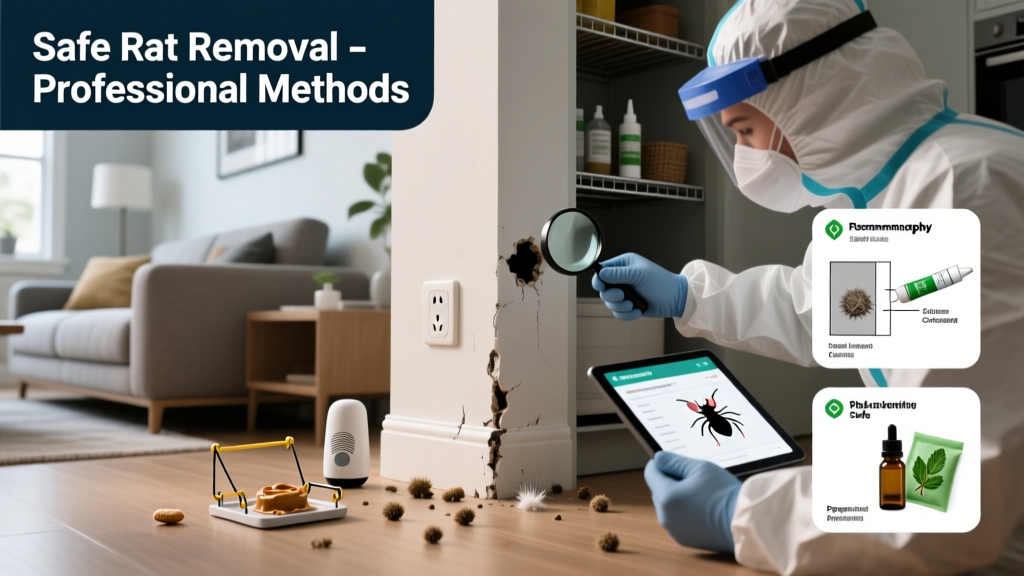
Rats aren’t just noisy or messy—they’re dangerous. Norway rats and roof rats carry over 35 diseases transmissible to humans (CDC, 2022), chew through wiring (causing 26% of undetermined structure fires per NFPA 2023), and reproduce rapidly—one pair can produce up to 2,000 descendants in a year. Ignoring even one sighting puts your health, home, and wallet at risk.
Identification
Spotting rats early is critical—and tricky. They’re nocturnal, shy, and often hide in walls, attics, or under floors. Look beyond droppings: listen for scratching behind walls at dusk, check for greasy rub marks along baseboards, and inspect for gnawed plastic, wood, or insulation.
Physical Traits & Key Signs
- Norway rat: Brownish-gray, blunt nose, shorter tail than body, 7–10 inches long; nests in burrows, basements, crawl spaces
- Rooftop rat: Sleeker, black or dark brown, pointed nose, tail longer than body; prefers attics, trees, and upper levels
- Droppings: Norway rat pellets are blunt-ended and ¾ inch long; roof rat droppings are tapered and ~½ inch
- Gnaw marks: Clean, parallel grooves ~⅛ inch wide—often on pipes, drywall, or stored food packaging
| Feature | Rat (Norway) | Rat (Roof) | House Mouse |
|---|---|---|---|
| Size (head + body) | 7–10 inches | 6–8 inches | 2.5–4 inches |
| Tail length | Shorter than body | Longer than body | As long as body |
| Entry hole size | ≥½ inch | ≥½ inch | ¼ inch |
| Preferred nesting | Ground level, soil, basements | Elevated, trees, attics | Wall voids, cabinets, clutter piles |
What Attracts Them
Rats don’t wander in randomly—they follow reliable resources. Food, water, and shelter form the ‘rat triangle.’ A single leaky faucet, open pet food bag, or compost bin left uncovered is enough to draw them in. According to the National Pest Management Association’s 2023 Rodent Behavior Survey, 68% of infestations begin within 30 feet of accessible food waste or standing water.
- Unsecured garbage (especially if bags tear or bins lack tight lids)
- Pet food left outdoors overnight or in accessible indoor bowls
- Overgrown shrubbery or stacked firewood touching the house (provides cover and nesting)
- Clogged gutters holding stagnant water or debris
- Unclean grills, bird feeders, or fallen fruit beneath trees
Treatment Methods
Natural & Mechanical Options
Start with non-toxic, low-risk methods—especially if you have pets, kids, or allergies. Snap traps remain the gold standard for speed and reliability when placed correctly. Use peanut butter (not cheese) as bait—it’s sticky, high-protein, and irresistible. Place traps perpendicular to walls, with triggers facing the wall, every 2–3 feet in active zones.
- Electronic traps (e.g., Rat Zapper) deliver instant, humane electrocution—no handling required
- Ultrasonic devices show inconsistent results; the FTC warns they’re not proven effective against established infestations (FTC Consumer Alert, 2021)
- Peppermint oil sprays may deter but won’t eliminate—use only as a short-term signal while sealing entry points
Chemical & Professional-Grade Solutions
Anticoagulant rodenticides (like bromadiolone) work by preventing blood clotting—but they pose secondary poisoning risks to pets and wildlife. The U.S. EPA requires tamper-resistant bait stations for all retail rodenticides sold after 2015. Never scatter loose bait indoors. If using poison, pair it with monitoring: mark each bait station, check daily, and replace only when consumed.
"Bait alone rarely solves the problem. In 9 out of 10 severe infestations we handle, clients had used multiple bait blocks—but missed sealing the 3–5 key entry points that let new rats in weekly." — Carlos Mendez, licensed PCO with 18 years’ field experience, MetroPest Solutions
Prevention
Sealing beats trapping every time—once the current rats are gone, stop replacements before they arrive. Focus on structural integrity, not just cleanliness. Rats squeeze through holes the size of a quarter; they chew through aluminum, drywall, and soft concrete.
- Install steel wool + caulk around pipe penetrations (steel wool deters chewing; caulk seals)
- Replace rotted door sweeps and repair gaps >¼ inch under garage or basement doors
- Use ¼-inch hardware cloth (not chicken wire) to cover vents, soffits, and crawlspace openings
- Trim tree branches ≥6 feet from rooflines and exterior walls
- Store dry goods in glass or thick plastic containers with locking lids—not cardboard or thin zip-top bags
When to Call an Exterminator
Hire a licensed professional if you’ve found evidence in two or more areas (e.g., droppings in attic and basement), hear consistent scurrying after midnight for >3 nights, or spot live rats during daylight hours—a sign of overcrowding and possible disease pressure. Most reputable firms offer free inspections and guarantee retreatments for 30–90 days.
Can rats climb walls or pipes?
Yes—roof rats excel at vertical climbing. They scale stucco, brick, and downspouts with ease, and shimmy up PVC and copper pipes using their claws and tails for balance. Norway rats prefer ground-level routes but will climb if necessary.
Do rats leave on their own?
No. Rats establish territories and defend them. Without intervention—removal plus exclusion—they stay indefinitely. Population growth follows a J-curve: slow at first, then explosive once breeding pairs mature.
How fast do rats reproduce?
A female Norway rat reaches sexual maturity at 8–12 weeks and can produce 6–12 litters per year, averaging 6–12 pups per litter. That’s up to 120 offspring annually per female—before accounting for her daughters’ first litters.
Will vinegar or ammonia repel rats?
Not reliably. While strong odors may cause brief avoidance, rats acclimate quickly. A 2022 study in the Journal of Urban Pest Management found no statistically significant reduction in rat movement after 14 days of ammonia application in controlled field trials.
Are ultrasonic repellents safe for pets?
Most are harmless to dogs and cats—but ineffective. Their sound waves don’t penetrate walls or furniture, and rats habituate within days. Don’t rely on them instead of sealing or trapping.
Can I use mothballs to get rid of rats?
No. Mothballs contain naphthalene or paradichlorobenzene—both toxic to humans and pets when inhaled or ingested. The EPA prohibits their use as rodent repellents. They offer zero deterrent effect and pose serious health risks.
Getting rid of rats isn’t about choosing one tactic—it’s layering detection, removal, and exclusion. Start with rat droppings identification to confirm species and activity level, then move to sealing rat entry points before setting traps. For persistent cases, consult a local pro—many offer same-day service and use integrated pest management (IPM) that prioritizes safety and long-term results. You’ll sleep easier knowing your home is truly rat-proof—not just temporarily quiet.