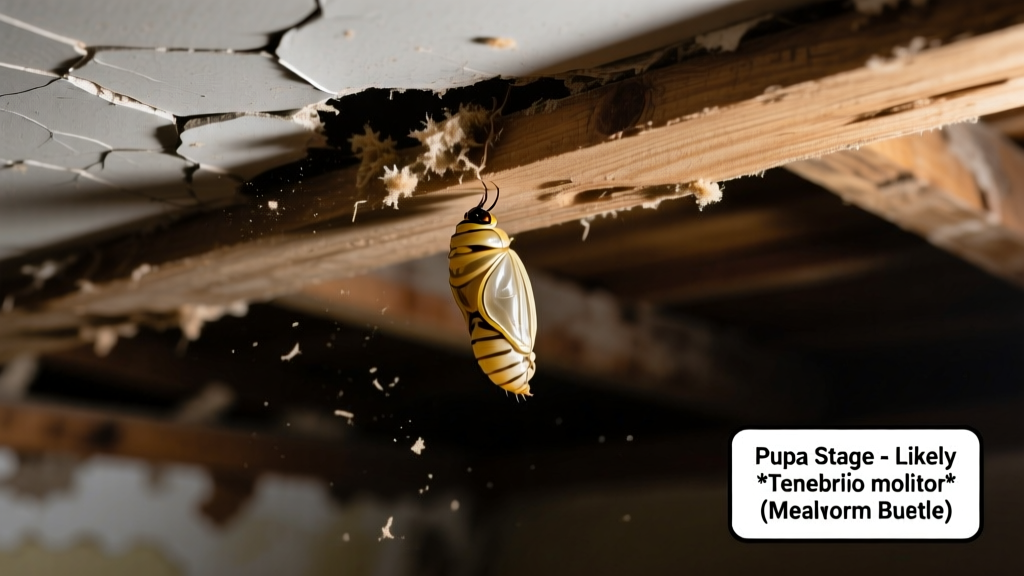
Pupae clinging to ceiling corners, light fixtures, or along crown molding aren’t just unsightly—they’re a clear signal that a moth or fly species has completed its larval development indoors. Unlike random debris, these hardened casings indicate an active infestation cycle, often tied to stored food, decaying organic matter, or neglected moisture sources.
Identification
Pupae on ceilings most commonly belong to Indian meal moths (Plodia interpunctella) or houseflies (Musca domestica), though clothes moths and drain flies occasionally leave them in high, sheltered spots. Indian meal moth pupae are pale brown, ~6–8 mm long, and often wrapped in loose silk webbing. Housefly pupae (called puparia) are dark reddish-brown, barrel-shaped, and about 8 mm—resembling tiny, shiny capsules.
| Pest Species | Pupae Appearance | Typical Location on Ceiling | Associated Clues |
|---|---|---|---|
| Indian meal moth | Pale brown, oval, silken cocoon visible | Near pantry lights, above cabinets, attic eaves | Webbing in dry goods, tiny holes in cereal boxes |
| Housefly | Dark brown, hard-shelled, tapered ends | Along beams, behind ceiling tiles, near vents | Fly activity near trash, pet waste, or rotting fruit |
| Clothes moth | Off-white, cylindrical, often hidden in dust | Inside light fixtures, attic rafters, closet corners | Holes in wool sweaters, fur coats, or carpet edges |
Use a magnifying glass and flashlight at night—many pupae reflect light differently than dust or cobwebs. If you spot more than three pupae in one room over 48 hours, assume breeding is active nearby.
What Attracts Them
These pests don’t randomly pupate overhead. They seek elevated, undisturbed sites for protection during metamorphosis. Indian meal moths climb upward after feeding in pantries; houseflies crawl up walls seeking dry, warm voids before pupating. Key attractants include:
- Unsealed grain, nut, or pet food containers (meal moths)
- Rotted fruit left on counters or in garbage bins (houseflies)
- Damp insulation or leaky HVAC ducts creating humidity pockets (drain flies)
- Old bird nests in soffits or attic vents (clothes moths and blowflies)
According to the National Pest Management Association’s 2022 Infestation Patterns Report, 68% of indoor moth pupation events occur within 10 feet of a food source—even if that source is tucked inside a sealed plastic bin with microscopic gaps.
Treatment Methods
Natural Methods
Start with non-toxic disruption. Vacuum all visible pupae using a crevice tool, then immediately seal the vacuum bag in a freezer for 48 hours before disposal. Wipe ceiling surfaces with a 50/50 vinegar-water solution to remove pheromone trails. Place pantry-grade pheromone traps like Indian meal moth traps near suspected entry points—these lure adults before they lay eggs.
Chemical Options
Only consider insecticides if pupae reappear after 7 days of natural intervention. Use aerosol pyrethrin sprays labeled for flying insects—but never spray directly onto electrical fixtures or insulation. For persistent cases, apply a residual insecticide dust (e.g., deltamethrin) into wall voids or attic access points using a hand duster. The U.S. EPA notes that improper application of such dusts accounts for 31% of reported pesticide misuse incidents in residential settings (EPA Pesticide Incident Monitoring System, 2023).
"Ceiling pupae are rarely the start of the problem—they’re the finish line of a hidden infestation. Find the larvae’s food source first, or you’ll keep cleaning pupae off the same spot for months." — Dr. Lena Cho, Entomologist, UC Riverside IPM Program, 2021
Prevention
Break the life cycle by eliminating larval food and blocking access. Store flour, rice, nuts, and birdseed in rigid, lidded glass or metal containers—not plastic bags or cardboard boxes. Seal cracks around windows, baseboards, and ceiling fixtures with silicone caulk. Install fine-mesh vent covers (≤1/8") on attic and bathroom exhausts. Replace incandescent bulbs with LED ones—heat from older bulbs attracts moths seeking warm pupation sites.
- Clean pantry shelves monthly with soapy water (not just wiping)
- Inspect secondhand furniture and clothing for webbing before bringing indoors
- Run bathroom and kitchen fans 20 minutes post-shower/cooking to reduce humidity
When to Call an Exterminator
Contact a licensed pest professional if you find pupae in multiple rooms, discover live larvae crawling on walls or ceilings, or see adult moths flying at dusk for more than five consecutive days. Also call if pupae appear inside light fixtures or behind ceiling tiles—these locations often mean breeding is occurring inside wall voids or insulation. A certified technician can perform thermal imaging to locate hidden larval clusters and apply targeted treatments inaccessible to DIY methods. See our list of licensed exterminators near you for verified providers.
Why do pupae stick to ceilings instead of falling?
Larvae spin silk threads before pupating—these anchor the casing firmly to smooth surfaces. Ceilings offer minimal disturbance and stable temperatures, making them ideal for metamorphosis. Gravity doesn’t dislodge them because the silk bonds chemically to paint, plaster, or dust layers.
Can pupae hatch if I leave them alone?
Yes—most pupae complete development in 5–14 days depending on temperature. Uninterrupted pupae will release adults that immediately begin mating and laying eggs. A single female Indian meal moth lays 200–400 eggs in her 5–7-day adult lifespan, rapidly escalating the problem.
Are ceiling pupae dangerous to humans or pets?
No direct health risk exists from pupae themselves—but their presence signals conditions favorable to disease-carrying pests. Housefly pupae indicate proximity to fecal contamination; meal moth infestations compromise food safety. In rare cases, airborne silk fragments from moth cocoons may trigger mild respiratory irritation in sensitive individuals.
Do spiders leave pupae on ceilings?
No. Spiders don’t form pupae—they lay egg sacs, which are round, silken, and often suspended on threads. Pupae are exclusive to holometabolous insects (those with complete metamorphosis): moths, flies, beetles, wasps. If you see clustered, oblong, hardened cases, it’s not spider-related.
How do I tell pupae from mold or insect droppings?
Pupae are uniform in shape, symmetrical, and detach cleanly with gentle pressure from a cotton swab. Mold grows in fuzzy patches and smears when touched; droppings are irregular, crumbly, and often found beneath roosting or feeding sites. Use a jeweler’s loupe: pupae show segmented bodies and sometimes visible antennae or wing pads.
Spotting pupae on your ceiling isn’t just a nuisance—it’s your home’s early warning system. Address the root cause within 48 hours, and you’ll likely avoid recurring waves of adults. For ongoing pantry protection, try our pantry pest-proofing checklist, designed to stop infestations before they reach the ceiling.