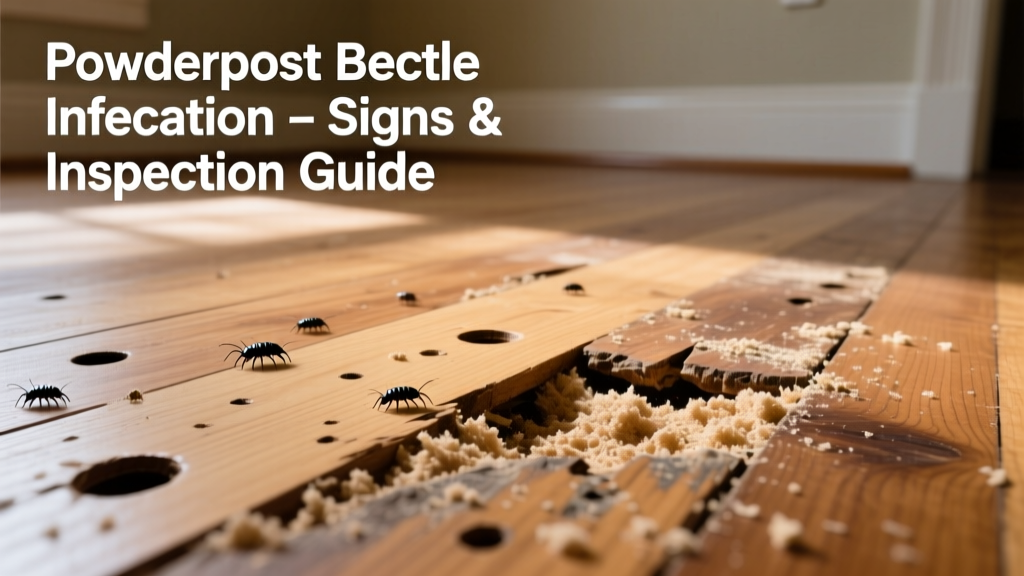
Powderpost beetles are tiny wood-boring insects—typically 1/8 to 3/16 inch long—that lay eggs in cracks or pores of hardwoods like oak, ash, hickory, and bamboo. Their larvae tunnel silently for 1–5 years, reducing structural timber and antiques to fine, flour-like frass (sawdust). Left unchecked, they compromise load-bearing beams, flooring, and heirloom furniture—often without visible signs until damage is severe.
Identification
Adult powderpost beetles resemble slender, reddish-brown ants but have distinct antennae with three-segmented clubs. You’ll rarely see the adults—they’re nocturnal and short-lived—but you’ll spot their work: small, round exit holes (1/32–1/16 inch) with fine, pale frass that piles up like talcum powder beneath infested wood. Active infestations show fresh frass near holes; old infestations have dusty, discolored holes with no new debris.
| Species | Size | Preferred Wood | Exit Hole Diameter | Key Clue |
|---|---|---|---|---|
| Lyctus spp. (true powderpost) | 1/16–1/8 inch | Hardwoods only (sapwood) | 0.03–0.04 inch | Frass feels gritty—not fluffy—when rubbed between fingers |
| Bostrichidae (false powderpost) | 1/8–3/16 inch | Hardwoods & softwoods | 0.04–0.08 inch | Holes often plugged with frass; adults chew into wood headfirst |
| Anobiid (deathwatch beetles) | 1/8 inch | Aged softwoods (e.g., subflooring) | 0.05–0.07 inch | Tap-tap-tapping sound at night in old buildings |
What Attracts Them
Powderpost beetles don’t seek out homes—they hitchhike in raw or unfinished hardwoods. Infestations start when lumber, flooring, or furniture is milled from recently felled trees with eggs or larvae already present. They thrive where relative humidity stays above 50% and temperatures hover between 65–85°F—conditions common in basements, crawl spaces, and humidified living rooms. Kiln-dried wood under 10% moisture content is rarely attacked, but improperly dried or stored lumber is highly vulnerable.
- Unfinished or lightly sealed hardwood flooring, trim, or paneling
- Antique furniture made from unprocessed sapwood
- Firewood brought indoors before full seasoning (especially oak or ash)
- Old barn wood or reclaimed timber used in renovations
Treatment Methods
Natural & Non-Chemical Options
For small, localized infestations—like a single chair leg or cabinet shelf—heat treatment works reliably. Expose infested items to 120°F for 24–48 hours using a professional heat chamber or carefully controlled solar box (never use ovens or open flames). Freezing at 0°F for 72 hours also kills all life stages, but only for portable items. Another proven method is borate-based surface sprays (e.g., Bora-Care), which penetrate wood and poison larvae on contact. According to the University of Florida IFAS Extension’s 2022 pest management bulletin, borate applications reduce larval survival by 98% when applied to raw or sanded wood prior to finishing.
Chemical Treatments
For structural wood or large-scale infestations, professional-grade insecticides are necessary. Fumigation with sulfuryl fluoride (Vikane®) is highly effective but requires full home evacuation and licensed applicators. Spot treatments with permethrin or bifenthrin offer limited penetration and are best reserved for surface protection—not active larval control. Never apply liquid pesticides to finished wood: they won’t absorb and may damage stains or polyurethane. Always follow EPA label instructions—per the U.S. EPA’s 2023 Residential Pesticide Use Report, improper application accounts for over 60% of reported treatment failures in wood-boring beetle cases.
"If you see fresh frass falling *today*, assume live larvae are within 1/2 inch of that hole. Surface sprays won't reach them—you need either heat, freezing, or deep-penetrating borate." — Dr. Karen Lopez, Entomologist, Cornell Cooperative Extension, 2021
Prevention
Prevent future infestations by controlling wood moisture and inspecting all new hardwoods before installation. Maintain indoor relative humidity below 50% year-round using dehumidifiers in basements and crawl spaces. Seal all raw wood surfaces—including cut ends of joists and subfloor edges—with paint, varnish, or borate solution before covering. When buying reclaimed wood or antiques, request documentation of kiln drying at 135°F for 4+ hours or prior borate treatment.
- Inspect firewood for exit holes before bringing it indoors
- Store new hardwood flooring in climate-controlled rooms for 2 weeks before installation
- Use only kiln-dried lumber labeled "kiln-dried to 10% MC or less" for interior projects
- Reapply borate spray to sanded or refinished wood surfaces every 5 years
When to Call an Exterminator
Call a licensed pest management professional if you find more than five fresh exit holes per square foot in structural framing, subflooring, or load-bearing beams—or if frass appears in multiple rooms over consecutive months. Also consult an expert if your home was built before 1970 with original hardwood floors, as hidden infestations may be decades old and widespread. Most reputable firms offer free inspections and provide written reports with moisture readings and thermal imaging to map activity zones.
Can powderpost beetles spread to other rooms?
Yes—but slowly. Adults fly weakly and rarely travel more than 10 feet from emergence sites. However, if infested furniture or flooring is moved between rooms, or if adjacent wood shares moisture pathways (e.g., joists touching subfloor), larvae can migrate through connected timber. That’s why wood-boring beetles often appear first near windows, doors, or HVAC vents where humidity concentrates.
Do they bite humans or pets?
No. Powderpost beetles feed exclusively on starches and cellulose in wood. They lack mouthparts capable of biting skin or fur—and they avoid light, making human contact extremely rare.
Will painting or staining stop them?
Only if applied *before* infestation. A thick, intact finish blocks egg-laying, but it won’t kill existing larvae. Sanding or refinishing exposes vulnerable wood again—so always treat with borate before recoating. For more on protecting finished surfaces, see our guide on how to seal wood against insects.
How long do they live inside wood?
Larval development lasts 1–5 years depending on temperature, wood species, and starch content. Warmer, drier conditions speed up development; cooler, damp ones delay it. Adults live just 2–5 weeks—just long enough to mate and lay eggs in new wood.
Are they covered by home insurance?
Almost never. Most standard policies exclude damage from insects, termites, and rodents—unless tied directly to a sudden, accidental event like a burst pipe that created ideal breeding conditions. Document all findings with photos and keep receipts for professional inspections; some insurers may consider claims if you prove preventative measures were in place.
Can I treat my own floorboards?
You can treat surface-level areas—like baseboards or exposed joist ends—with borate spray—but never attempt DIY fumigation or whole-house heat treatments. Improper borate dilution can leave white residues or fail to penetrate. For solid hardwood floors, consult a specialist who uses low-moisture injection systems. See our comparison of hardwood floor pest treatment options for verified methods.
Once you’ve confirmed activity and treated affected pieces, monitor monthly with a white sheet taped beneath suspect wood for 7 days. Fresh frass means treatment missed larvae—or new eggs were laid. Stay vigilant for six months post-treatment: that’s the longest typical adult emergence window. With consistent moisture control and proactive sealing, most homes eliminate powderpost beetles permanently—and protect their wood investments for decades.