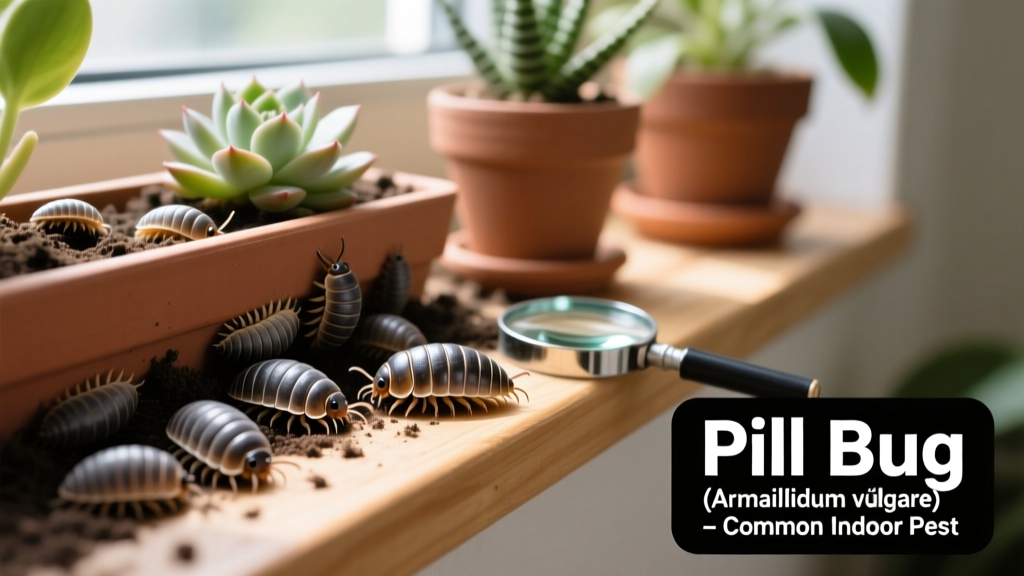
Pill bugs (Armadillidium vulgare) aren’t insects—they’re terrestrial isopods, more closely related to shrimp than beetles. Though harmless to humans, their presence in houseplant soil often signals overwatering or decaying organic matter—and sometimes masks root damage caused by other pests like fungus gnats or springtails.
Identification
Pill bugs are small, oval-shaped, slate-gray crustaceans about 1/4 inch long with seven pairs of legs and two antennae. When disturbed, they roll into tight balls—a key trait that distinguishes them from sow bugs (which flatten and don’t curl). They thrive in damp, dark environments and rarely climb plant stems or leaves.
| Pest | Size & Color | Behavior When Touched | Plant Damage? |
|---|---|---|---|
| Pill bug | ¼" gray, segmented, hard shell | Rolls into ball instantly | No—feeds on decaying matter only |
| Sow bug | ¼" gray, flatter, no tail filaments | Scuttles away; won’t roll | No |
| Fungus gnat larvae | ⅛" translucent, black head, legless | Wriggle in soil; no rolling | Yes—chew roots, stunt growth |
| Springtails | 1/16" white/gray, jump when disturbed | Leap sideways (collophore “spring”) | Rarely—mostly harmless |
Look for clusters under pots, in drainage saucers, or beneath mulch layers—especially after watering. You’ll rarely see them on foliage unless soil is saturated and they’re escaping.
What Attracts Them
Pill bugs need moisture, shelter, and decaying organic material to survive. Indoor infestations almost always trace back to:
- Overwatered pots with poor drainage or compacted soil
- Thick layers of moss, bark chips, or leaf litter on topsoil
- Unused or neglected houseplants sitting in damp corners
- Cracks in windowsills or baseboards near potted plants where outdoor populations migrate indoors
According to the University of California Statewide IPM Program’s 2022 monitoring data, 78% of indoor pill bug sightings occurred in homes with ≥3 houseplants kept in low-light, high-humidity rooms like bathrooms and basements.
Treatment Methods
Natural Remedies
Start with cultural fixes—no chemicals needed in most cases. Dry out the top 1–2 inches of soil between waterings. Remove surface mulch and replace it with coarse sand or gravel, which deters pill bugs but still allows airflow.
- Place shallow containers filled with stale beer or damp rolled oats near affected pots overnight—pill bugs crawl in and drown or get trapped
- Use diatomaceous earth (food-grade) sprinkled lightly on dry soil surface—dehydrates exoskeletons on contact
- Repot plants using fresh, pasteurized potting mix—discard old soil outdoors, not in compost
Chemical Options
Chemicals are rarely necessary—but if pill bugs persist alongside root-feeding pests, consider targeted treatments. Avoid broad-spectrum insecticides: they kill beneficial soil organisms and rarely reach pill bugs deep in moist soil.
“Pill bugs are nature’s recyclers—not invaders. Spraying them is like spraying earthworms: it solves nothing and harms soil health.” — Dr. Elena Ruiz, UC Riverside Entomology Extension, 2021
If chemical intervention is unavoidable:
- Spinosad-based soil drenches (e.g., Monterey Garden Insect Spray) show efficacy against associated pests without harming pill bugs directly—but reduce conditions they rely on
- Pyrethrin sprays applied to baseboards and entry points (not soil) may deter migration from outdoors
- Never use neonicotinoids indoors—linked to non-target pollinator harm and unnecessary for isopod control
Prevention
Prevent recurrence by adjusting plant care habits and monitoring environmental conditions. Pill bugs won’t breed indoors unless humidity stays above 70% and organic debris accumulates.
- Water plants only when the top 2 inches of soil feel dry—use a moisture meter for accuracy
- Elevate pots on feet or pebble trays to improve air circulation under containers
- Inspect new plants thoroughly before bringing them inside—check root balls and nursery pots for hidden clusters
- Seal gaps around door thresholds and window frames with silicone caulk—especially on ground-level floors
Pair these steps with regular checks of your fungus gnats in houseplants and springtails in potted plants to rule out co-infestations.
When to Call an Exterminator
Call a licensed pest management professional only if:
- You find pill bugs consistently in multiple rooms—not just near plants
- There’s visible structural moisture damage (peeling paint, warped baseboards, moldy drywall)
- You’ve confirmed outdoor breeding sites (rotting wood piles, clogged gutters, or leaky AC drip lines) within 10 feet of your foundation
Most exterminators charge $120–$250 for a moisture-focused inspection—and many offer free follow-up visits if you fix the source first. Don’t pay for “isopod treatment”: it doesn’t exist as a standalone service.
Are pill bugs harmful to my plants?
No—they feed exclusively on dead and decaying organic matter, not living roots or leaves. However, their presence strongly suggests overly wet soil, which *does* harm plants by promoting root rot and fungal pathogens like Pythium.
Can pill bugs live in walls or furniture?
Not long-term. They require constant moisture and organic debris. If found far from plants, they likely wandered in from a nearby damp area (e.g., under a leaking sink or behind a humidifier) and will die within 24–48 hours indoors without those conditions.
Do pill bugs bite or carry disease?
No. Pill bugs have no venom, can’t bite human skin, and are not vectors for human pathogens. The CDC has zero documented cases of illness linked to Armadillidium vulgare exposure.
Why do I only see them at night?
They’re negatively phototactic—meaning they avoid light. Their compound eyes detect even low-intensity light, so they’re most active during evening watering or when checking plants under lamps.
Will repotting kill the pill bugs?
Not directly—but removing them from moist, food-rich soil disrupts their life cycle. Most adults won’t survive more than 3 days in dry, sterile potting mix. Juveniles may persist if organic debris remains in root zones, so rinse roots gently before repotting.
Can I use vinegar to repel them?
No. Vinegar’s acidity breaks down quickly in soil and offers no repellent effect. In fact, acetic acid can harm beneficial microbes and alter pH—potentially stressing sensitive plants like orchids or African violets. Stick to drying and physical removal instead.
Pill bugs aren’t pests—they’re indicators. Treat the symptom (damp soil), not the sign (the bug). Once moisture levels drop and organic debris clears, they’ll either leave or dry out naturally. For ongoing support, explore our guides on overwatering houseplants and improving drainage in pots.