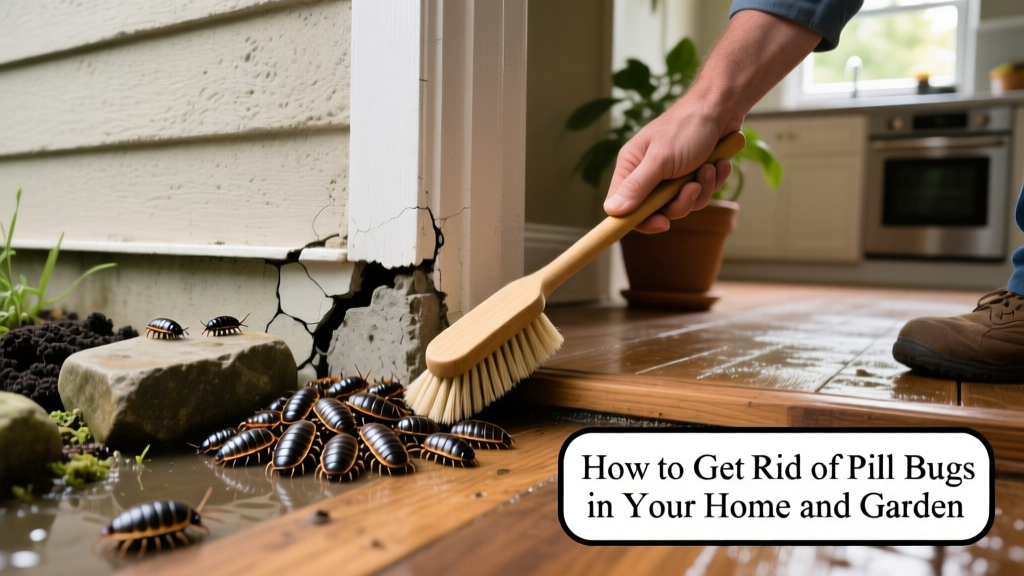
Pill bugs (Armadillidium vulgare) aren’t dangerous—they don’t bite, spread disease, or damage structures—but their sudden appearance in basements, crawl spaces, or potted plants triggers alarm. They’re crustaceans, not insects, and need constant moisture to survive; finding them indoors usually signals a hidden moisture problem you can’t ignore.
Identification
Pill bugs are oval-shaped, slate-gray, and about 1/4 inch long. They have seven pairs of legs, two antennae, and a segmented, armored exoskeleton. When disturbed, they curl into tight balls—a key trait that separates them from sow bugs, which flatten and don’t roll.
| Feature | Pill Bug | Sow Bug | Earwig |
|---|---|---|---|
| Rolls into ball? | Yes | No | No |
| Antennae length | Short, barely visible | Short | Long, threadlike |
| Abdominal appendages | None | Two tail-like uropods | Forceps-like cerci |
| Preferred habitat | Damp soil, mulch, under stones | Same, but more tolerant of drier spots | Under bark, leaf litter, flower pots |
Signs of infestation include clusters under damp cardboard boxes in garages, inside leaky bathroom cabinets, or beneath potted plant saucers. You won’t find droppings or chew marks—their presence alone is the clue.
What Attracts Them
Pill bugs follow moisture like a compass. They don’t seek food in homes—they seek survival. Common attractants include:
- Leaky faucets or pipes behind walls or under sinks (the U.S. EPA estimates 14% of household water usage is from leaks)
- Excess mulch piled against foundation walls (more than 2 inches deep)
- Cardboard storage boxes on concrete floors in basements or sheds
- Clogged gutters causing water to pool near exterior walls
- Overwatered houseplants with standing water in trays
They enter through gaps as small as 1/16 inch—cracks in foundations, gaps under doors, or weep holes in brick veneer.
Treatment Methods
Natural Remedies
Start here—especially if you have kids or pets. Diatomaceous earth (food-grade) creates microscopic cuts in their exoskeletons, causing dehydration. Apply a 1/8-inch band along baseboards, window sills, and entry points. Reapply after cleaning or rain.
Another effective option: rolled-up, damp newspaper traps. Place them overnight in suspected areas—pill bugs gather inside for moisture. Collect and discard in sealed bags each morning. Repeat for 3–5 days.
- Vinegar-water spray (1:1 ratio) deters them on contact—spray around door thresholds and window frames
- Cedar oil spray repels without toxicity—mix 10 drops cedarwood essential oil with 1 cup water in a spray bottle
- Reduce humidity with dehumidifiers—keep basement RH below 50% (ideal for discouraging pill bugs and mold alike)
Chemical Options
Only consider chemical treatment when natural methods fail *and* moisture sources are already addressed. Insecticides containing bifenthrin or cyfluthrin work—but they’re broad-spectrum and kill beneficial insects too. Never apply indoors unless labeled for indoor use.
According to the National Pesticide Information Center’s 2022 guidelines, perimeter sprays should be applied no more than 2 feet up and 2 feet out from the foundation—and only in dry, windless conditions.
"Pill bugs are a symptom, not the disease. If you spray and don't fix the leak or remove the mulch, you'll see them again in 7–10 days." — Dr. Elena Ruiz, Urban Entomologist, University of Florida IFAS Extension (2023)
Prevention
Long-term control means making your property inhospitable. Focus on three zones: exterior perimeter, interior moisture, and structural entry points.
- Install door sweeps with rubber seals—gap must be ≤1/8 inch
- Replace organic mulch within 12 inches of the foundation with gravel or stone
- Fix leaking outdoor spigots and downspout extensions to direct water ≥5 feet from the house
- Use plastic or metal storage bins instead of cardboard in damp areas—learn more about basement pest-proofing
- Inspect and seal cracks in concrete with hydraulic cement, not caulk
Also check your houseplant pest guide—pill bugs often hitchhike in nursery soil. Always quarantine new plants for 7 days before introducing them indoors.
When to Call an Exterminator
Call a licensed professional if:
- You find >50 pill bugs daily for over a week despite moisture fixes
- They’re appearing inside wall voids (heard rustling behind drywall)
- You suspect hidden water damage—e.g., warped subflooring or musty odors near baseboards
- Multiple moisture-related pests appear together (silverfish, springtails, fungus gnats)
Most reputable companies offer free inspections—and many will decline service if the issue is purely environmental (not infestation), which is actually good news: it means the fix is in your hands, not theirs.
Do pill bugs eat wood or drywall?
No. They feed on decaying organic matter—rotting leaves, fungi, and dead roots. They cannot digest cellulose in drywall or lumber. Their presence near baseboards indicates moisture damage, not feeding activity.
Can pill bugs survive in air-conditioned rooms?
Rarely. Their gills require high humidity (>70% RH) to function. In most AC-treated living spaces (RH 30–50%), they desiccate within hours. Finding them alive in bedrooms or offices strongly suggests a nearby moisture source—like a leaking pipe inside the wall or a humidifier running constantly.
Are pill bugs harmful to pets?
No known toxicity. Dogs and cats may bat them around or swallow one—no veterinary concern. However, repeated ingestion could cause mild GI upset due to chitin content. Keep pets away from diatomaceous earth applications.
Why do I see pill bugs only after rain?
Rain saturates soil, flooding their burrows. They migrate upward seeking drier ground—and often end up in your garage, porch, or basement via cracks. This isn’t attraction to your home—it’s escape behavior. Seal entry points *before* storm season, not after.
Do pill bugs lay eggs indoors?
Extremely unlikely. Females carry eggs in a fluid-filled marsupium (pouch) for 3–4 weeks, but development requires stable, humid soil conditions. Indoor environments lack the consistent moisture and organic substrate needed for successful hatching. Eggs found indoors are almost always from accidental transport in potted plants.
Can I use boric acid for pill bugs?
Not effectively. Boric acid works best on insects that groom themselves (like cockroaches), ingesting the powder. Pill bugs don’t groom and avoid dry powders. It’s also hazardous to children and pets if tracked. Skip it—stick with diatomaceous earth or moisture control.
Remember: Pill bugs are nature’s recyclers—not invaders. Your goal isn’t eradication, but exclusion. Fix the damp, seal the gaps, and they’ll move on naturally. For persistent issues, revisit your crawl space moisture checklist—that’s where most hidden problems start.