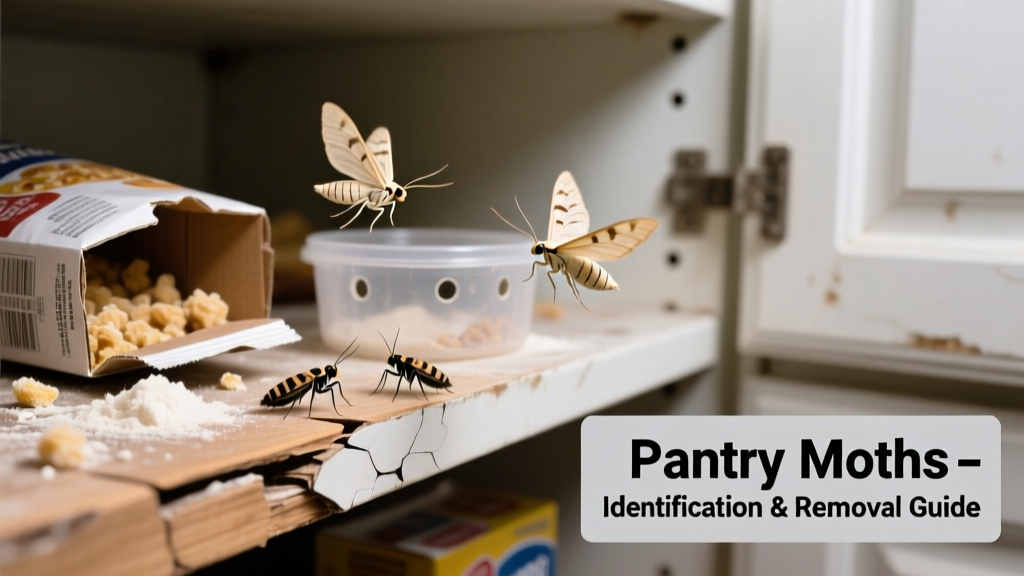
Pantry moths—most commonly Indian meal moths (Plodia interpunctella)—are tiny but destructive kitchen invaders. They don’t bite or spread disease, but their larvae spin silken webbing in flour, oats, nuts, and dried fruit, contaminating entire cabinets with frass and shed skins. Left unchecked, a single mated female can lay up to 400 eggs in 1–2 weeks, triggering exponential growth inside sealed packages.
Identification
Adult pantry moths are about 3/8 inch long with bi-colored wings: coppery-brown outer halves and pale gray near the head. They’re weak fliers and often flutter erratically near ceilings or pantry shelves—not like houseflies or gnats. You won’t see them feeding; instead, look for signs of their presence:
- Small, white or pinkish larvae (¼ inch long) crawling on shelves or inside bags
- Silky webbing clumping cereal, rice, or protein powder
- Clusters of tiny, beige eggs visible only with magnification on packaging seams
- Adults resting motionless on walls or inside cabinet doors at dusk
| Pest | Wing Pattern | Primary Location | Larval Behavior |
|---|---|---|---|
| Indian meal moth | Copper-gray bi-color wings | Pantry, pet food storage | Webs dry goods; drops from ceiling on silk threads |
| Webbing clothes moth | Uniform buff/tan, narrow wings | Closets, wool rugs | Avoids light; feeds on keratin, not food |
| Drugstore beetle | Smooth brown, oval body, no wings visible | Spice jars, herb containers | Bores into pills, tea bags, dried herbs |
What Attracts Them
Pantry moths rarely enter homes from outside. Instead, they hitchhike in via infested groceries—especially bulk-bin items, birdseed, dried pasta, or imported nuts. Once inside, they thrive where humidity stays above 60% and temperatures hover between 70–85°F. Kitchens with poor ventilation, cracked cabinet seals, or open pet food bins become ideal breeding zones. According to the University of Kentucky Entomology Department’s 2022 pest survey, 68% of pantry moth cases traced back to unsealed oatmeal, flour, or cornmeal purchased within the prior 3 weeks.
- Uninspected bulk-bin purchases (no expiration date, reused containers)
- Cardboard boxes stored directly on concrete floors (moisture wicks up)
- Expired or stale grains that emit faint fermentation odors
- Cracked or warped cabinet doors allowing light and airflow
Treatment Methods
Natural Methods
Start with non-toxic interventions—especially if you have kids or pets. Discard all opened dry goods showing webbing or larvae, even if contents look fine. Freeze unopened suspect items (like rice or lentils) at 0°F for 4 days to kill hidden eggs and pupae. Wipe shelves with vinegar-water (1:1) to remove pheromone trails—moths use scent cues to locate mates and egg-laying sites. Place pheromone traps (like these delta-style lures) on upper cabinet corners; they catch males and disrupt breeding cycles without pesticides.
Chemical Options
Reserve insecticides for severe, recurring cases—and never apply them near food prep surfaces. The U.S. EPA permits pyrethrin-based aerosols (e.g., CB-80) for crack-and-crevice treatment behind baseboards or inside empty cabinet frames. Avoid foggers: they disperse residue onto countertops and don’t reach larval hiding spots in bag folds. Always follow label instructions for re-entry time and ventilation. Note: Permethrin dust is banned for indoor food-area use by the EPA’s 2021 Residential Pesticide Rule.
Prevention
Prevention hinges on breaking the life cycle *before* eggs hatch. Transfer all new dry goods into rigid, airtight containers—glass mason jars or BPA-free plastic with gasketed lids. Avoid clear containers; pantry moths avoid dark interiors. Label each container with purchase date and inspect monthly for webbing. Store pet food and birdseed separately in metal or thick-walled plastic bins with locking latches. Vacuum pantry shelves weekly with a crevice tool, then dispose of the vacuum bag immediately—larvae survive standard HEPA filters.
"A single overlooked infested bag of walnuts can reinfest an entire pantry in under 10 days. Prevention isn’t about perfection—it’s about interrupting reproduction three times in a row." — Dr. Lena Torres, Urban Entomologist, Cornell Cooperative Extension, 2023
When to Call an Exterminator
Call a licensed pest professional if you find live larvae in *three or more separate cabinets* after 10 days of rigorous cleaning and freezing, or if adult moths persist despite 4+ weeks of pheromone trap use. Reputable companies will conduct a source inspection—not just spray—and provide a written report identifying entry points and product recommendations. Avoid firms offering “one-time whole-kitchen fogging”—it’s ineffective against hidden pupae and violates NY State Pesticide Regulation §220.3.
Can pantry moths get into sealed plastic bags?
Yes—especially thin polyethylene bags (like store-brand cereal liners). Larvae chew through micro-thin plastics, and adults can squeeze through zipper track gaps smaller than 0.5 mm. That’s why rigid containers with silicone gaskets are essential. A 2021 study in Journal of Economic Entomology found 92% of larvae breached standard zip-top bags within 72 hours of contact.
Do pantry moths fly to other rooms?
Rarely. They prefer low-light, warm, humid spaces with food sources. Adults may wander into adjacent dining areas or mudrooms—but they won’t establish breeding colonies there unless dry goods are stored nearby. Focus containment efforts on the kitchen and attached pantry closets first.
Are pantry moths dangerous to eat?
No known pathogens are carried by Indian meal moth larvae. But consuming webbed or frass-contaminated food risks gastrointestinal upset and introduces allergenic proteins from molted skins. The FDA’s Defect Action Levels allow up to 60 insect fragments per 100g of flour—but that doesn’t mean it’s advisable. When in doubt, discard.
How long does an infestation last?
With consistent intervention, most infestations resolve in 4–6 weeks—the length of one full life cycle (egg to adult). However, pupae can remain dormant for up to 300 days in cool, dry conditions. That’s why ongoing monitoring with traps is critical, even after visible activity stops.
Will cold weather kill pantry moths?
Only sustained freezing works. Brief winter dips won’t affect indoor populations. Freezing at 0°F for 4 days kills all life stages; refrigeration (32–40°F) merely slows development. Don’t rely on garage storage in temperate climates—many garages stay above 50°F year-round.
Can I reuse infested jars or containers?
Yes—if thoroughly cleaned. Wash with hot soapy water, scrub seams with a toothbrush, then soak in boiling water for 10 minutes. Rinse and air-dry completely before refilling. Discard any container with hairline cracks or degraded gaskets—they harbor hidden pupae.
Eliminating pantry moths isn’t about eradicating every last insect—it’s about making your kitchen inhospitable to reproduction. Consistent container use, regular inspections, and prompt disposal of compromised goods break the cycle faster than any spray. For long-term success, pair physical controls with kitchen-specific sealing strategies and revisit your grocery habits—especially when buying from bulk bins or discount warehouse outlets. Small changes, repeated weekly, yield lasting results.