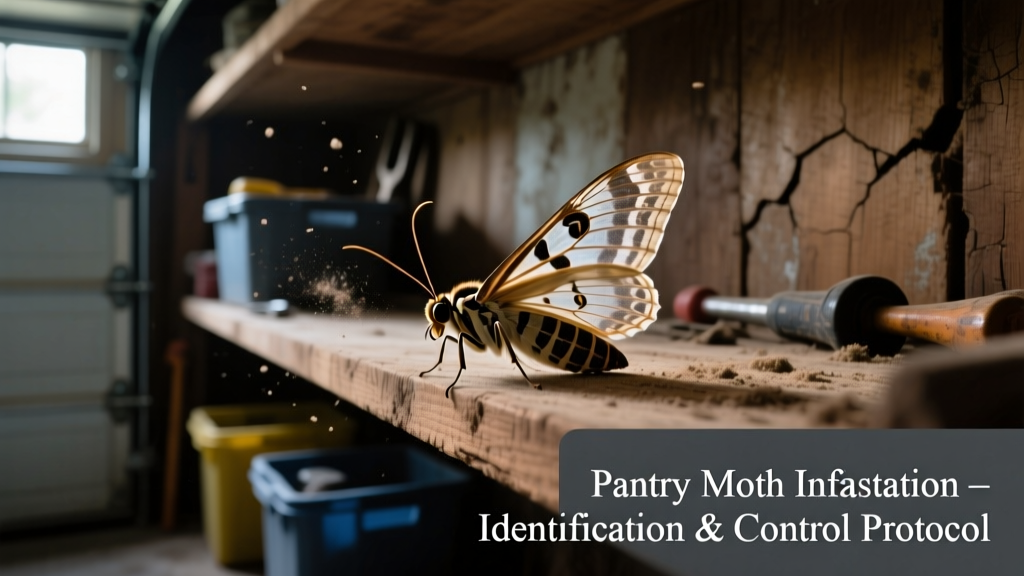
Pantry moths (primarily Indian meal moths, Plodia interpunctella) don’t just haunt kitchen cabinets—they thrive in garages where dry goods, pet food, birdseed, and holiday decorations are stored in warm, low-traffic conditions. Left unchecked, a single mated female can lay up to 400 eggs in two weeks, turning your garage into a breeding hub that spills into adjacent living spaces.
Identification
Adult pantry moths are small (½ inch wingspan), with distinctive copper-and-gray bi-colored wings held roof-like over their bodies at rest. Larvae are tiny, off-white caterpillars (¼ inch long) that spin silken threads and leave behind webbing, frass (tiny brown pellets), and clumped or discolored food residues.
| Feature | Pantry Moth | Clothes Moth | Webbing Clothes Moth |
|---|---|---|---|
| Wing color | Coppery outer third, gray base | Uniform beige or buff | Dull gold with fringed edges |
| Primary habitat | Dry food storage (garage, pantry) | Wool, fur, feathers (closets) | Same as clothes moth, but more likely in undisturbed corners |
| Larval sign | Silky webbing + frass in grain bins or pet food bags | Holes in fabric + casings | Webbing cases attached to fibers |
| Flight behavior | Erratic, drawn to light, often seen near garage door gaps | Avoids light, rarely flies far | Weak flier; stays close to infested material |
What Attracts Them
Garages offer three ideal attractants: unsealed food sources, warmth from sun exposure or attached homes, and minimal human disturbance. A forgotten bag of birdseed under a workbench, open dog food in a plastic bin, or holiday baking supplies stacked in cardboard boxes all provide perfect larval food. According to the University of California Statewide IPM Program’s 2022 pest profile, 68% of garage-based pantry moth infestations originate from pet food or birdseed—not flour or cereal.
- Cracked or resealable bags left untransferred to airtight containers
- Cardboard boxes stored directly on concrete floors (moisture wicks up, encouraging mold and egg survival)
- Gaps around garage doors and windows (adults enter from outdoors April–October)
- Cluttered shelving that blocks airflow and hides infested items
Treatment Methods
Natural Methods
Start with sanitation and physical removal. Discard all suspect dry goods—even if no larvae are visible—since eggs are microscopic and adhere to packaging. Freeze intact, unopened packages for 72 hours at 0°F to kill hidden eggs and larvae (per USDA ARS guidelines, 2021). Vacuum shelves, cracks, and baseboards thoroughly, then dispose of the vacuum bag outside.
- Use pheromone traps like Trapper Monitor Moth Traps to catch males and break mating cycles
- Wipe shelves with a 50/50 vinegar-water solution to remove egg residue and disrupt scent trails
- Store new items in rigid glass or thick plastic containers with gasket seals—not snap-lid plastic bins
Chemical Options
Residual insecticides should be used sparingly and only in non-food zones (e.g., garage ceiling joists, wall voids, or behind shelves). Avoid spraying near food storage—even trace drift contaminates surfaces. The U.S. EPA allows pyrethrin-based aerosols like CB-80 for crack-and-crevice treatment in garages, but only after all food is removed and sealed.
"In garage infestations, we find 9 out of 10 clients missed checking holiday baking supplies and bulk pet treats. Those are the silent reservoirs." — Dr. Lena Cho, Urban Entomology Extension Specialist, UC Davis, 2023
Prevention
Prevent recurrence by redesigning how you store items in the garage. Elevate all food-related products on sealed metal or plastic shelving—not directly on the floor. Install weatherstripping on garage doors and replace torn window screens. Rotate stock using the "first in, first out" rule, especially for seasonal items like nut mixes or dried fruit.
- Inspect every new bag or box before bringing it into the garage
- Label containers with purchase date and inspect quarterly
- Run a dehumidifier if relative humidity exceeds 60% (moisture encourages mold growth that larvae feed on)
- Replace cardboard boxes with clear, rigid containers—visibility helps spot early webbing
When to Call an Exterminator
Call a licensed pest professional if you see adult moths for more than three consecutive weeks despite full sanitation, or if webbing appears inside wall voids, ceiling tiles, or HVAC duct access panels. These indicate established colonies beyond surface-level control. Most reputable firms offer free garage-specific inspections—ask whether they use thermal imaging to locate hidden pupation sites in insulation or behind drywall.
Can pantry moths damage my garage structure?
No—they don’t chew wood, drywall, or insulation. But their presence signals moisture issues or neglected food sources that may attract other pests like ants or rodents. Their webbing can clog garage fan vents over time, reducing airflow efficiency.
Do pantry moths come from outside or inside?
Both. Adults fly in through gaps (especially May–September), but most infestations begin with contaminated groceries or bulk pet food purchased from stores where warehouse moths were present. The National Pest Management Association reports that 31% of retail pet food shipments test positive for pantry moth eggs upon arrival.
Will cleaning my garage once solve it?
Rarely. One-time cleaning removes adults and larvae but not eggs embedded in seams or crevices. Effective resolution requires a 21-day cycle: discard, freeze, trap, clean, monitor, repeat. That matches the full development time from egg to adult under garage temperatures (70–85°F).
Are pantry moths dangerous to pets or people?
No direct health risk—but ingesting larvae or frass isn’t advisable. Pets eating infested food may experience mild GI upset. More critically, chronic exposure to moth-damaged grains increases risk of aflatoxin contamination (a carcinogenic mold byproduct), per FDA Food Safety Modernization Act guidance (2022).
Can I use pantry moth traps in my garage?
Yes—but place them away from direct sunlight and drafts, which reduce pheromone effectiveness. Mount traps at eye level near suspected food zones (not near garage doors where wind disperses scent). Replace every 8–10 weeks, or sooner if the sticky surface is saturated.
What’s the fastest way to stop seeing moths at night?
Turn off garage lights at dusk and cover windows with light-blocking film. Adult moths are strongly phototactic. Pair this with immediate disposal of any infested items and running a HEPA-filter vacuum nightly for five days—it reduces airborne pheromones and disrupts mating cues.
Garage pantry moth problems rarely resolve on their own—and ignoring them invites migration into kitchens and pantries within weeks. Consistent monitoring, smart storage, and prompt action when you spot that first copper-winged adult make all the difference. For related strategies, see our guides on pantry moths in the kitchen and birdseed pest prevention.