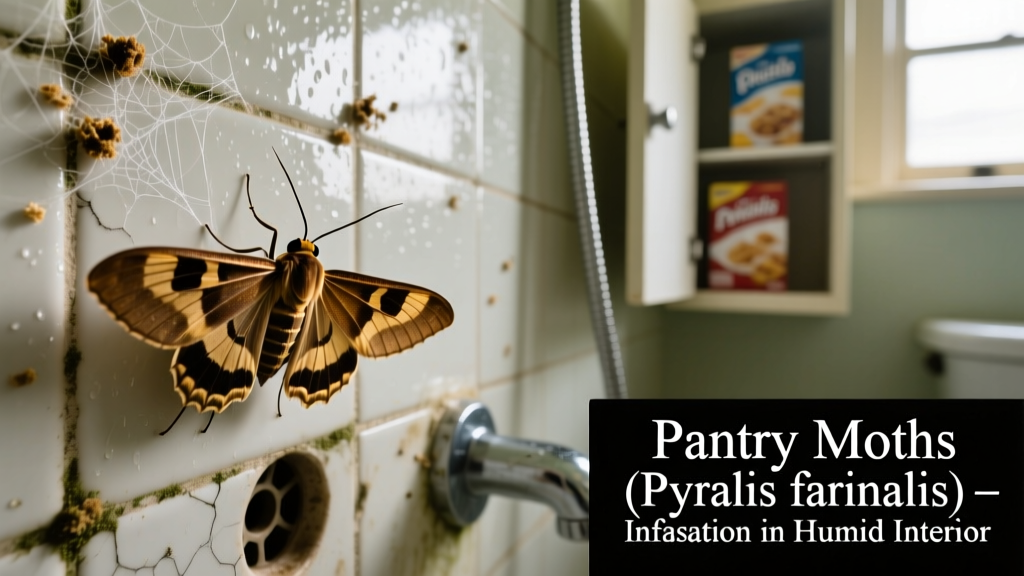
Pantry moths (primarily Indian meal moths, Plodia interpunctella) aren’t supposed to live in bathrooms—but they do. When you spot tiny tan-and-copper moths fluttering near your shampoo, cotton balls, or unused soap bars, it’s not a fluke. These pests seek dry, undisturbed stashes of organic material—and many bathroom products fit the bill perfectly.
Identification
Don’t mistake them for clothes moths or drain flies. Pantry moths in bathrooms are almost always Indian meal moths—small (5–8 mm), with distinctive bi-colored wings: pale gray near the head, rust-brown toward the tips. Larvae are off-white caterpillars, ½ inch long, often found inside packaging or spinning silken threads across cabinet shelves.
Key signs include:
- Flying adults near towel racks or vanity lights at dusk
- Silky webbing on cotton swabs, dried herbal bath salts, or protein-based shampoos
- Small, gritty frass (larval droppings) in corners of medicine cabinets
- Clumps of webbed-together bath powders or oatmeal scrub granules
| Pest | Wing Pattern | Primary Habitat Clue | Larval Food Source in Bathroom |
|---|---|---|---|
| Indian meal moth | Tan front, copper rear | Webbing on dry goods (e.g., clay masks, herbal soaks) | Dried botanicals, protein shampoos, powdered cleansers |
| Clothes moth | Uniform buff or beige | No webbing; larvae avoid light, hide in wool rugs or towels | Wool bath mats, silk hair ties, feather dusters |
| Drain fly | Fuzzy, moth-like but smaller, held roof-like | Seen crawling on wet surfaces or flying up from drains | Organic slime in overflow pipes or shower grout |
What Attracts Them
Pantry moths don’t breed in moisture—they breed in dry, nutrient-rich organics. Bathrooms become accidental larders when products contain ingredients like oat flour, coconut milk powder, honey solids, or ground almonds. A single contaminated bottle of DIY face scrub or expired foot soak can seed an entire cabinet.
Conditions that increase risk:
- Storing opened natural skincare or bath bombs in cardboard boxes or paper bags
- Keeping expired vitamins, protein powders, or herbal teas under the sink
- Using humidifiers or steamy showers that raise ambient humidity above 60% (moisture softens packaging, letting larvae chew through)
- Infrequent cleaning behind toilets or inside vanity drawers—where dust bunnies mix with shed skin cells and residue
Treatment Methods
Natural Remedies
Start here—especially if you store baby products or sensitive skin items. Freeze suspect items for 72 hours at 0°F (-18°C) to kill eggs and larvae. Discard anything with visible webbing or clumping—even sealed containers may have micro-perforations.
Then deep-clean:
- Vacuum all cabinet interiors with a crevice tool, then dispose of the bag outside
- Wipe shelves with 5% vinegar solution (1 part white vinegar, 4 parts water) to dissolve pheromone trails
- Line shelves with cedar blocks or food-grade diatomaceous earth (DE) — apply only in dry, inaccessible spots (e.g., back corners) to avoid inhalation
- Hang pheromone traps like Catchmaster Pantry Moth Traps — place one on each shelf, replacing every 8 weeks
Chemical Options
Only consider these if larvae persist after 10 days of natural treatment and sanitation. Avoid aerosol sprays near toiletries—residue can contaminate products. Instead, use targeted, low-toxicity options:
- Pyrethrin-based dust (e.g., Evergreen PyGanic Dust): Apply lightly behind baseboards or under cabinet frames—not on shelves
- Residual insecticide gel (e.g., Advion Cockroach Gel): Place pea-sized dabs in cabinet hinge recesses where larvae crawl (not on surfaces)
- Essential oil blends: 10 drops clove + 10 drops lavender in 2 oz water, misted weekly on non-porous surfaces only (test first on tile grout)
Prevention
Preventing reinfestation means treating the bathroom as a storage zone—not just a hygiene zone. According to the National Pest Management Association’s 2022 Household Pest Report, 68% of pantry moth cases in non-kitchen areas involved improperly stored personal care products.
"I’ve pulled live larvae from unopened bottles of bentonite clay—always check the 'best by' date and smell for mustiness before storing anything with plant-based powders." — Elena Ruiz, Board-Certified Entomologist, NPMA Certified Inspector (2023)
Adopt these habits:
- Transfer bulk bath salts, oat scrubs, or herbal soaks into rigid, opaque glass or HDPE #2 plastic containers with gasket seals
- Label all containers with purchase date and discard anything over 9 months old—even if unopened
- Store vitamin supplements and protein-based hair masks in the bedroom closet, not under the sink
- Run the bathroom exhaust fan for 20 minutes after every shower to keep relative humidity below 50%
When to Call an Exterminator
Call a licensed pest professional if you see adult moths for more than 14 consecutive days despite full treatment—or if you find larvae in sealed, brand-new products. That indicates either a hidden source (e.g., attic insulation contaminated during home renovation) or a structural entry point (cracks around plumbing chases).
Look for companies certified by the National Pest Management Association and ask specifically about experience with non-food-area moth infestations.
Can pantry moths lay eggs in shampoo?
Yes—if it contains plant proteins, honey derivatives, or oat extracts. Liquid formulas are less attractive, but thick, creamy shampoos with suspended botanicals (like aloe or chamomile powder) provide enough organic substrate for egg-laying. Check ingredient lists for words ending in “-ose,” “-in,” or “-flour.”
Why do I only see them at night?
Indian meal moths are crepuscular—they’re most active at dawn and dusk. Their compound eyes adapt quickly to low light, and bathroom vanity bulbs or nightlights create ideal flight conditions. You’ll rarely see them midday unless disturbed.
Do they bite or spread disease?
No. Pantry moths don’t feed on blood or human tissue. They don’t transmit pathogens, but their presence signals product degradation—and larval frass can trigger allergic reactions in sensitive individuals, especially around eyes or nasal passages.
Can they come from the attic or walls?
Yes. Larvae can travel up plumbing chases or through gaps around exhaust ducts. If you’ve ruled out all bathroom-stored items and still see moths, inspect attic insulation for rodent nests (which often contain spilled birdseed or pet food)—a known moth breeding site.
Will cleaning with bleach kill moth eggs?
Bleach is ineffective against pantry moth eggs. Its high pH doesn’t penetrate the waxy chorion layer. Vinegar (acetic acid) or freezing works better. Bleach may even corrode metal cabinet hinges, creating new hiding spots.
Are mothballs safe to use in the bathroom?
No. Paradichlorobenzene (PDB) mothballs release toxic vapors that concentrate in enclosed, poorly ventilated spaces like bathrooms. The U.S. EPA warns against using them indoors—especially near children’s bath toys or toothbrushes. Safer alternatives exist.
Dealing with pantry moths in the bathroom isn’t about eradicating a kitchen pest—it’s about recognizing how modern personal care products blur the line between pantry and powder room. Stay vigilant with expiration dates, seal integrity, and humidity control, and you’ll break the cycle for good. For related help, see our guides on drain flies in bathroom sinks and silverfish in damp bathroom corners.