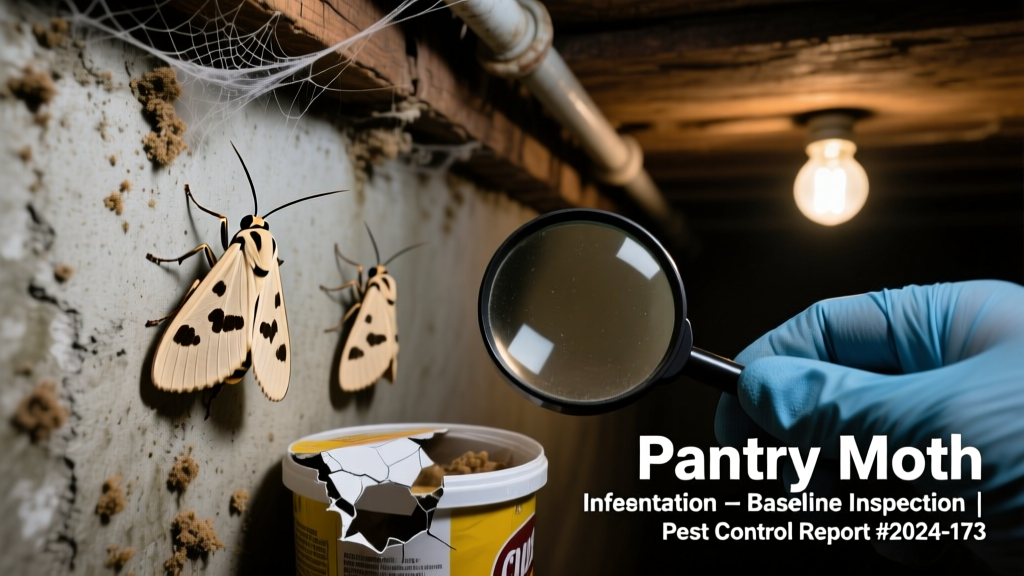
Pantry moths (Plodia interpunctella) aren’t just a kitchen nuisance—they thrive in cool, dim, cluttered basements where bulk food, pet food, birdseed, and holiday baking supplies sit undisturbed for months. Unlike kitchens, basements often lack regular cleaning cycles and temperature control, letting infestations grow silently until webbing appears in corners or adult moths flutter near light fixtures at dusk.
Identification
Adult pantry moths are small—about 3/8 inch long—with distinctive bi-colored wings: coppery-brown outer wings and pale gray inner wings. They don’t eat food themselves, but their larvae do—and that’s where the real damage happens. Look for tiny white caterpillars (¼ inch long), silky webbing inside bags or jars, clumped grains, or small cocoons stuck to ceiling joists or shelf undersides.
| Pest | Wing Color Pattern | Primary Activity Time | Common Basement Source |
|---|---|---|---|
| Pantry moth | Coppery-brown outer wings, pale gray inner wings | Dusk to night | Open grain bins, old flour sacks, forgotten pet food |
| Indian meal moth | Nearly identical—same species; Plodia interpunctella is the scientific name | Same | Same |
| Webbing clothes moth | Uniform buff or beige, no contrast | Daytime, avoids light | Wool blankets, stored clothing, carpet remnants |
| Moth fly (drain fly) | Fuzzy, dark gray, moth-like shape | Evening near drains or sump pits | Organic slime in floor drains or wet basement walls |
What Attracts Them
Basements attract pantry moths because they offer three things: undisturbed dry goods, stable (often humid) temperatures, and minimal human activity. Relative humidity above 60% helps eggs hatch faster, and temps between 60–80°F let larvae develop in as little as 27 days—according to the University of Kentucky Entomology Department’s 2022 pest profile. Common entry points include cardboard boxes with residual grain dust, reused grocery bags, or pet food purchased in bulk and stored loose.
- Unsealed bags of rice, oats, cornmeal, or dried beans
- Cardboard packaging left intact (eggs hide in corrugations)
- Old holiday baking supplies—cocoa, powdered sugar, nut flours—stashed behind water heaters
- Unused birdseed or wild bird feeders stored nearby
Treatment Methods
Natural Methods
Start here—especially if you store food in the basement or have kids or pets. Freeze suspect items at 0°F for 4 days to kill all life stages (egg to adult). Vacuum shelves, cracks, and baseboards thoroughly, then dispose of the bag outside immediately. Use pheromone traps like Trapper Monitor Pro along basement walls—not near food—to monitor flight patterns and reduce mating.
Chemical Options
Only use EPA-registered insecticides labeled for indoor stored-product pests—and never directly on food or food-contact surfaces. DeltaDust (deltamethrin) applied as a crack-and-crevice treatment along foundation walls and shelf perimeters can disrupt larval movement. According to the U.S. EPA’s 2023 Pesticide Product Label System, deltamethrin remains effective for up to 8 weeks in low-traffic zones like basements. Avoid foggers: they don’t reach larval hiding spots and can disperse eggs.
Prevention
Prevention hinges on breaking the reproductive cycle through sanitation and smart storage. Transfer all dry goods into rigid, smooth-sided containers—glass mason jars or thick HDPE plastic with gasket seals. Never keep food in original cardboard or thin plastic bags. Keep basement humidity below 55% using a dehumidifier; the Insurance Institute for Business & Home Safety’s 2023 report notes that sustained RH under 50% reduces moth egg viability by over 70%.
"I’ve seen more reinfestations from overlooked ‘back-of-the-shelf’ oatmeal containers than from open cereal boxes. Check every item—even sealed ones—if you see one moth. Larvae can chew through foil-lined pouches." — Carla Ruiz, certified structural pest inspector with 18 years in residential basements
- Rotate stock: Use oldest items first (mark dates on containers)
- Wipe down shelves monthly with vinegar-water (1:1) to remove pheromone residue
- Inspect new purchases before bringing them downstairs—especially bulk grains and pet treats
When to Call an Exterminator
Call a licensed professional if you find larvae or webbing in more than three separate locations, or if adult moths persist after 10 days of trapping and deep cleaning. Also call if you suspect infestation has spread to wall voids—indicated by moths emerging from electrical outlets or baseboard gaps. Most reputable firms offer a basement-specific inspection that includes thermal imaging to locate hidden clusters behind insulation.
Can pantry moths live in insulation?
No—they don’t feed on fiberglass or cellulose. But larvae *can* tunnel into dusty, food-contaminated insulation near dropped ceilings or around old pantry shelving. If insulation smells musty and shows webbing, it’s likely contaminated debris—not the insulation itself.
Do pantry moths come from outside?
Rarely. Over 95% of basement infestations start from infested products brought in—often unnoticed in seemingly sealed packages. A 2021 study in the Journal of Economic Entomology found that 89% of retail grain products tested had at least one live egg or larva upon purchase.
Will cold winter temperatures kill them in the basement?
Not reliably. Basements rarely drop below 40°F—even in January. Pantry moth larvae enter diapause below 50°F but survive for months. Only sustained freezing (below 0°F for 72+ hours) kills all stages.
Can I reuse infested jars or containers?
Yes—if thoroughly washed in hot, soapy water, then soaked in boiling water for 10 minutes. Discard plastic lids with rubber gaskets; larvae hide in the seal grooves. Glass jars with smooth rims are safest.
Are pantry moths dangerous to humans?
No—they don’t bite, carry disease, or trigger allergies. But their presence means food is contaminated with frass (excrement), silk, and potential mold spores from damp conditions. The FDA considers any visible webbing or larvae a reason to discard the product.
Basement pantry moths won’t vanish overnight—but they’re highly manageable with consistent monitoring and strict storage discipline. Focus first on eliminating current sources, then lock down future entries. For ongoing peace of mind, pair pheromone traps with quarterly shelf audits—and always check behind the furnace before storing next season’s holiday nuts.