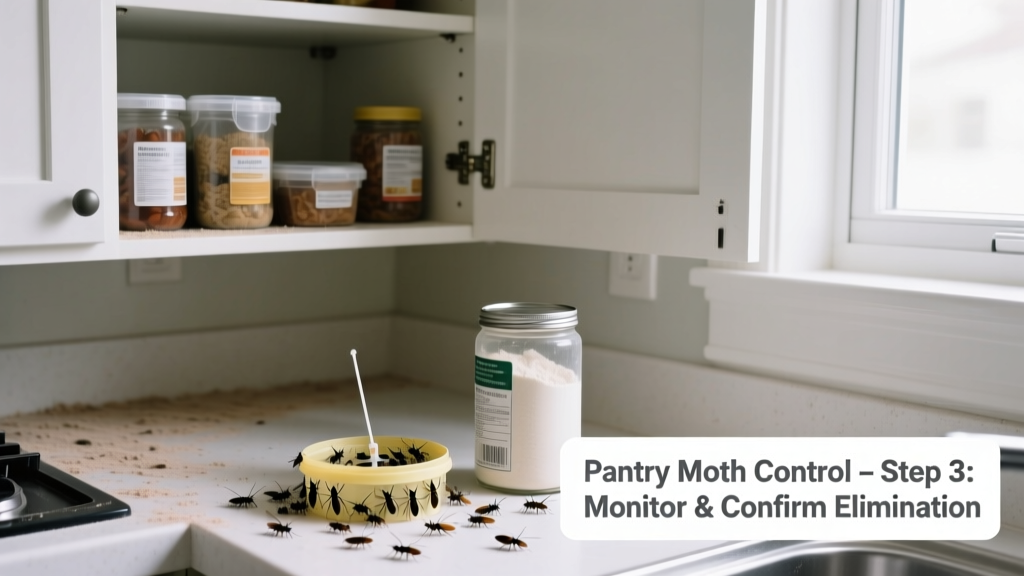
Pantry moths—most commonly Indian meal moths (Plodia interpunctella)—are small, winged insects that turn dry food storage into a breeding ground. A single female can lay up to 400 eggs in flour, cereal, nuts, or dried fruit—and larvae spin silken threads that contaminate entire cabinets in days.
Identification
Adult pantry moths are about 3/8 inch long with distinctive copper-and-gray bi-colored wings. They don’t bite or transmit disease, but their presence signals hidden larval activity. Look for webbing in grain packages, tiny clumps of silk and frass (insect excrement), or adult moths fluttering near shelves at dusk.
| Feature | Indian Meal Moth | Warehouse Moth | Webbing Clothes Moth |
|---|---|---|---|
| Wing color pattern | Coppery outer third, pale gray base | Uniform tan-brown | Uniform beige-gold, no banding |
| Primary habitat | Dry pantry foods | Grain silos, pet food bags | Wool, fur, feathers—not food |
| Larval webbing | Heavy, silk-lined tunnels in food | Less obvious; often in seams of packaging | In fabrics, not food |
What Attracts Them
Pantry moths rarely fly in from outside—they hitchhike in via infested products. According to the U.S. Department of Agriculture’s 2022 Pest Alert bulletin, over 65% of initial infestations originate from store-bought grains, birdseed, or dried herbs purchased with hidden eggs. Warmth (70–85°F), humidity above 60%, and undisturbed food for 7+ days create ideal conditions for egg-to-adult development in just 25–40 days.
- Unsealed bulk bins at grocery stores or co-ops
- Older stock sitting in cabinets longer than 3 months
- Cracked or resealable bags with tiny punctures (even pinprick-sized)
- Recycled jars or containers that weren’t heat-washed before reuse
Treatment Methods
Natural Treatments
Start here—even moderate infestations respond well to non-toxic steps. Discard all open or suspect items immediately (don’t just “check” them; larvae are microscopic early on). Vacuum shelves, cracks, and crevices thoroughly, then wipe surfaces with white vinegar or diluted peppermint oil (10 drops per cup of water). Store remaining food in rigid, airtight containers—glass or thick BPA-free plastic with gasket seals.
Freeze newly purchased dry goods for 4 days at 0°F to kill hidden eggs and larvae. This method is endorsed by the University of California Statewide IPM Program’s 2023 guidelines as 99.8% effective when done correctly.
Chemical Treatments
Reserve chemical options for persistent cases after full sanitation. Use only food-safe insect growth regulators (IGRs) like methoprene—never broad-spectrum sprays near food prep areas. The U.S. EPA lists methoprene as safe for use in pantries when applied to cracks and crevices only, not directly on food or surfaces. Avoid foggers: they disperse residue onto food and fail to reach larval hiding spots inside packaging.
- Apply IGR gel in hinge gaps of cabinet doors and along shelf edges
- Use pheromone traps (like Pherocon® IPM traps) to monitor adults—but remember: traps catch moths, not larvae
- Discard trap lures every 8 weeks; replace if dusty or wet
Prevention
Prevention hinges on breaking the life cycle *before* eggs hatch. Rotate stock using the “first in, first out” rule: place newer items behind older ones. Label every container with purchase date and use-by window. Inspect new groceries under bright light—look for webbing, specks, or grittiness in oats or rice.
“Most pantry moth recurrences happen because people clean the visible mess but skip vacuuming behind the microwave or inside drawer tracks—larvae crawl into those zones and restart the cycle in 10 days.” — Dr. Lena Cho, Entomologist, UC Davis Extension, 2022
Keep humidity below 50% with a dehumidifier in basements or garages where dry goods are stored. Replace cardboard boxes with sealed containers—cardboard absorbs moisture and harbors eggs in its corrugated layers.
When to Call an Exterminator
Call a licensed pest management professional if you find live larvae in >3 separate food categories (e.g., flour, pasta, and protein bars) after 10 days of rigorous cleaning—or if moths appear daily for two weeks despite traps and freezing. These indicate either deep-seated infestation in wall voids or repeated reintroduction from unmonitored sources like pet food or bird feeders.
Look for companies certified by the National Pest Management Association (NPMA) and ask specifically about pantry moth protocols—not general “kitchen pest” packages. Some firms still use outdated pyrethrin sprays that leave residues and miss larvae entirely.
Can pantry moths get into sealed plastic bags?
Yes—if the bag is thin polyethylene (like standard grocery bags), larvae can chew through. Even zip-top bags aren’t fully secure unless they’re freezer-grade with double-track seals. Always transfer bulk purchases into rigid containers within 24 hours.
Do pantry moths eat spices or sugar?
They prefer high-protein or high-fat foods—nuts, chocolate, pet food, dried meats—but will consume sugar, flour, and whole spices if nothing else is available. Ground spices are safer than whole (e.g., whole cloves vs. ground clove), as larvae avoid strong volatile oils.
How long do pantry moths live?
Adults live 5–7 days but spend that time laying eggs. The real threat is the larval stage: 2–4 weeks feeding and contaminating food. Total lifecycle—from egg to adult—takes 25–40 days at room temperature, per the USDA’s 2022 Life Cycle Assessment.
Will cold temperatures kill pantry moth eggs?
Yes—consistent 0°F for 4 days kills all life stages. Refrigeration (32–40°F) only slows development; eggs survive weeks in fridges. Never rely on fridge storage alone.
Are pantry moths dangerous to pets or kids?
No direct danger—but ingesting larvae or webbing isn’t advised. The bigger risk is nutritional loss: infested grains lose protein content and may develop mold from larval moisture. If your pet eats infested kibble, watch for mild GI upset; consult a vet if vomiting persists beyond 24 hours.
Can I salvage infested flour or rice?
No. Even sifting or baking won’t remove silk, frass, or eggs embedded in granules. Discard it. Don’t compost indoors—larvae can mature in warm piles. Seal in a plastic bag and place in an outdoor trash bin immediately.
Getting rid of pantry moths isn’t about speed—it’s about precision. Focus on where they hide (not just where you see them), rotate inventory religiously, and treat every container like a potential incubator. For ongoing help, explore our best pantry moth traps and airtight food storage solutions.