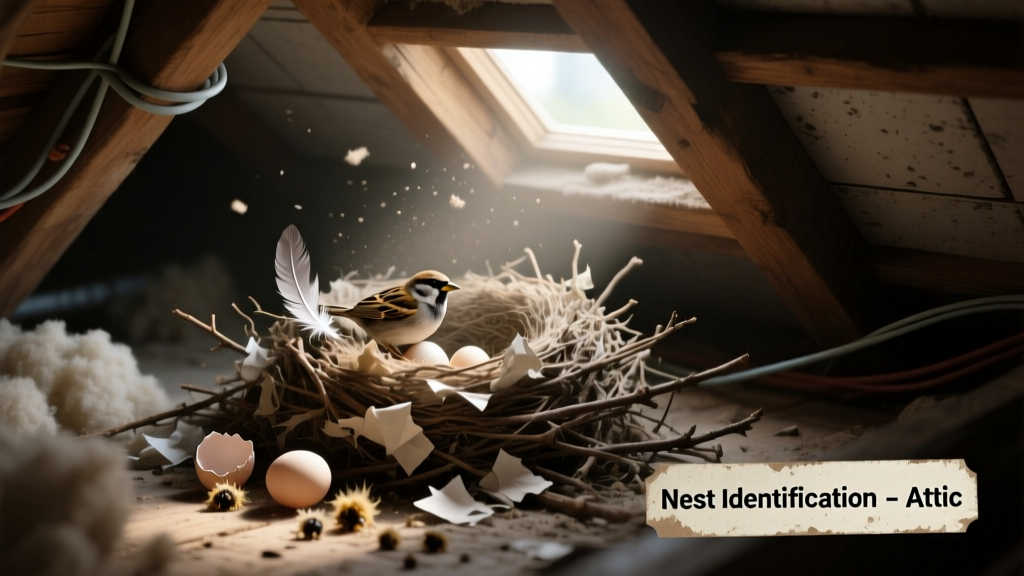
Attic nests aren’t just clutter—they’re evidence of active infestation. Rodents, birds, bats, and even wasps build homes in attics because they offer warmth, shelter, and minimal disturbance. Left unchecked, these pests chew wiring, spread pathogens, and compromise insulation—leading to fire hazards and costly repairs.
Identification
Not all attic nests look alike. Size, material, location, and associated signs point directly to the species involved. Mice stash shredded paper and insulation in wall voids near rafters; squirrels pile leaves and twigs near roof vents; raccoons rip open soffits and leave large, moist droppings; bats cluster in dark, high corners and leave greasy smudges on beams.
| Pest | Nest Material | Droppings | Entry Clues |
|---|---|---|---|
| Mice | Shredded paper, insulation fibers, fabric | 3–6 mm, rice-shaped, scattered | 1/4" holes, gnaw marks on wood or plastic |
| Squirrels | Leaves, twigs, bark, moss | 10–12 mm, barrel-shaped, clustered | Chewed vent covers, scratch marks near eaves |
| Raccoons | Torn insulation, debris, nesting pads | 3/4" long, cylindrical, often with berry seeds | Ripped soffits, bent flashing, strong musky odor |
| Bats | No true nest—roost in clusters | Shiny, segmented, crumbles like pepper | Grease stains near gaps, fluttering at dusk |
| Yellowjackets | Gray papery combs, hidden in soffits or walls | No droppings—look for live workers near entrance | Small (1/4") holes, buzzing sound, wasps flying straight in/out |
What Attracts Them
Attics become pest magnets when three conditions align: access, warmth, and nesting resources. Gaps larger than 1/4 inch let mice in; unsealed roof vents invite squirrels; uncapped chimneys are raccoon highways. Insulation provides nesting material *and* thermal buffering—especially attractive during late fall and early spring.
- Unscreened gable or ridge vents
- Loose or missing soffit panels
- Cracked or uncapped chimneys
- Overhanging tree branches within 6 feet of roofline
- Old insulation contaminated with urine or nesting debris
Treatment Methods
Natural First Steps
Start non-invasively—especially if young or nursing animals may be present. Seal all but one entry point, then install a one-way exclusion door (e.g., CritterGuard tube) to let adults exit but not re-enter. Use peppermint oil-soaked cotton balls near suspected entry zones for mice; hang reflective tape or wind chimes near squirrel routes to disrupt landing patterns.
Chemical & Mechanical Options
Never use rodenticides in attics—dead rodents decompose in inaccessible spaces, causing odor and secondary infestations. Instead, use snap traps baited with peanut butter (for mice) or whole peanuts in shell (for squirrels). For yellowjacket nests, apply dust insecticides like deltamethrin *only at night*, when wasps are least active—and wear full protective gear.
Prevention
Exclusion is 90% of long-term success. Replace damaged soffit panels with aluminum or steel-mesh versions. Install chimney caps rated for raccoons (not just birds). Seal gaps around pipes and wires with copper mesh + acoustical sealant—not caulk alone. According to the National Pest Management Association’s 2022 Structural Pest Control Report, 78% of repeat attic infestations occur due to incomplete sealing of secondary entry points.
- Inspect attic quarterly—especially after storms
- Trim tree limbs to ≥6 feet from roof edge
- Store holiday decorations in hard-sided plastic bins (not cardboard)
- Replace fiberglass insulation with borate-treated cellulose—it deters nesting and resists chewing
When to Call an Exterminator
Call a licensed professional if you find: bat colonies larger than 15 individuals (protected under state law in 38 states), raccoon latrines (high risk of Baylisascaris roundworm), or yellowjacket nests larger than a grapefruit. Also call if you hear scratching *inside walls*—that often means mice have breached into living spaces, requiring interior inspection.
How do I tell mouse droppings from bat guano?
Mouse droppings are dry, hard, and taper at both ends. Bat guano is shiny, segmented, and crumbles easily into glittery specks when rubbed—often found directly below roost sites. Unlike mice, bats never urinate inside attics; their waste is almost entirely fecal.
Can squirrels damage electrical wiring?
Absolutely. Gray and fox squirrels chew on PVC conduit and NM cable sheathing to file down ever-growing incisors. The U.S. Fire Administration attributes 26% of undetermined-cause residential fires in rural areas to rodent-chewed wiring—most occurring between November and March.
Is it legal to remove a raccoon nest myself?
In most states, yes—but only if no young are present. Raccoon kits (born April–June) cannot survive outside the den until 12–14 weeks old. Disturbing an active den risks orphaning kits or provoking defensive aggression. Always check local wildlife regulations via your state’s Department of Natural Resources before acting.
Why does my attic smell musty after removing a nest?
Urine-soaked insulation holds odor-causing bacteria and mold spores. Simply replacing nesting material isn’t enough. You’ll need to remove and replace all insulation within 3 feet of the nest site—and treat exposed wood with a microbial enzyme cleaner like Bio-Blast Pro.
Do birds reuse old nests?
Most songbirds don’t—but starlings and house sparrows will refurbish abandoned nests year after year. If you find a mud-and-grass nest with fresh eggshells or feathers, assume it’s active. Wait until late summer (after fledging) before removal, or contact a wildlife rehabilitator for humane relocation guidance.
Can wasp nests grow back in the same spot?
Yes—yellowjackets mark nest sites with pheromones. After removal, clean the area with a 10% vinegar solution and apply a residual insecticide dust like Tempo SC Ultra to the cavity. Monitor for activity for 72 hours post-treatment.
"If you see more than two entry points in your attic, assume at least one pest has established a breeding colony—not just a temporary shelter." — Dr. Lena Cho, Wildlife Biologist, Cornell Cooperative Extension, 2023
Identifying the pest behind attic nests isn’t guesswork—it’s pattern recognition backed by physical evidence. Match what you see to this guide, act decisively but humanely, and prioritize exclusion over eradication. Your attic should store holiday lights—not wildlife.