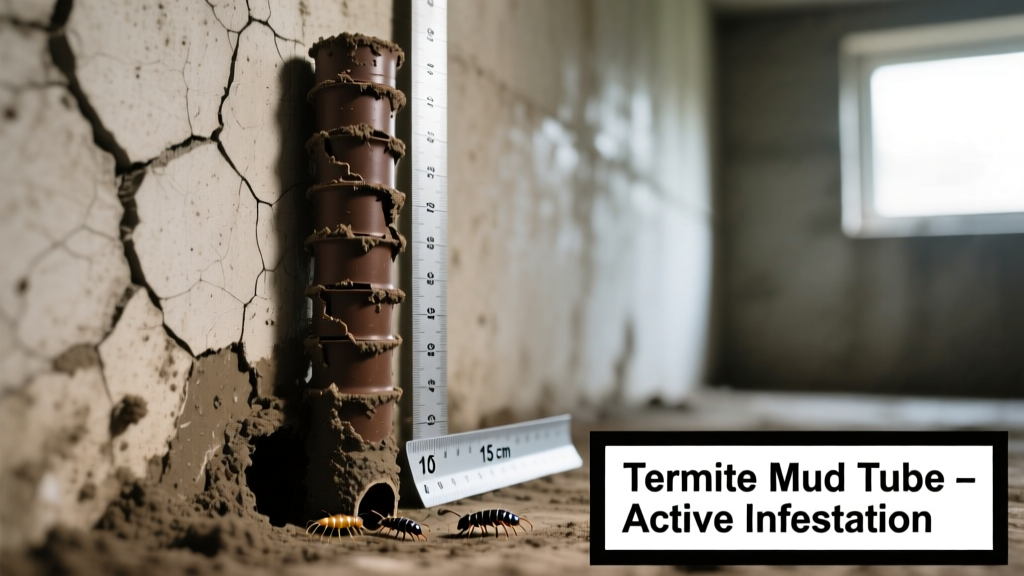
Mud tubes on interior or exterior walls are a red-flag sign—not of dirt buildup, but of hidden insect activity. These pencil-thin, grayish-brown tunnels are built by subterranean termites to maintain humidity and avoid light while traveling between soil and wood. Left unchecked, they can hollow out structural timbers in months, not years.
Identification
Subterranean termites (Reticulitermes spp.) are the only common pests that construct true mud tubes on walls. These tubes contain soil, saliva, and feces—and unlike ant trails or cobweb residue, they’re rigid, attached at both ends, and often run vertically along foundation cracks, plumbing chases, or stud cavities.
- Termite tubes are smooth, uniform, and rarely wider than ¼ inch
- Fresh tubes feel damp or cool; older ones crumble when pressed
- You may spot tiny, creamy-white workers inside if you gently break open an active tube
- No sawdust or frass—unlike carpenter ants, which leave behind coarse, granular debris
| Feature | Subterranean Termite Tube | Carpenter Ant Trail | Dirt/Debris Buildup |
|---|---|---|---|
| Texture | Moist, clay-like, cohesive | Dry, loose, scattered | Loose, powdery, easily brushed off |
| Attachment | Firmly bonded top-to-bottom | Not attached—just dust accumulation | No adhesion; sits on surface |
| Location pattern | Follows seams, corners, utility lines | Along baseboards or window sills | Random, gravity-driven streaks |
| Associated damage | Hollow-sounding wood, blistered paint, no visible entry holes | Small round exit holes, piles of frass near windowsills | None—purely cosmetic |
What Attracts Them
Subterranean termites don’t invade homes for food alone—they need consistent moisture, shelter, and access. Leaky pipes, poor grading, clogged gutters, and wood-to-soil contact create ideal conditions. According to the U.S. Forest Service’s 2022 Urban Pest Report, 68% of termite infestations begin within 3 feet of a moisture source like a downspout or basement window well.
- Soil grade higher than foundation sill plate
- Wood mulch piled against brick or siding
- Basement humidity above 60% RH for >48 hours
- Cracks in concrete slabs wider than 1/16 inch
Treatment Methods
Natural & Non-Chemical Options
For early-stage, localized activity (1–2 tubes, no evidence of swarmers or damaged wood), try these first:
- Remove moisture sources: fix leaks, install dehumidifiers, extend downspouts 5+ feet away from foundation
- Install physical barriers: stainless steel mesh (e.g., TermiMesh) over slab penetrations during renovation
- Use cardboard traps: damp cardboard placed near tubes attracts workers—remove and burn weekly
- Apply diatomaceous earth (food-grade) into tube openings—only effective if dry and undisturbed
Chemical Treatments
When tubes indicate established colonies (multiple lines, swarming events, or confirmed live termites), professional-grade termiticides are necessary. The EPA-approved non-repellent liquid treatments—such as fipronil or imidacloprid—create undetectable barrier zones in soil. Homeowner-applied products rarely achieve full coverage or proper depth; misapplication can disperse colonies deeper into walls.
"A single untreated 12-inch gap in a chemical barrier lets 10,000+ termites cross per day—enough to consume 1 lb of wood monthly." — Dr. Karen Lopez, Entomologist, University of Florida IFAS Extension, 2023
Prevention
Long-term prevention hinges on breaking the termite triad: soil contact, moisture, and cellulose. Start with a thorough exterior inspection twice yearly—especially after heavy rain.
- Maintain at least 6 inches of clearance between soil and wood siding or framing
- Replace rotted door thresholds and window sills with pressure-treated or composite lumber
- Seal expansion joints and utility penetrations with expanding polyurethane foam (not silicone)
- Install termite-monitoring stations every 10 feet around the perimeter—check quarterly
For detailed guidance on sealing foundation gaps, see our foundation crack sealing guide.
When to Call an Exterminator
Call a licensed pest management professional immediately if you observe any of the following:
- More than three active mud tubes on one wall section
- Swarmers (winged reproductives) indoors between March–June
- Blistered or sagging drywall near baseboards
- Tap-test reveals hollow sound in floor joists or studs
Most reputable companies offer free inspections and written reports—including thermal imaging and moisture mapping. Avoid firms that pressure you into immediate treatment without documentation.
Are mud tubes always from termites?
No—but nearly always. Carpenter ants may use existing tubes as pathways but never build them. Mud dauber wasps create freestanding mud nests on eaves—not vertical wall tubes. If tubes appear overnight after rain and lack continuity, check for roof leaks washing sediment down walls.
Can I remove mud tubes myself?
You can carefully brush off inactive, dry tubes—but doing so before treatment risks scattering the colony. Active tubes should remain intact until after barrier installation or baiting begins. Removing them prematurely triggers termites to build new, harder-to-detect routes.
Do mud tubes mean my house is heavily infested?
Not necessarily. A single tube could indicate a small satellite colony—or a major nest feeding through a single access point. The number of tubes correlates poorly with colony size; what matters more is whether they’re active (moist, intact, with live termites) and where they lead. Use a moisture meter to test adjacent wood: readings above 20% warrant further investigation.
Why do mud tubes appear on interior walls?
Because termites follow plumbing lines, electrical conduits, and stud cavities upward from the crawl space or slab. Interior tubes almost always trace back to a foundation penetration—like a water line entering the basement or HVAC duct sleeve. Check behind toilets, under kitchen sinks, and along laundry room walls.
Will painting over mud tubes solve the problem?
No—it hides evidence and traps moisture, accelerating wood decay. Paint may also interfere with future termite monitoring or treatment. Always inspect and treat first; then repair and repaint. For safe interior wall prep post-treatment, see our termite damage repair checklist.
How long do mud tubes last after treatment?
Active tubes degrade within 2–4 weeks after successful colony elimination. They become brittle, shrink slightly, and lose cohesion. However, some tubes persist for months—so visual presence alone isn’t proof of ongoing activity. Monitor with cardboard traps or moisture sensors instead of relying on tube appearance.
Mud tubes are nature’s alarm bell—not background noise. Catching them early means saving thousands in structural repairs and avoiding toxic remediation. Stay vigilant, document what you find, and act before spring swarming season ramps up. For seasonal termite activity maps and regional risk alerts, visit our termite season tracker.