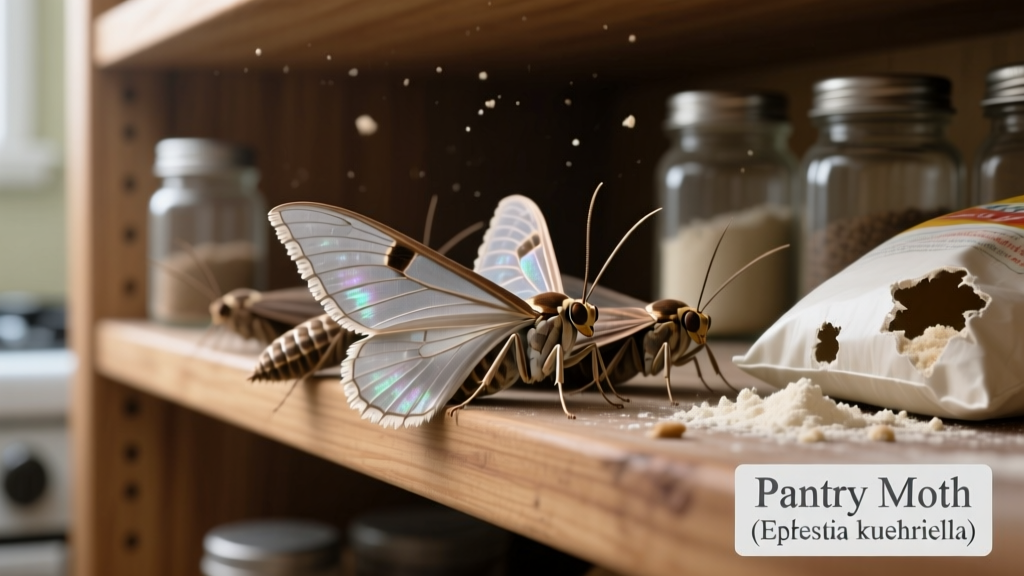
Those tiny, fluttering moths you spot near your cereal box or flour bin aren’t random visitors—they’re likely Indian meal moths (Plodia interpunctella) or, less commonly, Mediterranean flour moths (Ephestia kuehniella). Both are stored-product pests that lay eggs directly in dry goods, and their larvae—tiny, off-white caterpillars with brown heads—spin silken webbing and contaminate entire bags of rice, nuts, dried fruit, or pet food.
Identification
Correct ID is critical: misidentifying them as clothes moths or flying ants leads to ineffective treatment. Indian meal moths are the most common pantry pest in U.S. homes, accounting for over 90% of reported pantry moth cases (National Pest Management Association, 2022). They’re about ½ inch long with distinctive bi-colored wings—coppery-red outer halves and pale gray bases. Mediterranean flour moths are slightly smaller, with uniform pale gray wings and subtle black speckling.
| Feature | Indian Meal Moth | Mediterranean Flour Moth |
|---|---|---|
| Wing color pattern | Coppery-red outer third, pale gray base | Uniform pale gray with faint black dots |
| Larval webbing | Thick, silken threads; often clumps grains | Lighter, more scattered webbing |
| Preferred foods | Nuts, chocolate, dried fruit, birdseed | Flour, cornmeal, pasta, bakery products |
| Development time (egg to adult) | 25–135 days (temp-dependent) | 30–60 days at 77°F |
Look for these signs—not just adults:
- Clumps of grains or cereal stuck together with silk
- Small, creamy larvae (¼ inch) crawling on shelves or inside packaging
- Webbing inside open bags or along jar rims
- Fecal pellets resembling fine sawdust near infested items
What Attracts Them
Pantry moths don’t fly in from outside to nest—they hitchhike. Over 85% of infestations begin with eggs already present in store-bought food (University of California Statewide IPM Program, 2021). They thrive where conditions are warm (70–85°F), dry (less than 60% RH), and undisturbed—exactly like your pantry shelf behind the oatmeal.
They’re drawn to:
- Unsealed or thin-plastic packaging (e.g., cereal boxes, nut pouches)
- Products stored over 3 months—especially whole grains, spices, and protein bars
- Crumb buildup in corners, under shelves, or inside canisters
- Used pet food bags left open or stored in garages
Treatment Methods
Natural Methods
Start here—no chemicals needed for early-stage infestations. Discard all infested items in an outdoor trash bin (not kitchen garbage). Vacuum shelves, cracks, and crevices thoroughly, then wipe with vinegar-water (1:1) to remove pheromone residue. Store remaining dry goods in rigid, airtight containers—glass mason jars or thick plastic with gasket seals (e.g., OXO Pop Containers).
Freeze suspect unopened packages for 4 days at 0°F to kill eggs and larvae—a method validated by USDA-ARS research (2020). Then transfer contents to clean, sealed containers.
Chemical Options
Only consider insecticides if moths persist after 10 days of natural treatment—and never apply sprays near food prep areas. Use pyrethrin-based aerosols labeled for indoor pantry use (e.g., PT-565) only in empty cabinets, targeting cracks and hinge areas. Avoid foggers: they disperse residue onto surfaces and won’t reach larval hiding spots.
"Pantry moths rarely require insecticides—if you’re still seeing adults after two weeks of sanitation and freezing, you’ve missed a hidden source, not a resistant population." — Dr. Karen Vail, Entomologist, University of Tennessee Extension (2023)
Prevention
Prevention isn’t about repelling—it’s about breaking the breeding cycle. Rotate stock using the "first in, first out" rule. Label every container with purchase date and inspect new groceries before shelving—especially bulk-bin items, organic flours, and imported dried fruit.
Install pheromone traps (like Pro-Pest Pantry Traps) as early-detection tools—not solutions. Replace monthly; place one per 100 sq ft of pantry space, away from windows and vents.
Also:
- Wipe down shelf liners monthly with soapy water
- Store opened pet food in metal or heavy-duty plastic bins with locking lids
- Check holiday baking supplies (cocoa, almond flour, dried cranberries) before December—they’re frequent culprits
When to Call an Exterminator
Call a licensed pest professional if you find moths in three or more separate pantry zones *after* completing full sanitation and freezing protocols—or if you spot larvae in wall voids, behind baseboards, or inside light fixtures. These indicate established breeding sites beyond food sources. Most reputable companies offer free follow-up visits for pantry moth cases within 30 days.
Can pantry moths make me sick?
No documented cases link pantry moth ingestion to human illness—but their webbing, feces, and shed skins are allergens and spoil food quality. The FDA allows up to 60 insect fragments per 100g of flour; however, visible contamination means discard.
Do pantry moths bite or carry disease?
No. Neither Indian meal nor Mediterranean flour moths feed as adults. They lack mouthparts for biting or blood-feeding and pose no vector risk.
Why do I keep finding moths even after cleaning?
Larvae hide in seams of cabinets, under rubber shelf liners, or inside canister gaskets. A single missed pupa (brown, cocoon-like) can hatch into 6–8 new adults in 5–7 days. Re-inspect every 3 days for 2 weeks post-clean.
Are bay leaves or cedar blocks effective?
No peer-reviewed studies support bay leaves, cloves, or cedar as repellents against pantry moths. A 2019 UC Davis trial found zero reduction in egg-laying near bay leaf sachets versus controls.
Can pantry moths get into sealed glass jars?
Only if the lid wasn’t fully tightened or the seal was compromised. Adult moths cannot chew through glass or intact metal lids—but they’ll exploit gaps as small as 0.5 mm. Always check rubber gaskets for cracks.
Do pantry moths survive winter?
Yes—indoors. Their development slows below 60°F, but central heating keeps pantries warm year-round. Eggs laid in November can hatch in February.
Once you’ve cleared the infestation, maintain vigilance—not perfection. Moths reappear most often when we relax habits during holidays or travel. Keep a spare set of airtight containers near your grocery drop zone, and inspect new purchases under bright light before shelving. For ongoing help, see our pantry moth trap buying guide and step-by-step pantry deep-clean checklist.