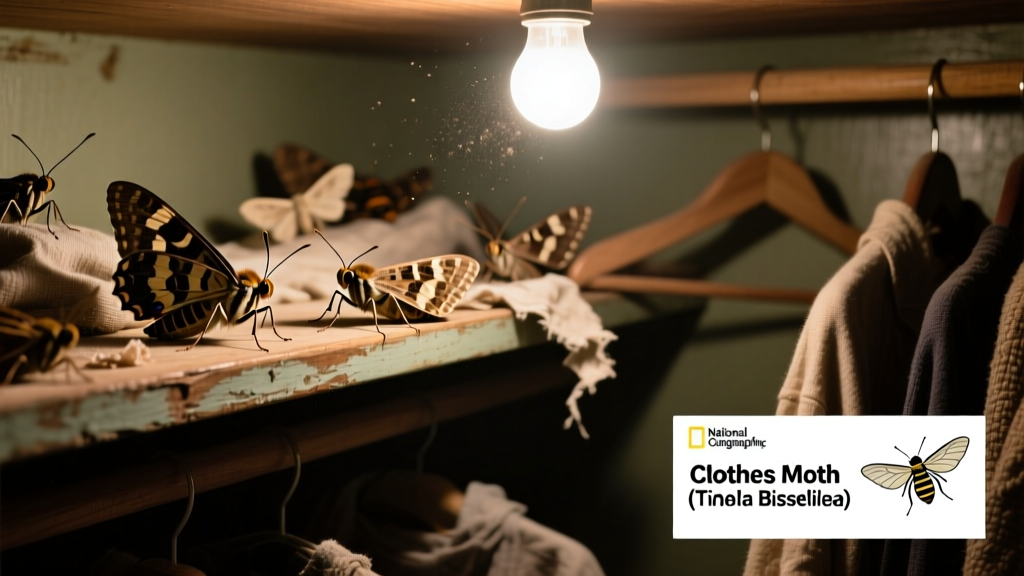
Those tiny, fluttering insects darting from your wool sweater or silk blouse aren’t just a nuisance—they’re likely webbing clothes moths (Tineola bisselliella) or casemaking clothes moths (Tinea pellionella). Unlike pantry moths, these pests feed exclusively on keratin-rich natural fibers, silently damaging garments, rugs, and upholstery over weeks or months before you notice holes or frass.
Identification
Clothes moths are small (¼ inch), pale beige or buff-colored, and avoid light—unlike pantry moths, which fly toward windows and kitchen lights. Adult moths don’t eat fabric; it’s their larvae that cause damage. Look for:
- Irregular holes or bare patches in wool, cashmere, feathers, or fur
- Silky, tube-like larval cases (casemakers) or silken feeding mats (webbing species)
- Small, sand-colored eggs (0.5 mm) glued to fibers—nearly invisible without magnification
- Crumbly, gritty frass resembling ground pepper near infested items
Here’s how to tell them apart from pantry moths:
| Feature | Clothes Moth | Pantry Moth |
|---|---|---|
| Wingspan | ¼ inch (5–7 mm) | ⅝ inch (14–16 mm) |
| Wing color | Dull beige or golden with no pattern | Distinct coppery-brown outer wings + grayish inner wings |
| Flight behavior | Weak fliers; scuttle or hop short distances | Strong fliers; drawn to light and open food containers |
| Primary food source | Keratin: wool, silk, fur, feathers, pet hair | Dry goods: flour, nuts, cereal, birdseed |
| Larval case | Webbing species: silken mat; Casemakers: portable case of silk + debris | No case; feeds openly on food surface |
What Attracts Them
Clothes moths thrive where conditions are stable and undisturbed: dark, warm (70–80°F), low-airflow closets with natural-fiber storage. They’re not attracted to cleanliness—moths prefer soiled items because sweat, oils, and food stains provide nutrients for larvae. According to the Entomological Society of America’s 2022 Pest Management Professional field survey, 68% of confirmed clothes moth infestations began in closets holding off-season clothing worn only once or twice per year.
- Storing unwashed sweaters or coats with body oils or food residue
- Using cardboard boxes or plastic bags (traps moisture and hides activity)
- Leaving pet hair or dander on rugs or furniture near closets
- Skipping seasonal inspection of stored furs, taxidermy, or antique textiles
Treatment Methods
Natural Methods
Start with non-toxic options—especially if you have children, pets, or sensitive skin. Freezing kills all life stages: seal infested items in airtight bags and freeze at 0°F for 72 hours. For delicate items, dry cleaning is effective but won’t prevent reinfestation unless combined with sanitation. Cedar oil sprays (not cedar chips alone) disrupt larval development when applied directly to closet interiors every 2 weeks. Vacuum thoroughly—including baseboards, shelf crevices, and behind hanging rods—then dispose of the bag or canister contents outdoors.
Chemical Methods
Use targeted insecticides only after confirming active infestation. Pyrethrin-based aerosols labeled for clothes moths (e.g., CB-80) can be sprayed into cracks and corners—but never on fabrics or inside drawers. Mothballs containing paradichlorobenzene are federally restricted for residential use and ineffective against eggs; they also pose respiratory risks per U.S. EPA guidelines (2023). Instead, consider pheromone traps like ProPest Clothes Moth Traps—they don’t kill moths but monitor activity and help pinpoint hotspots.
"Clothes moths rarely come from outside. In 9 out of 10 cases, we trace the source to a single contaminated garment brought home from a thrift store, rental, or inherited item." — Dr. Lena Cho, Urban Entomology Extension Specialist, Cornell University Cooperative Extension (2023)
Prevention
Prevention hinges on breaking the breeding cycle—not just killing adults. Wash or dry-clean all natural-fiber clothing before storing. Store items in breathable cotton garment bags—not plastic—and add lavender sachets or dried rosemary (not as repellents, but as odor markers for early detection). Rotate closet contents seasonally: pull out winter coats in spring, inspect for frass or webbing, and air them outdoors for 2+ hours in direct sunlight. Replace vacuum filters monthly during high-risk months (April–October).
- Install LED motion-sensor lights in closets to deter egg-laying (moths avoid light)
- Keep humidity below 50% using a dehumidifier—larvae desiccate above that threshold
- Label storage bins with dates and inspect quarterly using a 10x hand lens
When to Call an Exterminator
Call a licensed pest management professional if you find live larvae in more than three separate locations (e.g., closet, attic, basement rug), or if traps catch >5 moths per week for two consecutive weeks. Also consult one if you’ve treated twice with verified methods and still see new damage—this often signals hidden infestation in wall voids or HVAC ducts. Licensed exterminators use thermal imaging and fiber-scanning tools unavailable to consumers, and can apply residual insect growth regulators (IGRs) like methoprene in inaccessible areas.
Can clothes moths bite humans?
No. Clothes moths lack mouthparts capable of biting or feeding on blood. Their larvae feed only on keratin. Any itching or rash coinciding with moth sightings is likely due to dust mites, mold spores, or contact dermatitis from degraded fabric fibers—not the moths themselves.
Do cedar chests really repel moths?
Not reliably. Untreated cedar wood emits volatile oils that may mildly deter adult moths—but only when freshly sanded and in high concentrations. A 2021 study published in Journal of Economic Entomology found that aged cedar chests reduced egg-laying by just 12% versus controls. Effective protection requires combining cedar with regular inspection and low-humidity storage.
How long does a clothes moth lifecycle take?
Under ideal conditions (75°F, 60% RH), eggs hatch in 4–10 days, larvae feed for 30–90 days, then pupate for 8–10 days before emerging as adults. That means damage can accumulate for up to 4 months before you see adult moths. This lag is why early detection via frass or webbing matters more than catching flying adults.
Will washing clothes kill moth eggs?
Yes—if done correctly. Hot water (120°F+) for 30 minutes kills eggs and larvae. Cold-water washes do not. For delicates, steam-cleaning at ≥212°F for 15 seconds across all surfaces is effective. Always follow with immediate drying on high heat for 30 minutes—moisture left in folds invites reinfestation.
Are pantry moths and clothes moths the same species?
No. They belong to entirely different families: clothes moths are in the family Tineidae; pantry moths (Indian meal moths) are in Pyralidae. They don’t interbreed, don’t share food sources, and require completely different treatment strategies. Treating a clothes moth infestation with pantry moth traps—or vice versa—delays resolution by weeks.
Can I reuse infested wool sweaters after treatment?
Yes—if properly processed. After freezing or professional cleaning, inspect under bright light for remaining frass or webbing. Hold the garment up to backlight: holes will appear as translucent spots. If damage is minimal, reinforce weak areas with fusible interfacing before wearing. For heirloom pieces, consult a textile conservator through the textile pest damage repair service page.
Identifying the right moth saves time, money, and your favorite sweater. Don’t assume it’s “just moths”—it’s almost always a specific species with predictable habits. Confirm what you’re dealing with first, then act. For ongoing monitoring, pair pheromone traps with biweekly closet inspections—and remember: no moth problem is too small to ignore when it’s feeding on your wool coat. Keep your closet pest inspection checklist handy, and revisit your natural moth repellents list before storing next season’s knits.