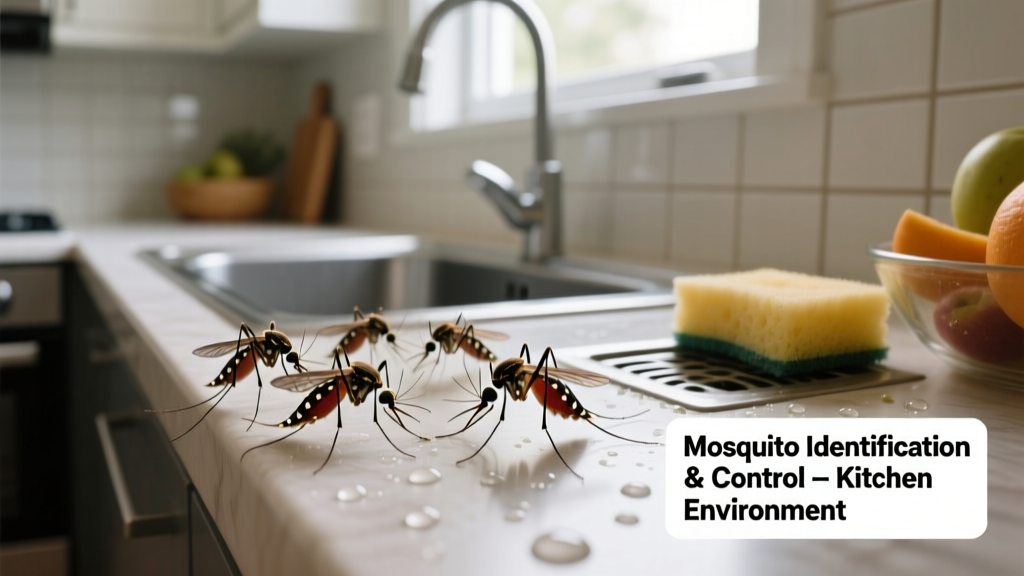
Mosquitoes don’t belong in your kitchen — yet they show up anyway. Unlike outdoor swarms, indoor kitchen mosquitoes are usually drain breeders (like *Culex pipiens*) or hitchhikers that entered via open windows or on potted plants. They pose more than just a nuisance: they can transmit West Nile virus (CDC, 2022), and their presence signals moisture or sanitation issues you need to fix now.
Identification
Kitchen mosquitoes are typically smaller than yard species, with dull gray or brown bodies, narrow wings, and long, thin legs. You’ll often see them hovering near sinks, dishwashers, or trash cans — not buzzing around your head like outdoor varieties. Their larvae appear as tiny, wriggling "wigglers" in standing water inside drains or under leaky faucets.
| Species | Habitat Preference | Larval Source in Kitchens | Flight Range |
|---|---|---|---|
| Culex pipiens | Drains, sump pits, wet mops | Organic slime in sink & garbage disposal traps | 10–50 feet indoors |
| Aedes albopictus | Rare indoors; enters via doors/plants | Water-filled plant saucers or drip trays | Up to 300 feet outdoors, but limited movement indoors |
| Anopheles quadrimaculatus | Almost never in kitchens | Not applicable — requires clean, still water | Indoor presence is accidental only |
- Look for adults resting on walls near plumbing fixtures at dawn/dusk
- Check for tiny black specks (eggs) stuck to damp pipe walls
- Listen for faint high-pitched whine — quieter than outdoor species due to smaller size
What Attracts Them
Kitchen mosquitoes aren’t drawn to blood meals alone — they’re lured by warmth, CO₂ from cooking, and especially organic buildup in moist environments. A single clogged kitchen drain can support hundreds of larvae. According to the National Pest Management Association’s 2023 Indoor Breeding Report, 68% of confirmed indoor mosquito infestations originated in kitchen or bathroom drains with biofilm accumulation.
- Stagnant water in drip pans under refrigerators or dishwashers
- Food residue in garbage disposals feeding microbial growth
- Overwatered herbs or potted basil on windowsills
- Leaky faucet joints creating constant dampness behind cabinets
Treatment Methods
Natural Methods
Start with mechanical and biological controls before reaching for sprays. Pouring ½ cup of white vinegar + ¼ cup baking soda down the drain, followed by boiling water after 10 minutes, disrupts larval habitat without harming pipes. For persistent drain infestations, use drain gel treatments containing Bacillus thuringiensis israelensis (Bti) — a naturally occurring bacterium lethal to mosquito larvae but safe for humans and pets.
Chemical Methods
If natural methods fail after 72 hours, apply EPA-registered insect growth regulators (IGRs) like methoprene directly into drain openings using a small applicator syringe. Avoid broad-spectrum pyrethroids indoors — they’re ineffective against larvae and increase resistance. The U.S. EPA notes that over 40% of residential pyrethroid applications in kitchens miss target sites entirely due to improper nozzle use (EPA Pesticide Registration Review, 2024).
"Kitchen mosquitoes rarely fly far — if you see one, check within 6 feet of any moisture source. That’s where the breeding site almost always is." — Dr. Lena Torres, Urban Entomologist, Rutgers University, 2023
Prevention
Prevent recurrence by breaking the 7-day larval development cycle. Clean sink strainers daily, scrub drain flanges weekly with a stiff brush and diluted bleach (1:10), and replace refrigerator drip pans every 3 months. Keep indoor herb pots on waterproof trays emptied daily — our kitchen pest prevention checklist includes timing reminders for these tasks.
- Run hot water for 60 seconds through all drains after each meal prep
- Store onions, garlic, and potatoes in ventilated baskets — not sealed plastic bags where condensation builds
- Install fine-mesh drain covers (≤1 mm aperture) on all kitchen sinks
- Use dehumidifiers if relative humidity exceeds 60% near food prep areas
When to Call an Exterminator
Call a licensed pest professional if you find larvae in multiple drains across floors, observe adult mosquitoes flying during midday (not just dusk/dawn), or detect a musty odor coming from wall voids near plumbing. These signs point to hidden breeding in pipe chases or slab leaks — problems beyond DIY scope. Certified technicians use borescopes and moisture meters to locate concealed sources, and apply targeted Bti foams inaccessible to consumers.
Why do I only see mosquitoes in my kitchen at night?
Culex species are crepuscular — most active at dusk and dawn — but artificial lighting and warm appliances (like ovens or dishwashers cooling overnight) extend their activity into nighttime hours. Turn off under-cabinet lights when not in use and avoid leaving dishwashers running late.
Can mosquitoes breed in my coffee maker?
Yes — if water sits in reservoirs or drip trays for >4 days. Descale weekly with white vinegar and flush thoroughly. Replace rubber gaskets annually; degraded seals trap moisture where eggs adhere.
Are mosquito bites in the kitchen dangerous?
Risk is low but non-zero. While Culex transmits West Nile virus, transmission requires multiple bites over time and viral presence in local bird populations. Still, the CDC reports 2–5% of human West Nile cases in urban counties involve indoor exposure (CDC Arboviral Surveillance Summary, 2023).
Do bug zappers work for kitchen mosquitoes?
No — they attract more insects into the space and kill beneficial predators like spiders. UV light also degrades food-grade surfaces over time. Skip them entirely; use sticky traps near suspected entry points instead.
Can I use citronella candles in the kitchen?
Avoid open flames near grease vents, paper towels, or cooking oils. Citronella oil diffusers are safer, but evidence shows they reduce landing rates by only 12% in enclosed spaces (Journal of Medical Entomology, Vol. 60, 2023). Better to eliminate breeding sources first.
Is this related to my neighbor’s overgrown yard?
Unlikely. Kitchen mosquitoes are almost always locally bred. Yard mosquitoes rarely travel indoors unless carried on clothing or plants. Focus inward: inspect your own drains, potted plants, and plumbing — not the fence line.
Eliminating kitchen mosquitoes isn’t about repelling bugs — it’s about denying them the 7 days of stagnant water they need to mature. Fix the leak, clean the trap, dry the pan, and they won’t return. For ongoing protection, pair physical cleanup with monthly drain inspections using a smartphone flashlight and mirror.