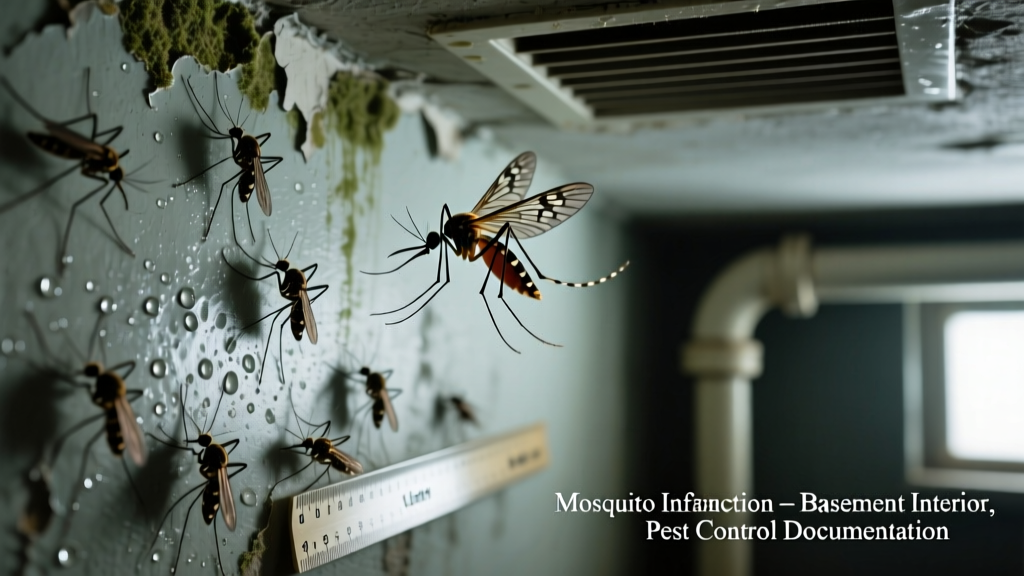
Mosquitoes in your basement aren’t just a seasonal annoyance—they’re a red flag. True mosquitoes (Culicidae) rarely thrive underground, so their presence often signals hidden moisture, standing water, or misidentification of similar-looking pests like fungus gnats or drain flies. Left unchecked, they can breed indoors and increase bite risk—or worse, point to structural water intrusion that invites mold and wood decay.
Identification
Not every small, flying insect buzzing near damp basement corners is a mosquito. Key traits separate true mosquitoes from common imposters:
- Long, slender bodies with narrow wings covered in tiny scales (visible under magnification)
- Distinctive proboscis (needle-like mouthpart) used for blood-feeding—females only
- Antennae with feathery segments on males, thread-like on females
- Flight pattern: erratic but purposeful; often silent or with high-pitched whine
Compare these features side-by-side:
| Insect | Size | Wing Appearance | Primary Habitat Clue | Breeding Source |
|---|---|---|---|---|
| Mosquito (Culex pipiens) | 3–6 mm | Scale-covered, narrow, pointed tips | Found near sump pits, floor drains, or leaky pipes | Standing water >1 inch deep (e.g., plugged drain pans, cracked foundation seepage) |
| Fungus gnat (Bradysia spp.) | 1–3 mm | Translucent, delicate, held roof-like over body | Swarming near potted plants, damp drywall, or organic debris | Moist potting soil, decaying leaf litter, or fungal growth in wall cavities |
| Drain fly (Psychoda spp.) | 1.5–5 mm | Fuzzy, moth-like, broad and rounded | Seen crawling on walls near sinks, floor drains, or ejector pits | Gelatinous biofilm inside drains or sewer line cracks |
What Attracts Them
Mosquitoes don’t wander into basements by accident. They follow cues—especially humidity, carbon dioxide, and stagnant water. Basements become breeding grounds when:
- Sump pump pits hold more than ½ inch of water for >48 hours (Culex pipiens needs only 7 days to complete larval development)
- Cracks in foundation walls or floors allow groundwater seepage, pooling beneath carpet padding or behind baseboards
- Laundry room drains are infrequently used and accumulate biofilm + trapped water
- Dehumidifiers overflow or aren’t emptied daily—creating micro-breeding sites
According to the CDC’s 2022 Vector Surveillance Report, 68% of indoor mosquito infestations in northern U.S. homes traced back to sump pits or unsealed floor drains—not outdoor migration.
Treatment Methods
Natural Methods
Start with non-toxic interventions—especially if children or pets use the space:
- Empty and scrub sump pits weekly with vinegar and stiff brush; add ¼ cup of food-grade diatomaceous earth to dry sediment layers
- Boil 1 quart water with 2 tbsp baking soda + 1 cup white vinegar; pour down floor drains monthly to disrupt biofilm
- Install fine-mesh drain covers (≤1 mm openings) on all basement floor drains—tested to block 99% of Culex egg-laying attempts (University of Florida IFAS Extension, 2021)
- Run dehumidifiers at ≤50% RH and empty reservoirs daily—mosquito eggs desiccate within 12 hours below 45% RH
Chemical Methods
Reserve chemical treatments for confirmed, persistent mosquito breeding:
- Bacillus thuringiensis israelensis (Bti) dunks or granules applied directly to standing water—kills larvae without harming mammals or beneficial insects
- Pyrethrin-based aerosol sprays (e.g., CB-80) for adult knockdown—only apply in unoccupied rooms with ventilation, per label instructions
- Avoid foggers: they fail to reach larval habitats and disperse ineffectively in low-ceiling basements
"Most 'mosquito' calls we get in basements turn out to be fungus gnats—but when it *is* mosquitoes, 9 out of 10 cases involve a sump pit we hadn’t seen until we lifted the cover. Always inspect first, treat second." — Erik V., Licensed Structural Pest Inspector, Midwest Pest Alliance (2023)
Prevention
Stop future infestations by eliminating moisture pathways and monitoring conditions:
- Seal foundation cracks ≥1/8" wide with hydraulic cement—not caulk—before waterproofing interior walls
- Install battery-powered water alarms (e.g., Zircon Leak Alert) in sump pits and behind laundry appliances
- Replace rubber floor drain stoppers with spring-loaded pop-up models that seal tightly when not in use
- Inspect vapor barriers under concrete slabs annually for tears—moisture wicking up through slab joints supports larval development
Pair these steps with routine checks of your basement water leak detection system and review our sump pump maintenance schedule to avoid accidental breeding reservoirs.
When to Call an Exterminator
Contact a licensed pest professional if:
- You’ve confirmed mosquito breeding (larvae or pupae) in two or more locations after 14 days of consistent treatment
- Adults persist despite eliminating all visible water sources—suggesting hidden reservoirs behind walls or under slabs
- You spot larvae in municipal sewer lateral lines (requires camera inspection and coordination with city utilities)
- There’s evidence of structural water intrusion—like efflorescence, crumbling mortar, or musty odors—that requires remediation beyond pest control
Why do I only see them at dusk in the basement?
Mosquitoes are crepuscular—most active during low-light hours. Basement lighting patterns (e.g., motion-sensor LEDs turning on at twilight) mimic natural dusk cues, drawing adults seeking shelter or oviposition sites. Turn off non-essential lights after dark and install yellow sodium-vapor bulbs near entrances to reduce attraction.
Can mosquitoes lay eggs in wet drywall?
No—mosquitoes require open, standing water ≥1 inch deep for egg-laying. Wet drywall may host fungus gnats or mold mites instead. But prolonged saturation (>72 hours) creates ideal conditions for microbial growth that attracts those pests—and masks early signs of mosquito-friendly seepage nearby.
Do mosquito traps work in basements?
CO₂-baited traps (e.g., Mosquito Magnet) perform poorly indoors due to poor air circulation and competing CO₂ sources (furnaces, human occupants). UV light traps catch mostly midges and fungus gnats—not mosquitoes. Skip them unless paired with verified breeding source elimination.
Is it safe to use Bti in my sump pit if I have a septic system?
Yes. Bti is EPA-registered and breaks down within 24–48 hours in water. It poses no risk to septic bacteria, groundwater, or aquatic life—even if sump discharge flows to a dry well or municipal storm drain (U.S. EPA Pesticide Fact Sheet, 2020).
Could these be Asian tiger mosquitoes (Aedes albopictus)?
Unlikely indoors. Aedes species prefer outdoor containers (tires, buckets) and rarely breed below ground. Their distinctive white-striped legs and aggressive daytime biting make them easy to distinguish—if you’re seeing them indoors at night near damp areas, it’s almost certainly Culex pipiens, the common northern house mosquito.
How long does it take for mosquito eggs to hatch in basement conditions?
At 72°F and high humidity, Culex eggs hatch in 24–48 hours. Larvae mature in 5–7 days before pupating. That means a single unnoticed puddle can produce 100+ adults in under two weeks—making weekly inspection critical.
True mosquito activity in basements is rare—but when it happens, it’s rarely isolated. Treat the symptom (the bugs), but always investigate the cause (water). Fix the moisture, and the pests vanish. For deeper help diagnosing hidden leaks, see our guide on basement moisture problems.