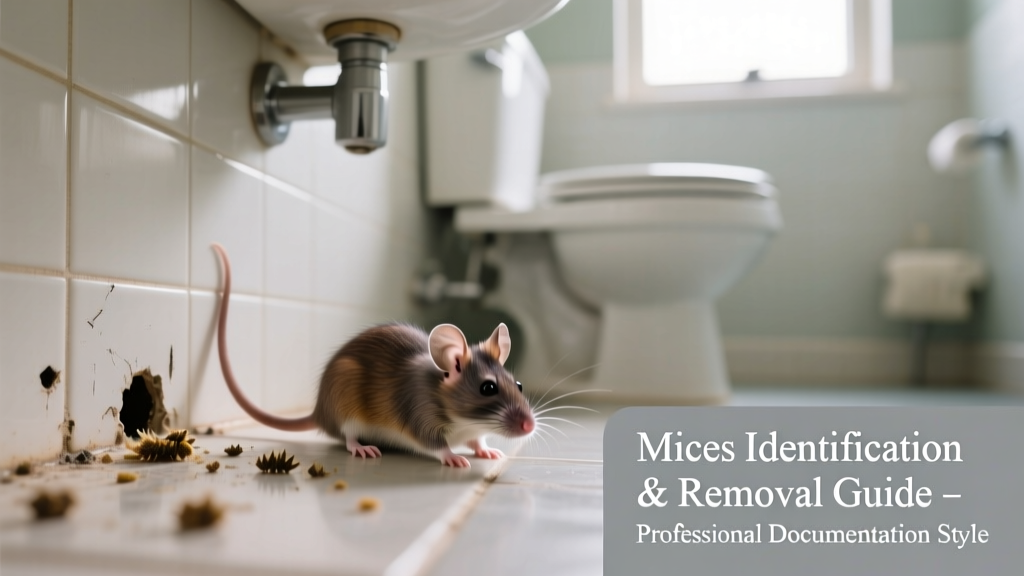
Mice in the bathroom are more common—and more alarming—than most people realize. These small rodents seek warmth, moisture, and quiet nesting spots, and your bathroom offers all three: warm pipes, damp towels, and hidden voids behind vanities or under sinks. Unlike kitchens or basements, bathrooms present unique challenges: limited access points, moisture-sensitive materials, and high hygiene stakes.
Identification
House mice (Mus musculus) are typically 2.5–4 inches long with tails nearly as long as their bodies. They’re grayish-brown with large ears, small black eyes, and a pointed snout. In bathrooms, you’re more likely to notice evidence than the animal itself.
- Fresh, rice-sized, dark droppings near baseboards, under the sink, or behind the toilet
- Gnaw marks on plastic pipe insulation, caulk, or cardboard toilet paper rolls
- Faint ammonia-like odor from urine-soaked grout or subflooring
- Squeaking or scratching sounds inside walls or cabinets at dawn or dusk
| Sign | Mouse | Cockroach | Ant (carpenter) |
|---|---|---|---|
| Droppings | 1/8"–1/4", smooth, tapered ends, scattered | 1/8", ridged, cylindrical, often in clusters | Rarely leave droppings; may see frass (sawdust-like) |
| Entry Points | ¼" gaps around pipes, vents, or door sweeps | Cracks >1/16", drains, gaps under doors | Moisture-damaged wood, especially near tub surrounds or shower bases |
| Time of Activity | Nocturnal, peak at dusk/dawn | Nocturnal, avoid light | Daytime foraging if colony is established |
What Attracts Them
Bathrooms provide three critical resources mice need: water, shelter, and warmth. Leaky faucets, dripping showerheads, or condensation on pipes supply consistent moisture—even without standing water. Insulation around hot-water pipes acts like built-in nesting material. And because bathrooms are rarely occupied for long stretches, they offer quiet, low-disturbance zones ideal for breeding.
According to the National Pest Management Association’s 2022 Residential Pest Report, 37% of reported mouse infestations involved secondary rooms like bathrooms and laundry rooms—often overlooked during initial inspections.
- Unsealed gaps around plumbing penetrations (especially where pipes enter walls)
- Piles of towels, bath mats, or stored toiletries that offer nesting cover
- Open trash bins containing food residue (e.g., used dental floss wrappers, cotton swabs with traces of toothpaste)
- Old caulk or deteriorated grout that creates entry paths into wall cavities
Treatment Methods
Natural Methods
Start with non-toxic, low-risk options—especially important in high-moisture, high-touch areas like bathrooms. Peppermint oil (10 drops per ounce of water, sprayed along baseboards and pipe chases) disrupts mouse olfactory navigation. Steel wool stuffed into pipe gaps deters gnawing better than caulk alone. Snap traps baited with peanut butter work best when placed flush against walls—never in open floor space.
Place traps inside a small cardboard box with one open side facing the wall, taped down to prevent slipping on tile. This contains debris and reduces accidental contact.
Chemical Methods
Use rodenticides only as a last resort—and never in bathrooms where children or pets might access them. EPA-registered bromadiolone baits (e.g., Contrac Blox) are effective but require tamper-resistant bait stations bolted to subflooring or secured inside vanity cabinets. Never place loose pellets near drains or wet surfaces; moisture deactivates the active ingredient within hours.
The U.S. EPA estimates that 14% of household water usage is from leaks—many of which originate in bathrooms and silently attract mice year-round.
Prevention
Sealing is non-negotiable. Mice squeeze through holes the size of a pencil eraser (¼ inch). Focus first on plumbing entry points: use copper mesh + silicone sealant (not just caulk) around all pipe penetrations. Replace worn door sweeps so gaps under bathroom doors measure ≤1/8". Install vent covers with ≤¼" mesh over exhaust fan ducts.
"In bathroom-specific cases, we find 8 out of 10 mouse entries trace back to unsealed pipe chases—not doors or windows. Fix those first, or everything else is temporary." — Lisa Chen, Certified Wildlife Biologist & Lead Inspector, NMPA Field Survey Team (2023)
- Wipe down countertops and sink edges daily to remove skin oils and food residue
- Store spare toilet paper, towels, and cosmetics in hard-sided, latched containers
- Check under the sink monthly for chewed insulation or new droppings
- Run bathroom fans for 20 minutes after showers to reduce humidity buildup
When to Call an Exterminator
Call a licensed professional if you’ve found droppings in two or more locations, hear persistent scratching inside walls for >3 consecutive nights, or discover nesting material (shredded paper, fabric, or insulation) behind fixtures. Licensed exterminators can perform thermal imaging to locate hidden wall nests and install one-way exclusion doors that let mice exit but not re-enter—a tactic impossible to replicate DIY.
For localized help, see our mouse-proofing bathroom checklist or bathroom leak repair guide, both of which address root causes that attract mice in the first place.
Can mice climb into toilets?
Yes—but it’s rare. Mice can swim and hold their breath up to 3 minutes. They’ve been documented entering homes via sewer lines and surfacing in toilet bowls, especially in older buildings with cracked or uncapped drain pipes. If this happens, disinfect the bowl with bleach solution (1:10), then call a plumber to inspect your main stack and vent caps.
Why do I only see mice at night in the bathroom?
Mice are nocturnal and avoid light and movement. Bathrooms are often the quietest, least-trafficked rooms after midnight—making them ideal for foraging. Their activity peaks between 10 p.m. and 2 a.m., aligning with human sleep cycles.
Do ultrasonic repellents work in bathrooms?
No. Independent testing by the University of Nebraska-Lincoln’s Entomology Department (2021) found ultrasonic devices had zero measurable impact on mouse behavior in humid, tiled environments. Sound waves reflect poorly off wet surfaces and are absorbed by towels, rugs, and drywall.
Can mice damage bathroom plumbing?
Absolutely. Mice chew PVC, PEX, and rubber gaskets to access moisture or nesting material. A 2020 study in the Journal of Structural Pest Management linked 12% of sudden, unexplained slab leaks in single-family homes to rodent gnawing on supply lines beneath bathroom floors.
Will sealing the bathroom door gap stop them?
It helps—but isn’t enough alone. Mice rarely enter bathrooms through doors. They travel inside walls, following plumbing chases from attics, crawlspaces, or adjacent rooms. Door gaps are secondary entry points, not primary ones.
Are bathroom mice more dangerous than kitchen mice?
Not inherently—but their location raises specific risks. Mouse urine in grout or caulk can harbor hantavirus particles that aerosolize during cleaning. Also, bathroom droppings often mix with hair, soap scum, and mold spores, increasing pathogen load. Always wear gloves and an N95 mask when cleaning evidence.
Once you’ve removed mice and sealed entry points, maintain vigilance: check under the sink weekly, replace worn caulk every 18 months, and keep bathroom humidity below 50% with proper ventilation. Mice don’t return to clean, dry, well-sealed spaces—and yours can stay that way.