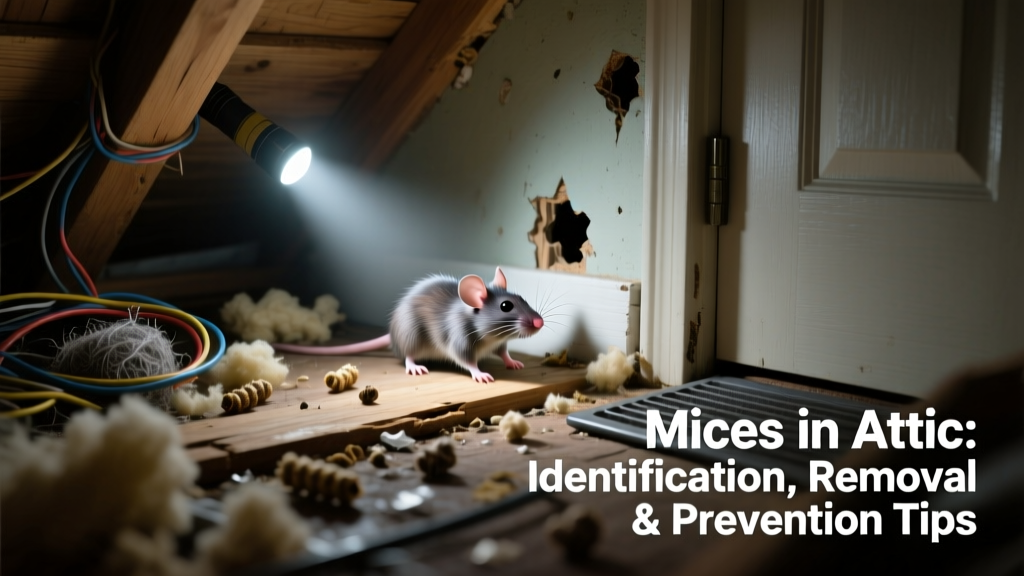
Mice in the attic are more than a nuisance—they’re a structural and health hazard. A single pair can produce up to 10 litters per year, with 5–6 pups each, meaning dozens of mice may be nesting above your ceiling within months. Their gnawing damages insulation, wiring (causing fire risk), and wood framing—and their droppings carry hantavirus, salmonella, and allergens that circulate through HVAC systems.
Identification
House mice (Mus musculus) are small, agile rodents typically 2.5–4 inches long (excluding tail), with light gray to brown fur, large ears, and pointed snouts. In attics, they favor insulation piles, rafters, and stored boxes—especially near soffits or roof vents.
Look for these signs:
- Fresh, rice-sized black droppings (3–6 mm) scattered near insulation or beams
- Gnaw marks on wood, cardboard, or electrical sheathing with parallel grooves
- Nesting material: shredded paper, fabric, or insulation clumped in corners or wall voids
- Faint ammonia-like odor from urine buildup, especially in poorly ventilated areas
- Scurrying or scratching sounds at dusk or dawn—mice are nocturnal but active year-round
| Pest | Size & Appearance | Key Signs | Typical Nesting Spot in Attic |
|---|---|---|---|
| House mouse | 2.5–4" long; gray/brown; large ears; thin tail | Fresh black pellets; fine gnaw marks; shredded insulation nests | Insulation piles, soffit corners, behind ductwork |
| Rats (Norway/roof) | 7–10" long; thick tail; blunt snout; coarse fur | Larger droppings (½"+); grease marks along beams; burrows in insulation | Rafter ends, gable vents, near pipes or chimneys |
| Squirrels | 9–12" long; bushy tail; gray/red fur; strong claws | Loud daytime activity; large leafy nests; chewed vent screens | Ridge vents, gable louvers, chimney caps |
| Bats | 2–4" wingspan; leathery wings; no tail visible | Dry, crumbly black guano; fluttering sounds; oily stains near entry | Under shingles, ridge cap gaps, eaves |
What Attracts Them
Mice don’t wander into attics by accident—they follow food, warmth, and shelter. Attics offer ideal conditions when:
- Temperatures stay between 60–80°F year-round due to poor ventilation or heat bleed from living spaces
- Unsealed gaps exist: holes larger than ¼ inch (a dime’s width) let mice squeeze through
- Insulation is loose, old, or disturbed—providing nesting material and cover
- Stored items include cardboard boxes, paper documents, or fabric (all chewable and nest-worthy)
- Roof vents, soffits, or fascia boards have gaps, missing screening, or rotting wood
According to the National Pest Management Association’s 2022 Rodent Control Report, 68% of attic infestations begin through gaps around plumbing stacks or recessed lighting housings—not obvious roof openings.
Treatment Methods
Natural Options
Start here if you’ve spotted only 1–3 mice and want to avoid poisons or traps indoors. Natural methods work best as deterrents and early-stage interventions—not for established colonies.
- Peppermint oil spray (10 drops oil per oz water) applied along baseboards and entry points—reapply weekly; mice dislike the menthol vapor
- Steel wool + caulk: Pack coarse steel wool into gaps <¼", then seal with silicone caulk (mice can’t chew through both layers)
- Ultrasonic devices: Use only models certified by UL 464; effectiveness varies—but they *can* disrupt nesting behavior in small, enclosed attic zones
- Corn cob-based repellents (e.g., Fresh Cab) placed in storage bins—non-toxic and EPA-registered for indoor use
Chemical & Mechanical Options
For confirmed nests or frequent activity, targeted mechanical control is safer and more effective than broadcast rodenticides—which pose secondary poisoning risks to pets and wildlife.
- Spring traps (e.g., Victor Kill-Bit): Place perpendicular to walls, baited with peanut butter + oats; check daily
- Electronic traps (e.g., Rat Zapper Ultra): Deliver instant kill; safe around children/pets when mounted out of reach
- Glue boards: Avoid unless absolutely necessary—inhumane and ineffective for attic use (dust and debris reduce stickiness)
- Anticoagulant baits (e.g., Contrac Blox): Only use in tamper-resistant bait stations labeled for attics; never scatter loose pellets
"In attic settings, 90% of successful mouse removal starts with exclusion—not trapping. If you don’t seal the entry, you’ll reset the clock every 3 weeks." — Dr. Lena Torres, Urban Wildlife Extension Specialist, Cornell Cooperative Extension, 2023
Prevention
Prevention isn’t about one-time fixes—it’s about layered defense. Focus first on sealing, then monitoring, then maintenance.
- Inspect all attic perimeter points: soffit vents, roof vents, gable louvers, plumbing/chimney penetrations, and recessed light housings
- Seal gaps >1/8" with copper mesh (not steel wool alone—mice pull it out) embedded in polyurethane caulk (e.g., Great Stuff Pest Block)
- Install 1/4" stainless steel hardware cloth over soffit and gable vents—staple every 2 inches and paint to match
- Store holiday decor, clothing, and documents in hard plastic bins with gasketed lids—not cardboard or fabric
- Install an attic fan with humidistat control: keeping relative humidity below 50% deters nesting and mold growth
Replace fiberglass insulation damaged by urine or nesting with blown-in cellulose treated with borate—it resists chewing and deters future rodent use.
When to Call an Exterminator
Call a licensed pest professional if:
- You find more than 10 fresh droppings in one area—or see greasy rub marks along rafters
- There’s evidence of nesting in multiple locations (e.g., insulation clumps in 3+ spots)
- You hear constant activity at night—or notice chewed electrical wires near junction boxes
- DIY sealing hasn’t reduced sightings after 10 days of consistent trap checks
- You suspect bats or rats instead of mice—misidentification leads to failed treatment
Reputable companies will provide a written inspection report, seal warranty (minimum 1 year), and post-treatment monitoring. Avoid firms that push monthly “maintenance” sprays—attics rarely need ongoing chemical treatment.
Can mice chew through PVC pipe?
Yes—but not easily. Mice prefer softer materials like drywall, wood, or rubber. They *can* gnaw through thin-walled PVC (Schedule 20 or DWV), especially where pipes meet fittings or show UV degradation. Use Schedule 40 PVC or metal conduit for new runs near potential entry zones. For existing vulnerable sections, wrap with aluminum tape or embed in concrete during repairs.
How long does it take to get rid of attic mice?
With full exclusion and trapping, most small infestations (1–5 mice) resolve in 7–14 days. Larger colonies (10+ mice) often require 3–6 weeks—especially if nesting occurred before winter, when breeding slows but survival increases. The insulation replacement timeline should align with pest control: remove contaminated material *after* mice are gone and entry points sealed.
Do attic mice leave in summer?
Rarely. Unlike some pests, house mice don’t migrate seasonally. They remain year-round in temperature-stable attics—especially if food and nesting material are available. Summer heat may shift activity to cooler, shaded rafter zones, but they won’t vacate unless excluded or displaced.
Will mothballs keep mice out of the attic?
No. Mothballs contain naphthalene or paradichlorobenzene—both toxic to humans and pets at low doses, with no proven repellent effect on mice. The U.S. EPA has never approved mothballs for rodent control, and their vapors can corrode wiring insulation. Skip them entirely—use proven exclusion and monitoring instead.
Can I use smoke bombs in the attic?
Absolutely not. Smoke bombs (fumigants) are illegal for indoor residential use and extremely dangerous in confined attic spaces. They displace oxygen, ignite dust or insulation, and release toxic fumes. The rodent-proofing checklist includes safer, code-compliant alternatives like foam-and-mesh barriers and vent guards.
Does homeowners insurance cover mouse damage?
Generally, no. Most policies exclude vermin-related damage—including chewed wires, ruined insulation, or contamination cleanup—as “preventable neglect.” Some insurers offer optional endorsements for rodent damage, but they rarely cover pre-existing infestations. Document everything with dated photos before contacting your provider—and always get an exclusion certificate from your pest pro before filing claims.
Attic mice thrive where oversight is low and access is easy. Your best tool isn’t a trap or spray—it’s vigilance: inspect twice yearly, seal new gaps immediately, and treat the attic like part of your home’s envelope—not a forgotten storage zone. For persistent issues, pair professional exclusion with attic ventilation upgrades to make the space less hospitable, not just harder to enter.