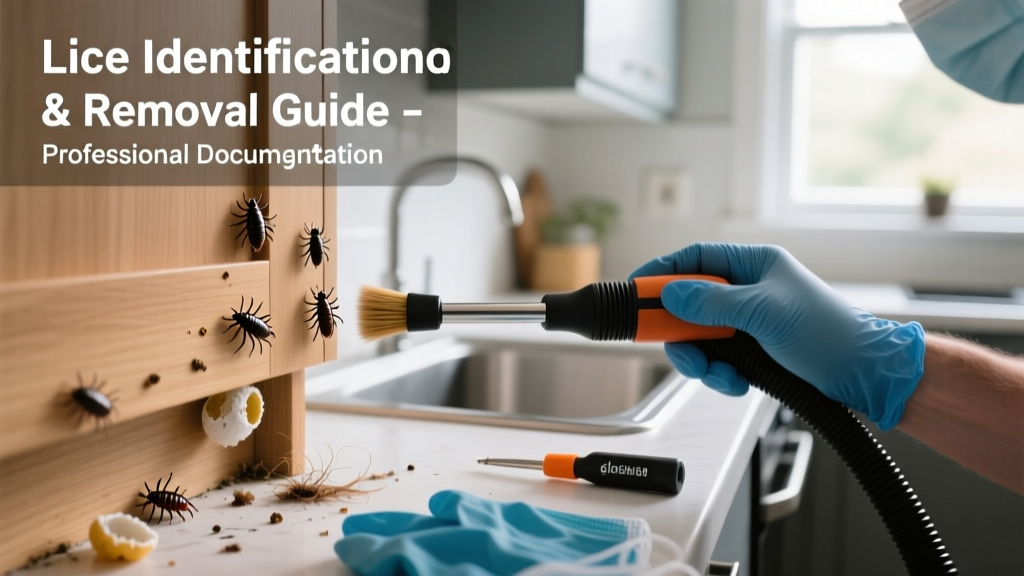
Lice are parasitic insects that feed exclusively on human blood — they do not live in kitchens, nor do they infest food, countertops, or appliances. If you’re finding tiny, fast-moving insects in your kitchen, they are almost certainly not lice but something else: booklice (psocids), flour beetles, grain mites, or even springtails. Misidentifying these pests leads to ineffective treatments and wasted effort. Getting the ID right is step one — and it’s critical.
Identification
True human head lice (Pediculus humanus capitis) cannot survive more than 24–48 hours off a human host. They lack wings, don’t jump or fly, and have six legs with claw-like tarsi designed to grip hair shafts. Finding them in a kitchen is biologically implausible — unless someone recently sat at the kitchen table with an active scalp infestation and shed a few, which would be rare and non-reproducing.
| Pest | Size & Color | Habitat Clue | Feeds On |
|---|---|---|---|
| Booklice (Psocids) | 1–1.5 mm, pale gray/white, soft-bodied | High humidity + moldy paper, cardboard, or starchy debris | Mold spores, fungi, starches |
| Flour beetles | 3–4 mm, reddish-brown, hard-shelled | Inside opened flour, cereal, or pasta packages | Dry stored grains and powders |
| Grain mites | 0.5 mm, translucent white, barely visible without magnification | Clumping or moldy-smelling dry goods; often on surface of infested product | Grains, cheese, dried fruit, pet food |
| Springtails | 1–2 mm, gray or blue-black, jump when disturbed | Near sinks, drains, or leaky pipes — love moisture | Decaying organic matter, fungi, algae |
What Attracts Them
Kitchens provide three key conditions for nuisance pests mistaken for lice: moisture, warmth, and organic food sources. Booklice thrive where relative humidity exceeds 60% — especially near leaky faucets, under refrigerators, or behind dishwashers. Grain mites multiply rapidly in damp flour or old oatmeal left unsealed. Flour beetles hitchhike in bulk grain purchases and reproduce inside cabinets within weeks.
- Unsealed bags of rice, cornmeal, or protein powder
- Cardboard boxes stored directly on concrete floors (condensation + mold)
- Expired spices or nut flours developing rancidity and mold
- Cracked caulk around sinks allowing moisture buildup and fungal growth
Treatment Methods
Natural Methods
Start by discarding all suspect dry goods — even if they look fine. Vacuum shelves thoroughly, then wipe with 70% isopropyl alcohol to kill eggs and mold. Reduce humidity using a dehumidifier (target ≤50% RH) and fix leaks within 48 hours. For booklice, discard water-damaged cardboard or paper packaging — they cannot survive without mold.
Chemical Methods
Residual insecticides are rarely needed — and never recommended for food prep areas. If grain mites persist after sanitation, only use EPA-registered insecticide dusts like diatomaceous earth (food-grade) applied as a thin line behind baseboards or inside empty cabinet corners. Do not apply to surfaces used for food handling. According to the National Pesticide Information Center’s 2022 guidelines, overuse of pyrethrins in kitchens increases resistance and poses inhalation risks near cooking zones.
"Over 92% of psocid infestations resolve fully within 10 days of humidity control and source removal — no pesticide required." — Dr. Lena Cho, Urban Entomology Extension, UC Riverside, 2023
Prevention
Store all flour, oats, nuts, and protein powders in rigid, airtight containers made of glass or thick plastic — not resealed bags. Label containers with purchase dates and rotate stock using “first in, first out.” Install exhaust fans that vent outdoors (not into attics) and run them during and after cooking. Check under sinks monthly for slow drips — a single leak can sustain booklice populations for months.
- Replace cardboard cereal boxes with sealed containers immediately upon opening
- Wipe down pantry shelves with vinegar solution every 2 weeks
- Use silica gel packs in spice drawers and flour bins (replace quarterly)
- Inspect new grocery items for webbing, clumping, or musty odor before storing
When to Call an Exterminator
Call a licensed pest professional only if: (1) You’ve confirmed grain mites or booklice across multiple rooms (not just the kitchen), (2) Humidity remains above 60% despite dehumidifier use and leak repairs, or (3) You find live insects in sealed, brand-new, unopened food packages — indicating warehouse-level contamination. Most kitchen ‘lice’ cases require no exterminator; misdiagnosis is the most common reason for unnecessary service calls.
Can lice live in kitchen cabinets?
No. Human lice cannot survive off a host for more than two days, and they cannot feed on anything other than human blood. Cabinets offer no food source, no warmth regulation, and no way to cling to surfaces. What you’re seeing is another pest entirely — likely booklice or grain mites.
Do I need to throw away my toaster if I saw tiny bugs near it?
Only if you find live insects inside the crumb tray or heating elements — and only after confirming they’re flour beetles or weevils (which can nest in baked-on residue). Wipe the exterior, empty and vacuum the tray, then run it empty on high for 10 minutes to kill any eggs. See our guide on flour beetles in toasters for step-by-step cleaning.
Are grain mites dangerous to eat?
Accidentally consuming a few grain mites is not harmful to healthy adults, though it may cause mild gastrointestinal upset in sensitive individuals. The bigger concern is that their presence signals advanced spoilage — mold, rancidity, or bacterial growth in the food. Discard anything infested, including adjacent items that shared storage space.
Why do I keep seeing tiny bugs after cleaning?
You’re likely seeing newly hatched nymphs emerging from eggs laid before cleaning. Booklice eggs hatch in 3–7 days; grain mite eggs in 3–5. Continue humidity control and sanitation for at least 14 days to break the life cycle. Monitor with sticky traps placed near suspected entry points — see our kitchen pest monitoring guide.
Can pets bring lice into the kitchen?
No. Dogs and cats carry different lice species (e.g., Trichodectes canis) that cannot survive on humans — and vice versa. Pet lice also cannot live off-host for more than 2–3 days and won’t colonize kitchens. If you’re finding insects near pet food bowls, check for grain mites or carpet beetles instead.
Does bleach kill booklice?
Bleach has no residual effect on booklice and won’t penetrate mold colonies growing inside wall voids or behind cabinets — their true breeding sites. It’s also corrosive to grout and metal fixtures. Use diluted vinegar or 70% isopropyl alcohol for surface disinfection, and focus on fixing moisture issues first. For deeper remediation, read our mold behind kitchen cabinets guide.
Confusing other pests with lice delays proper action — and lets infestations grow. Accurate ID, humidity control, and smart storage habits solve nearly all kitchen ‘lice’ cases. When in doubt, trap a specimen in clear tape and consult your local extension office for free identification. Prevention isn’t about perfection — it’s about consistency with the basics: seal, dry, rotate, and inspect.