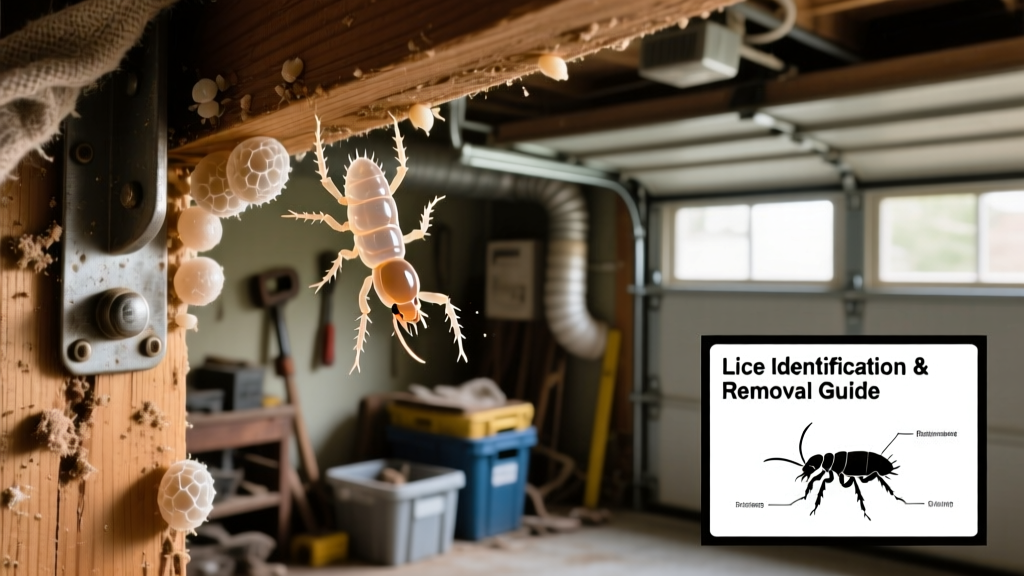
Lice are parasitic insects that feed on human or animal blood—but finding them in a garage is unusual and almost always indicates an underlying issue: either infested clothing, gear, or pets stored there, or confusion with other small, fast-moving pests like booklice or psocids. Unlike head or body lice, true lice don’t survive long off a host (typically <48 hours), so their presence in a garage signals recent introduction—not established breeding. Ignoring it risks spread to living areas or adjacent pet zones.
Identification
True lice (Pediculus humanus) are tiny (1–3 mm), wingless, flattened insects with six legs ending in hook-like claws for gripping hair or fabric fibers. They’re tan to grayish, often mistaken for dandruff—but unlike flakes, they cling tightly and don’t brush off easily. In garages, what’s *actually* seen 90% of the time isn’t lice at all—it’s booklice (psocids), which thrive in damp, moldy cardboard, old papers, or insulation.
| Pest | Size & Color | Habitat Clue | Host Dependency |
|---|---|---|---|
| Human head louse | 1–3 mm, tan/gray | Glued to hair shafts or seams of stored hats/scarvesRequires human host; dies within 2 days off body | |
| Booklouse (psocid) | 1 mm or smaller, translucent or pale brown | Fuzzy mold on stored boxes, damp drywall paper, or behind insulationFeeds on mold/fungi—no blood needed | |
| Thrips | ~1 mm, dark slender bodies | Near potted plants, window sills, or light fixturesPlant-feeding; harmless to humans |
What Attracts Them
True lice enter garages only via contaminated items: winter coats hung on hooks, gym bags tossed in corners, pet bedding left uncleaned, or secondhand furniture with lingering hairs. Booklice, however, are drawn to moisture: garages with humidity above 60%, leaky roofs, uninsulated walls, or piles of mold-prone materials like newspapers, cardboard moving boxes, or stacked firewood against damp concrete.
- Cardboard boxes stored directly on concrete floors
- Unused upholstered furniture covered in plastic (traps moisture)
- Pet crates or carriers stored without cleaning after use
- Stuffed animals or seasonal decorations kept in humid attics or garages
Treatment Methods
Natural Approaches
For confirmed lice: wash all suspect fabrics in hot water (130°F+) and dry on high heat for ≥20 minutes. Vacuum upholstery, rugs, and crevices thoroughly—then immediately seal and discard the vacuum bag. For booklice, reduce humidity using a dehumidifier (<50% RH) and discard moldy cardboard or paper stacks. Wipe surfaces with vinegar-water (1:1) to remove mold spores they feed on.
Chemical Options
Permethrin spray (0.5%) is EPA-registered for lice on non-porous surfaces like tool handles or storage bins—but never apply to upholstered furniture or pet beds without label review. For persistent booklice, boric acid dust applied sparingly along baseboards *only* where pets/kids won’t contact it disrupts their exoskeletons. Avoid foggers: they’re ineffective against lice and dangerous in enclosed garages with vehicle exhaust fumes.
"Booklice aren’t biting pests—but their presence is a red flag for hidden moisture damage. Fix the humidity first, or treatment is just cosmetic." — Dr. Lena Cho, Entomologist, University of Florida IFAS Extension, 2022
Prevention
Store seasonal clothing and accessories in sealed plastic totes—not fabric bins or cardboard. Inspect pet crates and leashes before bringing them into the garage after outdoor use. Install a hygrometer to monitor humidity year-round; if readings exceed 55% regularly, add ventilation or a 30-pint dehumidifier. Seal gaps around garage doors and windows with silicone caulk to block entry points for hitchhiking lice on rodents or birds.
- Wash or freeze (0°F for 72 hrs) any fabric items before storing in garage
- Rotate stored boxes quarterly—discard any with musty odor or visible mold
- Use LED motion-sensor lights instead of incandescent bulbs (less heat = less condensation)
- Keep firewood elevated and at least 20 inches from walls
When to Call an Exterminator
Call a licensed pest pro if you find live lice on multiple people *and* confirm they’re linked to garage-stored items—or if booklice persist for >3 weeks despite humidity control and cleanup. Most general pest companies won’t treat lice (they’re not structural pests), but specialists in booklice control or rodent exclusion can address root causes like moisture intrusion or nesting activity. Avoid “general lice treatment” services—they’re rarely qualified for garage-specific ecology.
Can lice live in car seats stored in the garage?
Yes—but only briefly. Human lice can survive up to 48 hours on fabric car seats if recently vacated by an infested person. Vacuum thoroughly and steam-clean seams at ≥120°F to kill eggs and adults. If the car is used daily, risk is low; if unused for weeks, treat before re-entry.
Do lice infest tools or gardening gloves?
Not directly—but gloves worn during close contact (e.g., helping an infested child with gardening) can carry lice. Wash cotton gloves in hot water; replace leather or synthetic ones if heavily soiled. Wipe metal tools with alcohol—lice can’t grip smooth surfaces well, but nits may stick to fabric loops.
Why do I keep seeing tiny bugs near my garage’s light fixture?
That’s likely thrips or fungus gnats—not lice. Both swarm near UV-emitting LEDs or warm bulbs. Replace bulbs with warm-white (2700K) LEDs and install fine-mesh screening over vents to reduce attraction.
Is finding lice in my garage a sign of poor hygiene?
No. Lice spread through direct contact—not dirt or neglect. Finding them in a garage usually means infested items were stored there temporarily. Focus on containment, not stigma.
Can bird lice from nest debris in my garage roofline spread to humans?
Bird lice (Menacanthus stramineus) cannot feed on humans and die within hours off avian hosts. But their presence signals active nests—remove them safely and seal entry points. See our bird nest removal guide for step-by-step protocols.
Garage lice incidents are rare—and rarely about the lice themselves. They’re almost always a symptom: of overlooked laundry, undetected moisture, or unnoticed pet exposure. Address the vector, not just the bug. Monitor humidity weekly, inspect stored fabrics seasonally, and remember: if you haven’t seen lice on a person, you’re probably dealing with something else entirely—and that changes everything.