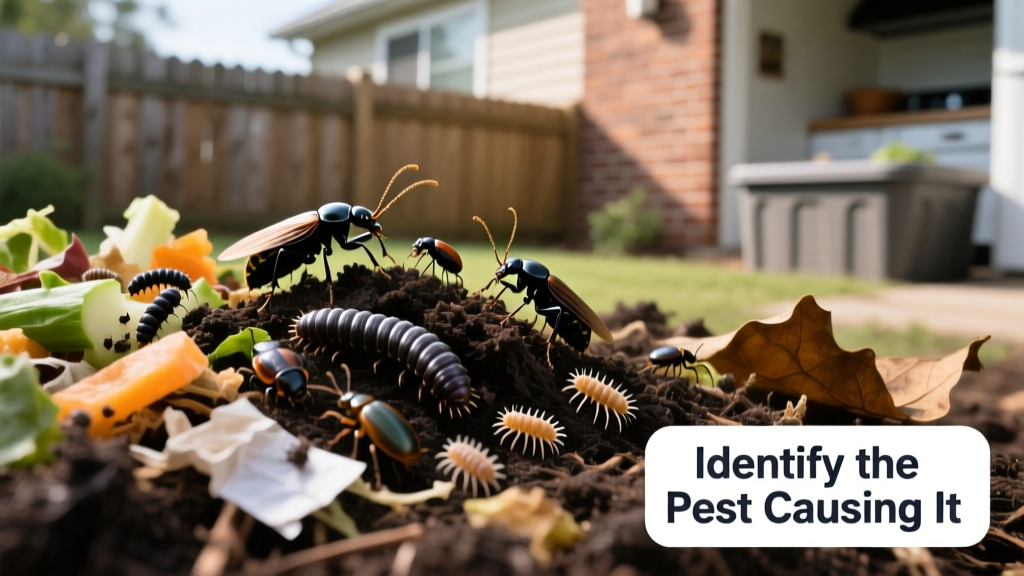
Seeing insects swarming your compost bin doesn’t automatically mean something’s wrong—but it *does* signal that conditions are right for specific pests, some beneficial and others problematic. Fruit flies, fungus gnats, soldier flies, and even cockroaches can appear, each revealing clues about moisture, nitrogen balance, or contamination. Misidentifying them leads to unnecessary interventions—or worse, ignoring a real sanitation risk.
Identification
Not all compost-dwelling insects are pests. Some, like black soldier fly larvae, accelerate decomposition; others, like houseflies or German cockroaches, indicate hygiene failures or attract larger predators. Key identifiers include size, color, behavior, and life stage location (e.g., adults hovering vs. larvae buried in wet scraps).
| Insect | Size & Color | Key Behavior | Compost Risk Level |
|---|---|---|---|
| Fruit fly (Drosophila) | 1–2 mm, tan/red eyes, red wings | Hovers near surface, drawn to fermenting fruit/liquids | Low — nuisance only |
| Fungus gnat (Bradysia) | 2–3 mm, dark gray/black, long legs | Weak fliers; larvae feed on fungi & decaying roots | Low–Medium — may damage seedlings if moved to pots |
| Black soldier fly larva (Hermetia illucens) | 12–25 mm, segmented, dull brown/black, no visible legs | Wriggles actively; burrows into hot, moist material | Beneficial — speeds breakdown, suppresses houseflies |
| Housefly (Musca domestica) | 6–7 mm, gray with four dark stripes, sponging mouthparts | Rests on surfaces, lays eggs in rotting meat/dairy | High — disease vector; signals improper management |
| German cockroach (Blattella germanica) | 10–15 mm, light brown, two dark parallel stripes | Nocturnal, avoids light; seeks warmth & grease residues | Critical — indicates indoor spillage or bin breach |
What Attracts Them
Compost is an ecosystem—and pests arrive when their needs are met. Moisture imbalance, excessive food waste (especially meat, dairy, or oily foods), insufficient turning, and uncovered bins create ideal breeding grounds. According to the U.S. EPA’s 2022 Organic Waste Management Guidelines, improperly managed residential compost piles generate 3× more fly activity than aerated, carbon-balanced systems.
- Overly wet conditions (>60% moisture) encourage fungus gnats and houseflies
- Exposed fruit/vegetable scraps attract fruit flies within minutes
- Lack of browns (dry leaves, shredded paper) starves microbes, slowing heat buildup and inviting pests
- Cracks or gaps in bin lids let in roaches and ants seeking shelter
Treatment Methods
Natural Solutions
Start here—most compost pests respond well to physical and cultural fixes. Cover fresh food scraps with 2–3 inches of dry browns (shredded cardboard, dried leaves, or sawdust). Turn the pile every 2–3 days to raise internal temperatures above 130°F for 3+ days—this kills fly eggs and disrupts gnat larvae development. For fruit flies, set out apple cider vinegar traps: fill a jar with ½ inch vinegar + one drop dish soap, cover with punctured plastic wrap.
Chemical Options
Reserve chemical intervention for confirmed infestations where natural methods fail—and only use EPA-registered products labeled for outdoor compost use. Spinosad-based sprays (e.g., Monterey Garden Insect Spray) are OMRI-listed and effective against adult fungus gnats and fruit flies when applied at dusk. Never use broad-spectrum pyrethroids: they kill beneficial predators like rove beetles and parasitic wasps that naturally regulate pest populations.
Prevention
Prevention hinges on consistency—not perfection. Maintain a 2:1 ratio of browns to greens by volume. Freeze food scraps for 48 hours before adding to kill hidden eggs. Use a sealed tumbler or bin with tight-fitting lid and ventilation holes covered with ¼-inch hardware cloth. Keep bins at least 10 feet from doors, windows, and air intakes to reduce indoor migration.
- Line bottom of stationary bins with wire mesh to deter burrowing pests
- Store kitchen scrap pail with lid and empty daily—never let it sit >24 hours
- After rain, stir in dry materials immediately to restore airflow
- Inspect bins weekly for cracks, warping, or rodent gnaw marks
When to Call an Exterminator
Call a licensed pest professional if you find German cockroaches inside your home within 10 feet of the compost area—or if you spot live maggots in indoor trash cans, baseboards, or cabinets. These are not compost issues anymore; they’re structural infestations. Also contact one if you see rats or mice repeatedly digging into your bin: they’re attracted by protein-rich waste and will chew through plastic to get it. According to the National Pest Management Association’s 2023 Rodent Response Report, 68% of suburban compost-related rodent calls involved unsecured bins with meat or pet food scraps.
"If you’re seeing more than five adult houseflies per minute around your bin—or finding larvae in your garage or porch—stop composting temporarily and audit your inputs. That’s not a pest problem yet; it’s a warning flare." — Dr. Lena Torres, Urban Composting Extension Specialist, Cornell Cooperative Extension, 2022
Are black soldier fly larvae harmful?
No—they’re beneficial decomposers. They don’t bite, don’t carry disease, and outcompete housefly larvae for resources. Their presence often means your pile is hot and active. If they migrate out seeking drier pupation sites, add more dry bedding or screen bin vents with fine mesh.
Why do I keep getting fruit flies even after covering scraps?
You may be using too-thin a layer of browns—or adding scraps directly onto cold, dense material instead of burying them in the active zone (middle/lower third). Try pre-mixing new greens with dry browns in a bucket first, then turning them deep into the pile.
Can compost pests get into my house through windows?
Fungus gnats and fruit flies can enter through unscreened windows or gaps around doors—but they won’t survive long indoors without moist organic matter. Houseflies are more persistent; install window screens with ≤16 mesh and seal door sweeps. Learn how to seal gaps around doors to block entry points.
Is it safe to use compost full of soldier fly larvae in my garden?
Yes—and it’s actually a sign of high-quality, biologically active compost. Larvae die during curing or when spread thin in soil. Their frass (excrement) is rich in chitin, which boosts plant immunity. Just avoid applying raw, larva-heavy compost to seedling trays—wait until it’s fully cooled and crumbly.
Do ants in compost mean something’s wrong?
Ants usually indicate low moisture and low heat—conditions where decomposition has stalled. They’re rarely harmful but suggest your pile needs water, nitrogen (greens), or turning. Flood ant trails with boiling water *only* at the colony entrance—not inside the pile—and follow up with aeration. See why your compost isn’t heating up.
How do I tell fly larvae from beetle larvae?
Fly larvae (maggots) are legless, tapered at both ends, creamy white, and found near rotting protein. Beetle larvae (e.g., rove beetles or ground beetles) have distinct heads, three pairs of true legs near the front, and often darker, segmented bodies. Most beetle larvae are beneficial predators—leave them alone. Identify beneficial insects in compost.
Healthy compost hums—not buzzes. When insects shift from background players to dominant occupants, it’s feedback, not failure. Adjust moisture, balance inputs, and observe for three days. Most issues resolve without sprays or drastic changes. And remember: if your bin smells earthy—not sour or rotten—and heats consistently, you’re already winning. The goal isn’t sterility—it’s intelligent coexistence.