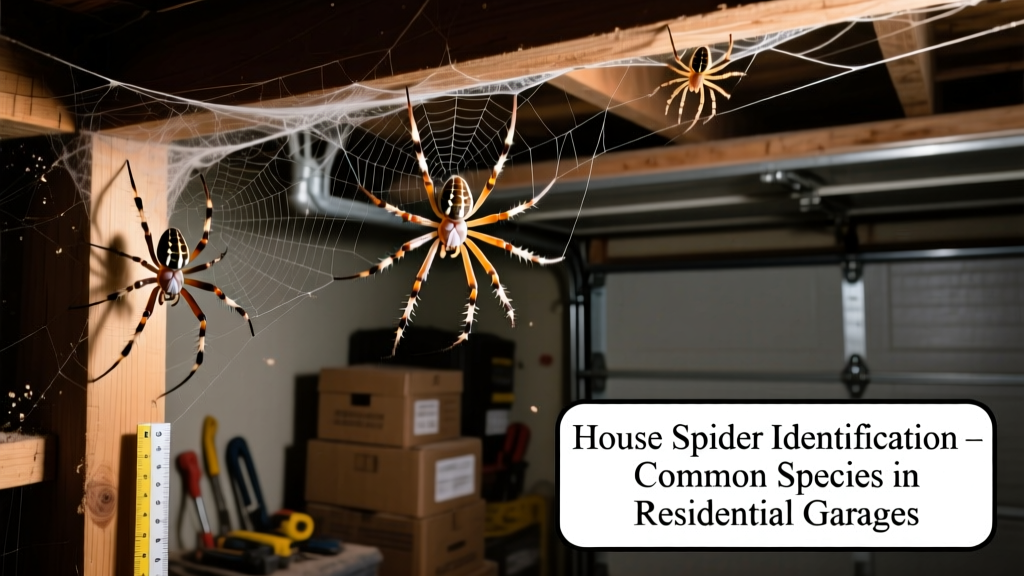
House spiders (Tegenaria domestica and related species) commonly take up residence in garages because of the sheltered, undisturbed environment — especially near stored boxes, tools, and vehicles. While they rarely bite and aren’t dangerous, their webs, egg sacs, and sudden appearances trigger anxiety for many homeowners. A single female can lay 4–9 egg sacs per season, each holding 100–250 eggs (University of Kentucky Entomology, 2022), making early intervention critical.
Identification
House spiders in garages are typically brown or gray with long, slender legs and a body length of 3–8 mm. They build irregular, tangled, funnel-shaped webs in corners, overhead rafters, behind shelves, and inside stored items like cardboard boxes or tool cabinets. Unlike black widows or brown recluses, they lack distinct markings — but their web placement and skittish behavior when disturbed are telltale signs.
| Species | Size & Color | Web Type | Risk Level |
|---|---|---|---|
| House spider | 3–8 mm; light brown, pale abdomen | Irregular, messy, often near walls/ceilings | Low — non-aggressive, venom harmless to humans |
| Black widow | 8–13 mm; shiny black, red hourglass underside | Strong, haphazard, low to ground, near debris | High — neurotoxic venom; seek medical care if bitten |
| Cellar spider | 5–7 mm; pale yellow/brown, extremely long legs | Loose, wispy, often in high corners | None — harmless, eats other pests |
What Attracts Them
Garages offer ideal conditions: clutter provides hiding spots, moisture from leaky faucets or poor ventilation supports prey insects, and exterior gaps let them enter unnoticed. Dusty corners, stacked cardboard, unused holiday decorations, and open pet food bags all boost insect activity — which draws spiders looking for meals.
- Cracks under garage doors (even gaps as small as 1/8 inch)
- Piles of firewood, lawn equipment, or unsealed storage bins
- Standing water from condensation or AC drip lines
- Outdoor lighting that attracts flying insects near entry points
Treatment Methods
Natural Methods
Vinegar-water spray (1:1 ratio) disrupts spider pheromone trails and deters return. Apply weekly along baseboards, door frames, and ceiling corners. Diatomaceous earth (food-grade) sprinkled along garage perimeters dehydrates spiders on contact — but reapply after rain or heavy foot traffic. Vacuuming webs and egg sacs with a shop vac (empty immediately outdoors) removes up to 90% of active populations in one session.
Chemical Options
Pyrethroid-based sprays (e.g., bifenthrin or cyfluthrin) applied as a perimeter barrier along garage door tracks, wall-floor junctions, and window frames provide 4–6 weeks of residual control. Always follow label instructions — never spray near vehicles’ air intakes or electrical panels. According to the U.S. EPA’s 2023 Pesticide Registration Review, these products pose low risk to mammals when used as directed.
Prevention
Start by decluttering: remove unused items, store seasonal gear in sealed plastic totes (not cardboard), and hang bikes and tools off the floor. Install weatherstripping on overhead and side-entry doors, and seal gaps around pipes and conduits with copper mesh + caulk — spiders can’t chew through metal. Keep garage humidity below 50% using a dehumidifier or exhaust fan, especially in humid climates.
- Inspect and replace torn garage door seals every 6 months
- Wipe down surfaces monthly with citrus-based cleaner — spiders dislike limonene
- Switch outdoor lights to yellow sodium vapor bulbs to reduce insect attraction
When to Call an Exterminator
Call a licensed pest professional if you spot more than 15 active webs in a single visit, find egg sacs clustered in multiple locations (especially behind drywall or insulation), or notice bites with localized swelling and muscle cramps — which could indicate misidentified venomous species. Most reputable companies offer garage-specific treatment plans starting at $120–$180, including inspection, targeted application, and 30-day follow-up.
"Garage spiders are almost always a symptom — not the problem. Fix the moisture and insect food source first, and the spiders drop off within 10–14 days." — Dr. Lena Cho, Urban Entomologist, Pest Management Professional Magazine, 2023
Do house spiders in garages bite?
No — house spiders avoid humans and only bite defensively if trapped against skin (e.g., in a glove or shoe). Bites resemble a mild bee sting and resolve in 1–2 days. If you experience severe pain, blistering, or fever, consult a physician — it’s likely another cause.
Can I use foggers in my garage?
Avoid total-release foggers. They’re ineffective against web-building spiders (which stay put), pose fire risks near vehicle batteries or fuel containers, and leave residue on tools and surfaces. Targeted sprays or dusts are safer and more effective.
How fast do house spiders reproduce in garages?
In warm, stable garage environments (65–75°F), females mature in 6–8 weeks and begin laying egg sacs within days. One pair can produce over 1,000 offspring in a single season — so early detection matters.
Are cellar spiders the same as house spiders?
No. Cellar spiders (Pholcidae) have extremely long, thin legs and build loose, dusty webs high in corners. They eat house spiders and other pests — consider them beneficial. Don’t treat them unless webs become excessive.
Will sealing my garage door eliminate them?
Sealing helps — but isn’t enough alone. House spiders also enter via utility penetrations, vents, and gaps around windows. Combine sealing with sanitation and moisture control for lasting results.
Do ultrasonic spider repellents work?
No peer-reviewed study supports their effectiveness. The FTC issued warnings in 2021 about false claims made by several brands. Save your money and focus on physical exclusion and habitat modification instead.
Consistent monitoring — check corners and rafters weekly during spring and fall — catches infestations before they scale. For deeper garage pest strategies, see our garage pest control guide. If cobwebs reappear near your garage door seal, it’s time to inspect for gaps. And remember: most garage spiders vanish once winter hits or indoor temperatures drop — but don’t wait for cold weather to act.