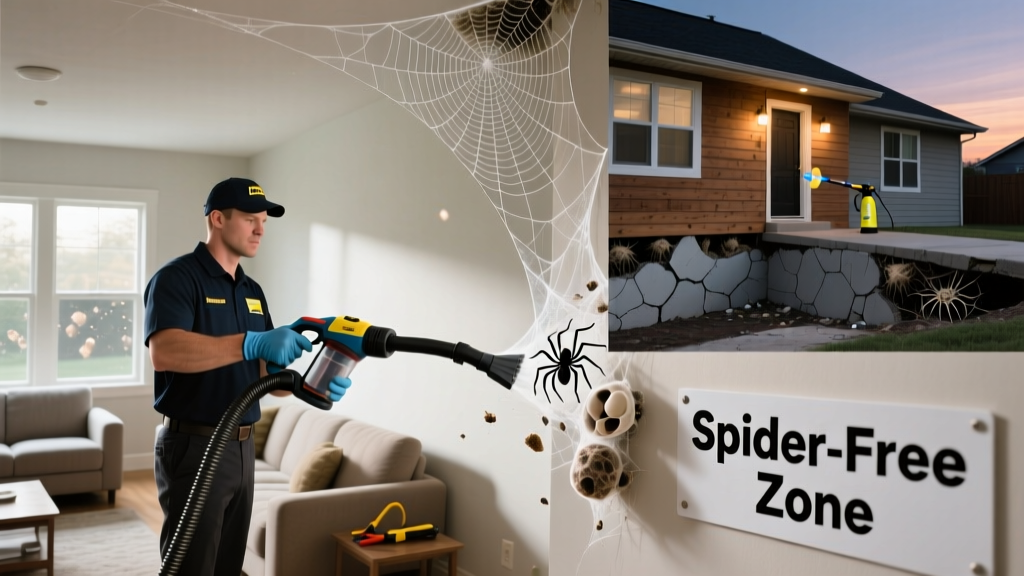
House spiders—like the common cellar spider (Pholcus phalangioides) and cobweb spider (Steatoda grossa)—aren’t dangerous, but their webs, sudden appearances, and sheer numbers can trigger anxiety or signal underlying entry points and moisture issues. Most are harmless predators that eat other pests, yet persistent sightings often mean conditions favoring them are going unaddressed.
Identification
Not all spiders in your home are the same. Accurate ID helps determine risk level and treatment priority. Most indoor species are small (3–8 mm), brown or gray, with long, thin legs and preference for undisturbed corners, basements, garages, and window frames.
| Species | Size & Color | Web Type | Risk Level |
|---|---|---|---|
| Cellar Spider | 5–7 mm; pale yellow-brown, extremely long legs | Irregular, tangled, dusty-looking | None — non-aggressive, venom harmless to humans |
| Cobweb Spider (False Black Widow) | 6–10 mm; shiny brown/black, bulbous abdomen | Three-dimensional, sticky, often near doorways | Low — bite rare, mild localized pain only |
| Jumping Spider | 4–7 mm; compact, hairy, often with iridescent chelicerae | No web — hunts actively | None — curious but non-threatening |
| Yellow Sac Spider | 5–8 mm; pale yellow-green, slender | Loose silken sacs in corners or behind furniture | Low-moderate — rare bites cause mild redness/swelling |
Signs you have more than occasional visitors include: fresh webs in unused rooms, molted exoskeletons stuck in corners, or clusters of tiny egg sacs (pearlescent, silk-wrapped, about the size of a grain of rice).
What Attracts Them
Spiders don’t seek out homes—they follow food and shelter. Their presence is almost always a symptom of other pest activity or structural conditions.
- Abundant prey: Silverfish, fruit flies, gnats, and ants draw spiders indoors.
- Moisture: Damp basements, leaky pipes, and poor ventilation create ideal microclimates for both spiders and their prey.
- Clutter and undisturbed zones: Cardboard boxes, stacked firewood, and storage bins offer nesting cover.
- Entry points: Gaps under doors, torn screens, and unsealed utility penetrations let them crawl in year-round.
According to the National Pest Management Association’s 2022 Residential Pest Survey, 68% of homes reporting spider activity also had documented moisture issues or concurrent insect infestations.
Treatment Methods
Natural Removal
Start here—especially if you have kids or pets. Physical removal is safe and effective for low-to-moderate numbers.
- Vacuum webs and spiders daily using a crevice tool; immediately seal and discard the bag or empty the canister outdoors.
- Spray a 1:1 vinegar-water solution along baseboards and window sills—spiders dislike the acetic acid and avoid treated areas.
- Place sticky traps (not baited) near known activity zones—not as a kill method, but to monitor population trends and hotspots.
- Introduce natural deterrents: Chestnuts, citrus peels, or essential oils like peppermint (diluted 10 drops per ounce of water) disrupt spider chemoreception.
Chemical Options
Reserve these for recurring, high-density situations—and always follow label instructions precisely.
- Pyrethroid-based sprays (e.g., bifenthrin or cyfluthrin) applied as perimeter barriers reduce ingress by 40–60% when reapplied every 90 days (U.S. EPA Pesticide Registration Review, 2021).
- Diatomaceous earth (food-grade) works mechanically: sprinkle a fine line along foundations, behind appliances, and in wall voids—reapply after cleaning or humidity spikes.
- Aerosol “crack-and-crevice” treatments target hidden harborages—but never use near HVAC intakes or pet bedding.
"Most homeowners over-treat spiders. If you’re seeing more than 10 per week in living areas, focus on eliminating their food source—not just the spiders themselves." — Dr. Lena Cho, Urban Entomologist, University of Florida IFAS Extension, 2023
Prevention
Long-term control means making your home less hospitable—not just removing individuals.
- Fix leaks and install dehumidifiers in basements and crawlspaces—keep relative humidity below 50%.
- Seal gaps >1/8″ with silicone caulk or copper mesh; replace worn weatherstripping on exterior doors.
- Store seasonal items in sealed plastic bins—not cardboard—and elevate off concrete floors.
- Keep vegetation trimmed 12–18 inches from foundations to eliminate bridge points.
For ongoing monitoring, pair prevention with regular silverfish control—they’re a major spider food source—and inspect attic vents for torn screening, a common entry route for jumping spiders.
When to Call an Exterminator
Professional help is warranted when:
- You find more than 20 live spiders in one week across multiple rooms.
- Egg sacs appear in high-traffic areas (e.g., kitchen cabinets, bedroom closets).
- You suspect black widows or brown recluses—both require expert identification and targeted protocols.
- DIY efforts fail after 6 weeks of consistent treatment and environmental correction.
Licensed technicians can conduct thermal imaging scans to locate hidden colonies and apply residual dusts in wall voids—something not feasible for most homeowners.
Do house spiders bite?
Almost never. They lack reason to bite unless trapped against skin (e.g., in clothing or bedding). Even confirmed bites from common house spiders rarely break the skin or require medical attention.
Are spider webs a sign of an infestation?
Yes—if new webs reappear within 48 hours after cleaning. That indicates active hunting and likely breeding nearby. Dusty, abandoned webs aren’t cause for concern.
Can I relocate spiders outside safely?
Yes—and it’s ecologically sound. Use a glass and stiff index card to gently capture and release them at least 10 feet from your foundation. Avoid releasing near windows or soffits where they may return.
Why do I see more spiders in fall?
Male spiders mature and become mobile in late summer/fall, searching for mates. Cooler outdoor temps also drive them indoors seeking warmth and shelter—peaking September through November.
Do ultrasonic spider repellents work?
No. Independent testing by Consumer Reports (2022) found zero statistically significant reduction in spider activity using ultrasonic devices. Save your money and focus on sealing and sanitation instead.
Will killing one spider attract more?
No. Spiders aren’t social and don’t communicate via pheromones the way ants or cockroaches do. However, leaving carcasses out can attract scavengers like carpet beetles—so vacuum or dispose promptly.
Spiders are part of the ecosystem—even indoors—and most pose no real threat. The goal isn’t eradication, but balance: reducing numbers to a barely noticeable level while addressing the root causes that invited them in. For persistent issues, combine physical exclusion with moisture control and crack sealing, and you’ll see results within 2–3 weeks. Consistency beats intensity every time.